Category Archives: Epiphany

A Visit to the Precipice – thoughts on Luke 4:21-30

21Then he began to say to them, “Today this scripture has been fulfilled in your hearing.” 22All spoke well of him and were amazed at the gracious words that came from his mouth. They said, “Is not this Joseph’s son?”23He said to them, “Doubtless you will quote to me this proverb, ‘Doctor, cure yourself!’ And you will say, ‘Do here also in your hometown the things that we have heard you did at Capernaum.’” 24And he said, “Truly I tell you, no prophet is accepted in the prophet’s hometown. 25But the truth is, there were many widows in Israel in the time of Elijah, when the heaven was shut up three years and six months, and there was a severe famine over all the land; 26yet Elijah was sent to none of them except to a widow at Zarephath in Sidon. 27There were also many lepers in Israel in the time of the prophet Elisha, and none of them was cleansed except Naaman the Syrian.” 28When they heard this, all in the synagogue were filled with rage. 29They got up, drove him out of the town, and led him to the brow of the hill on which their town was built, so that they might hurl him off the cliff. 30But he passed through the midst of them and went on his way.

modern nazareth from mt precipiceAbout a year ago, we were standing on that “brow of the hill” – or at least what is traditionally accepted as the spot. The modern city of Nazareth lies below the hill to the west.

And Mt. Tabor can usually be seen off to the east, toward the Sea of Galilee. However, on the day we visited Mt. Precipice, it was rainy and cloudy.

2015-01-09 clouds over NazarethAs the clouds rolled in over Nazareth, we had to use our imaginations to picture the vista below us.


We could mostly make out Nazareth to the west, but the rich farmland to the south and the valley between us and Mt. Tabor to the east were completely obscured by clouds.

2015-01-09 mt precipice toward tabor clouds


2015-01-09 mt precipice clouds


I noticed that our little group of tourists reacted to this phenomenon in a surprising way. Keep in mind that we really couldn’t see anything – the view was completely obscured by clouds and rain. But that didn’t stop us from lifting our phones and cameras …

shawna and amanda taking photos on mt precipice2015-01-09 07.37.48

tourists on mt precipice


But do you notice something about these pictures? Everyone is looking in a different direction.

Here we are at the top of the hill where Jesus himself was dragged, just so he could be thrown down the hillside and stoned to death for blasphemy. And we are looking in every single direction, through the fog, at things we cannot see. If we inch out to the edge of the path, we can look down the hillside and imagine a human being thrown down over those rocks.Amanda looking down from mt precipice


But the precipice itself is the only thing we can clearly see. Ponder that.

The precipice of Mt Precipice 2015-01-09 07.46.49


“Who Is My Neighbor?” – Sermon on Luke 10:25-37 Epiphany 2C

Preached at Oakwood United Methodist Church on January 17, 2016

A newer sermon on this text is here.

Here’s the set up to today’s gospel reading, from the earlier verses of Luke 10. Keep this in the back of your mind as we move forward into the reading. What has just happened was the sending of the 72, two by two, into the villages and towns where Jesus plans to go next. These disciples are the advance team, and their mission is successful.

The 72 have just returned, and Jesus has prayed a prayer of thanksgiving and praise to the Father, rejoicing in the Holy Spirit – that’s an interesting detail we won’t explore today – and has blessed these disciples. Everyone’s feeling pretty good about what has just happened. If this were a television show, the commercial break would come right about here.

Luke sets off today’s famous story with one of his signature introductions: “And behold.” Luke acknowledges what has just happened, and connects it to this story with “and.” But there’s that “behold” to show us that we are about to hear something new.

The Parable of the Good Samaritan

25 And behold, a lawyer stood up to put him to the test, saying, “Teacher, what shall I do to inherit eternal life?” 26 He said to him, “What is written in the Law? How do you read it?”27 And he answered, “You shall love the Lord your God with all your heart and with all your soul and with all your strength and with all your mind, and your neighbor as yourself.”28 And he said to him, “You have answered correctly; do this, and you will live.”

29 But he, desiring to justify himself, said to Jesus, “And who is my neighbor?” 30 Jesus replied, “A man was going down from Jerusalem to Jericho, and he fell among robbers, who stripped him and beat him and departed, leaving him half dead. 31 Now by chance a priest was going down that road, and when he saw him he passed by on the other side.32 So likewise a Levite, when he came to the place and saw him, passed by on the other side. 33 But a Samaritan, as he journeyed, came to where he was, and when he saw him, he had compassion. 34 He went to him and bound up his wounds, pouring on oil and wine. Then he set him on his own animal and brought him to an inn and took care of him. 35 And the next day he took out two denarii and gave them to the innkeeper, saying, ‘Take care of him, and whatever more you spend, I will repay you when I come back.’ 36 Which of these three, do you think, proved to be a neighbor to the man who fell among the robbers?”37 He said, “The one who showed him mercy.” And Jesus said to him, “You go, and do likewise.” – Luke 10:25-37 (ESV)


The lawyer who steps up to question Jesus only asks two questions. The first is a test, and if the lawyer were a Presbyterian, as I used to be, that question would sound more like “What is the chief purpose of humankind?” But Jesus doesn’t respond with “to love God and enjoy him forever.” The lawyer’s question isn’t as simple as our modern translations make it seem. “Teacher, I will inherit life eternal having done or fulfilled or acquired … what, exactly?” might be a more literal translation of this question.

As he so often does, Jesus identifies a teachable moment, and answers the question with –you guessed it – another question. Actually, two – and this is important. Jesus wants to know “What is in the law? You’re a lawyer, you know the scriptures; you already have your answer. You tell me what it says.”

But then Jesus immediately follows this question with a much more personal one – “How do you read it?” At once we realize that Jesus does not see the Law as a dead and stagnant set of words that mean the same thing to everyone. The Word of God is living and active (Hebrews 4:12), and how we read it determines how we will respond to God’s message.

The lawyer doesn’t hesitate, but begins by quoting the Shema, “Hear O Israel, the Lord your God is One. You shall love the Lord your God with all your heart, and with all your soul, and with all your might.” (Deuteronomy 6:4-5)

Here’s a little grammar lesson for you. We think of this as a command, but the verb is not an imperative. It’s more of an indication that something will surely happen in the future. You are going to love the Lord your God, because the Lord is the only God there is.

The lawyer adds part of a verse from Leviticus (19:18b), and this blending of two verses gives us what we now call “the Great Commandment.”

Yes, Jesus says, you’ve got it. Go do it. But just as Jesus turns back to his friends, who are still celebrating their successful mission trip, the lawyer adds a new question, and this isn’t a test, it’s an attempt to justify himself. This guy who was challenging Jesus a moment ago suddenly feels the need to get his approval, so he asks, “Yes, but … who is my neighbor?

I can imagine the others getting quiet as Jesus looks at the lawyer. They have a hunch they know what Jesus is going to do. I imagine Jesus pausing a moment, considering the best way to teach this lawyer about the high cost of discipleship. He decides to take on this expert in the law, and everyone else settles in to listen. They know that a story is coming.

Jesus sets the scene. It’s the road between Jerusalem and Jericho. About a year ago, my husband and I were on that road. We stopped at a Bedouin camp to get a good view of what is commonly called The Valley of the Shadow of Death.

2015-01-14 Valley of the Shadow

When we were there last January, it was the rainy season, so there was a bit of green showing here and there, but when we looked out across the Valley toward Jerusalem, it was hard to imagine anyone walking through this wilderness.

2015-01-14 UP to Jerusalem


That’s Jerusalem off in the distance, on the very rim of the horizon.


2015-01-14 Good Samaritan road


And when we turned and looked down the valley in the other direction, we could almost make out 2015-01-14 Jericho in the distanceJericho.


In between is treacherous wilderness, and the distance was too great to be traveled on foot in a single day. This made travelers vulnerable to the robbers and nomads who spent their lives scrabbling out an existence in this wasteland.


The place where our bus stopped was actually a Bedouin camp. At first, we thought it had been abandoned, but the tour guide assured us that it was not.

bedouin homes

The guide also warned us to take valuables with us when we got off the bus, and keep them close. We were also encouraged to not buy anything or try to bargain with these Bedouins. And whatever we did, when the children asked us for candy, even if we had some, we should refuse. It might be a ruse to get us to open our bags or pockets – something you should never do in front of a Bedouin child. You also should not let them catch you taking their pictures.

Bedouins on the run to meet the bus 2015-01-14 10.35.17

Sure enough, as soon as the bus stopped, here they came.


I was careful to wait until the children weren’t looking to take a snapshot.

Bedouin girl 2015-01-14 10.36.45


This charming little guy had a backpack full of trinkets he was trying to sell us. Everything was “one dollar.” When we declined, he held out his hand and asked “Candy? Gum?” From salesman to beggar in the blink of an eye. Bedouin boy with backpack 2015-01-14 10.36.01


As I tried to imagine someone walking from Jerusalem to Jericho, it wasn’t difficult for me to think that maybe these Bedouin children were somehow connected to the robbers in Jesus’ story. Clearly, they were not a real threat to us. We were in no danger of being stripped and left to die on the side of the road. But if this was the road Jesus and his listeners were imagining as he told the story, I could see why you wouldn’t have wanted to travel it alone.

Whenever Jesus tells a parable, he invites us into the story. There is almost always one character or another with whom we identify. Quite often, there’s a twist somewhere in the story that surprises us. It tells us we’ve been identifying with the wrong character all along, if we really want to be followers of Christ. The story of the Good Samaritan is no exception.

The first two people who accidentally happen by are a priest and a Levite. They both hurry over to the other side of the road. They probably wanted to avoid contamination – touching this man, who looked like he might be dead, would make them ritually unclean.

But if you were the man lying in the ditch, who better to come along than someone whose life is dedicated to God? At the very least, you would expect no further harm to come to you. Yet, neither of these men stop to help.

It is the third traveler who is moved to compassion. Finally, someone who can do something! He gets down off his camel or donkey, cleans the man’s wounds with wine and oil, bandages him up and puts the man on the camel – or donkey. But there’s a catch. This kind person, whose care has saved a life, is – a Samaritan. The very last person on earth you would want taking care of you. The Enemy.

We tend to want to identify with the hero in the story. The disciples and the lawyer who heard Jesus tell this parable might have had a hard time figuring out who the hero was. You’d think it would be the priest or the Levite, and it might be easy to justify their failure to help by remembering they were just trying to stay clean. We’d all like to identify with the person who does the right thing, but he turns out to be a Samaritan – just about the worst possible ethnic group any of the disciples could imagine.

The difference between the Samaritan and the first two holy men who happened along that road between Jerusalem and Jericho wasn’t a matter of eyesight. All three of them saw the man lying in the ditch. The difference is what they did when they saw him. The first two made a beeline for the opposite side of the road. Only the Samaritan saw the man and had compassion.

And Jesus says, “Go be like the Samaritan.” Go be like the person you snub. Go be like the person you think you’re too good to be around.

A few days after we returned from the Holy Land, one of those people we snub, a person we think we’re too good to be around,  died in my driveway. My husband found him lying in front of our garage door without a shirt, ankles crossed, eyes staring at the sky. We spent the day wondering about this man. What circumstances had put him in our driveway on one of the coldest nights of the year, without a shirt?

Across the street, we could see children playing on the school playground while, behind our house, the police worked to discover what had happened to this man. We didn’t know his name then. We learned it later, and the newspaper identified him as homeless. The stark contrast between children playing across the street and a man dying unattended in my driveway gave me a new sense of urgency to do something about the homeless people who move unseen here in New Ulm, particularly those who are most vulnerable, the children. Which of those children playing, I wondered, might end up like this man someday, if we don’t do something? If we don’t see and have compassion, as the Samaritan did?

We know that homelessness and poverty are inextricably linked. We also know that children born to single mothers are among the most likely to suffer from poverty. When these families become homeless, they have very few resources available to help them turn their lives around and get back on their feet.

That’s why the Ministerial Association has been working to establish NUMAS Haus for homeless single mother families. We want to do more than just give them a place to sleep for a few nights. We want to help them turn their lives around. You can learn more about the programs and services we plan to offer at the NUMAS Haus website.

I am grateful to serve in a congregation that is willing to partner with other churches to fulfill this God-sized vision. As the project moves forward and dreams become reality, I urge you to think about who your next neighbor might be. Who needs our compassion? Who hungers to know the love of God and the saving grace of our Lord Jesus Christ? And who among us is ready to be like the Samaritan, willing to identify with the outcast for the sake of serving Jesus? As we pass through the Valley of the Shadow of Death, will we see and cross over to the other side of the road, or will we see and be consumed by gut-wrenching compassion for any and all whose need lies before us?

When Jesus finished his story, he asked the lawyer, “Who proved to be a neighbor to the man who fell among the robbers?” The lawyer said, “The one who showed him mercy.” And Jesus said to him, “You go, and do likewise.”

He says the same to each of us. You go, and do likewise. Amen.


“A House Divided” – Sermon on Mark 3:22-26 and 1 Kings 12:1-19


Baptism of Our Lord C
January 10, 2016

We’re back in the Old Testament this week, returning to the sequence of events we left behind to celebrate the stories of Christmas and Epiphany. In a few moments, we will remember Christ’s baptism in the Jordan River by touching that same water and renewing our own baptismal covenant vows. But now, it is time to return to the Jerusalem of an earlier century. The great kings David and Solomon have died, and Solomon’s son Rehoboam has just taken the throne. He’s young and rash, and he’s eager to demonstrate his kingly power over the nation of Israel.

Maybe a little too eager. I get the idea as I read about Rehoboam that he’s trying to convince himself of his royal authority, as much as anyone else. Instead of showing mercy to his subjects, and gaining their gratitude and loyalty, Rehoboam acts tougher than he probably is. Instead of recognizing that his people have been overtaxed and overworked by Solomon, Rehoboam is only worried about appearing stronger than his father. So he threatens the people with even harsher conditions than they have already suffered.

It’s the straw that breaks the camel’s back, and the people rebel. 1 Kings 12: 16 tells us, “And when all Israel saw that the king did not listen to them, the people answered the king, “What portion do we have in David? We have no inheritance in the son of Jesse. To your tents, O Israel! Look now to your own house, David.”

It didn’t take long for the smirk on Rehoboam’s face turned to dismay, as he realized his mistake. He had to run for his life to escape being stoned to death. Instead of ruling the whole kingdom of Israel with an iron fist, he’s left with only two small tribes who remain loyal, as the other ten tribes head off to their own territories, following Jeroboam’s leadership. The kingdom is ripped in two, just as God told Solomon it would be.

It’s just at this point in the story that I have to wonder what God is up to here. After all, God had told Abraham he would make his descendants into a great nation, and it would be through God’s people, the nation of Israel, that God would bless the whole world. God had promised David that his descendants would rule over this great nation. But here we are, in the middle of a civil war, only two generations into David’s line. Instead of blessing the other nations of the world, Israel is torn in two, and chaos erupts. If we were to analyze the literary elements at work here, this would be the point in the story where “the plot thickens.”

On June 18, 1858, just about the time our church was being established here in the young city of New Ulm, a Republican candidate for US Senator stood up in the Illinois State Capitol to accept his party’s nomination. The speech he gave didn’t help him win that election to the Senate, but it did rally Republicans across the northern states around the issue of slavery, and it became one of Abraham Lincoln’s most famous speeches. Maybe you remember reading – or even memorizing – this passage from the beginning of that speech:

“A house divided against itself cannot stand. I believe this government cannot endure, permanently, half slave and half free. I do not expect the Union to be dissolved — I do not expect the house to fall — but I do expect it will cease to be divided. It will become all one thing or all the other. Either the opponents of slavery will arrest the further spread of it, and place it where the public mind shall rest in the belief that it is in the course of ultimate extinction; or its advocates will push it forward, till it shall become lawful in all the States, old as well as new — North as well as South.” [1]

Lincoln wasn’t the first to quote Jesus on this issue of division. Wikipedia, that source of infinite and undisputed knowledge, tells us that:

  • “Saint Augustine, in his book Confessions (Book 8, Chapter 8) describes his conversion experience as being ‘a house divided against itself.’
  • Thomas Hobbes, in his 1651 Leviathan (Chapter 18), stated that, “a kingdom divided in itself cannot stand.”
  • In Thomas Paine’s 1776 Common Sense, he describes the composition of Monarchy as having, “all the distinctions of a house divided against itself.”

There’s a reason why all these famous people have borrowed these words from Jesus: they are true. So let’s take a moment to go to the source, Jesus himself, and learn from him directly.

And the scribes who came down from Jerusalem said, “He has Beelzebul, and by the ruler of the demons he casts out demons.” And he called them to him, and spoke to them in parables, “How can Satan cast out Satan? If a kingdom is divided against itself, that kingdom cannot stand. And if a house is divided against itself, that house will not be able to stand. And if Satan has risen up against himself and is divided, he cannot stand, but his end has come.” – Mark 3:22-26

Last June, we looked at this passage in its context of the early stages of Jesus’ ministry. Now, we see it in the broader context of the whole story of God and his relationship with Israel. When the scribes accuse Jesus of casting out demons by being in league with the devil, Jesus comes back at them with a reference to Jewish history. He might as well have said, “A house divided against itself cannot stand. If Satan has risen up against himself and is divided, he cannot stand, but his end has come… just look at what happened to Rehoboam and the nation of Israel!”

But the scribes don’t catch the history lesson, apparently. They only care about the way Jesus challenges their authority. As far as they are concerned, Jesus is a heretic. They accuse him of being possessed by demons, trying to discredit Jesus in front of the crowds around him. They oppose his purpose by questioning the source of his power. When the scribes accuse Jesus of working with Beelzebub, they don’t realize that they have given Jesus precisely the words he needs to prove his point.

The name Beelzebub[2] comes from a Hebrew play on words. By the time the scribes use it, Beelzebub is just another name for the devil, and they may not have even known about its origins. But those origins go right back to the Old Testament.

Be-el-ze-vuv sounds an awful lot like Be-el-ze-vul, which means “Ba-al the exalted.” It’s what the Canaanites called their god, Baal, back in First and Second Kings, and you will read more about Baal and his prophets next week in Chapter 15 of The Story. While Be-el-ze-vuv sounds a lot like Be-el-ze-vul, it means something completely different. It means “lord of the flies.” And we all know where flies like to congregate. Around dead, smelly things.

Beelzebub is the lord of death, and his defeat is in division. Jesus names the blasphemy of the scribes for what it is: defiance against God. Claiming that God’s saving grace is the work of demons puts the scribes in opposition to the One who saves. Just as Rehoboam’s arrogance cost him the chance to rule over the entire nation of Israel, the scribes miss an opportunity to align themselves with God’s purpose in Jesus. A house divided cannot stand.

This is the point in the story where we come in. Just like Rehoboam, we are given a choice, and the decision we make will determine whether we find unity with God in Christ Jesus, or falter and tumble under our own arrogance. Our choice will either unite us with God or against God.

Abraham Lincoln said, “I do not expect the house to fall — but I do expect it will cease to be divided. It will become all one thing or all the other.” Lincoln was not so much afraid that the United States would be torn apart, the way Israel was, but that it would be unified around the wrong ideal: slavery instead of freedom.

We face the same dilemma in our own lives. Will we follow Jesus in full obedience, even as Jesus was obedient in his own baptism, ministry, and death on the cross? Or will we follow Beelzebub, the lord of the flies, who leads us only to eternal death and separation from God?

Our spiritual integrity is at stake. If Rehoboam’s folly teaches us anything, it is that breaking apart what belongs together is much easier than restoring what is broken. Jesus came to earth in human form for that very reason – to heal our brokenness, mend our divisions, and restore us to unity with God.

Long before Abraham Lincoln gave his “house divided” speech and this congregation was founded in New Ulm, Charles Wesley wrote a hymn called, “Blest Be the Dear Uniting Love.” The words go like this:

Blest be the dear uniting love that will not let us part;
Our bodies may far off remove, we still are one in heart.

Joined in one spirit to our Head, where he appoints we go,
And still in Jesus’ footsteps tread, and do his work below.

O may we ever walk in him, and nothing know beside
Nothing desire, nothing esteem, but Jesus crucified!

We all are one who him receive, and each with each agree,
In him the One, the Truth we live, blest point of unity!

Partakers of the Savior’s grace, the same in mind and heart,
Nor joy, nor grief, nor time, nor place, nor life, nor death can part.

The psalmist writes, “Teach me your way, O Lord, that I may walk in your truth; give me an undivided heart to revere your name” (Ps 86:11).

This is what it means to follow Jesus with an undivided heart. It means giving ourselves completely to him, so that he can fill us completely with his love and grace. Each of us was created with a space in our souls that only God can fill. We can try to fill that space with other things, just as Rehoboam tried to fill it with his desire for power, but nothing can fill the emptiness inside us except God. Everything else we try will only separate us from God, and tear us up on the inside.

You’ve probably experienced this in your own life. Maybe you’ve tried to fill that place inside you with things that promised to give you pleasure, only to experience pain and emptiness. Maybe you’ve tried to fill that place with doing good deeds, so others would think highly of you, or working long hours, or accumulating material goods. None of these things will satisfy the longing you have for God. Maybe you have given up, and decided that the hole in your heart can never be filled, so you’ve dumped bitterness and envy and disappointment into it, hoping that these things will get swallowed up like dying stars in a black hole in outer space.

Only one thing can fill that place in your life. Only one thing can satisfy your longing. It is Jesus, who came to earth as a tiny human child, and grew in favor with God and people, who taught that God’s radical love is available to all who believe that Jesus is the Son of God. Jesus, who died in our place, so that our sins might be forgiven, and we might be restored to the God who created us for just this purpose: to be loved so completely that our only desire is to love God back with all of our being.

If you have never accepted this precious gift of God’s grace, I invite you to do it now as we pray A Covenant Prayer together. If you have been letting other things try to fill the God-sized hole in your life, I invite you to surrender them to Christ right now, as we pray this prayer. You can be made whole. You can be united to Christ by giving your life completely to him. God wants you back. Let us pray.

A Covenant Prayer in the Wesleyan Tradition     (UMH #607)

I am no longer my own, but thine.
Put me to what thou wilt, rank me with whom thou wilt,
Put me to doing, put me to suffering,
Let me be employed by thee or laid aside by thee,
Exalted for thee or brought low by thee.
Let me be full, let me be empty, let me have all things, let me have nothing.
I freely and heartily yield all things to thy pleasure and disposal.
And now, O glorious and blessed God,
Father, Son, and Holy Spirit, thou art mine, and I am thine. So be it.
And the covenant which I have made on earth, let it be ratified in heaven. Amen.

[1]  The Annals of America, vol. 9, 1. Source document: Political Speeches and Debates of Abraham Lincoln and Stephen A. Douglas 1854-1861, Alonzo T. Jones, ed., 52-74.

[2] http://www.behindthename.com/name/beelzebub


Eureka! Healed for a Purpose! Sermon on Mark 1:29-39

Note: an updated sermon on this text is available here.

February 8, 2015

A kindergarten music teacher always introduced the first concert of the school year with these words to the parents: “Don’t blink, or you’ll miss a whole song.”

As we read through this first chapter of Mark’s gospel, I remember that advice. Mark wastes no time telling his story, and his urgency comes through, even when we try to divide his gospel into neat little passages that we can examine one by one. Don’t blink, or you’ll miss a whole story.

Spreading the events of a single day over several weeks gives us the opportunity to study those events closely, but we still get the impression that the people who were following Jesus had a hard time keeping up. Already, we’ve found Mark’s favorite word, “immediately” again and again – Mark uses it twelve times in the first chapter alone. So, just in case you need to catch your breath, or you made the mistake of blinking, here’s what has happened so far:

  • Jesus called four fishermen to follow him, and they left their boats and nets immediately.
  • They came to Capernaum, a small fishing village, where the four apparently lived.
  • On the Sabbath, Jesus went to the synagogue and began to teach with authority. A demon-possessed man challenged him, and named him as the Holy One of God – in other words, the Messiah – but Jesus told the unclean spirit to be silent and leave the man. It obeyed immediately.

It’s still the Sabbath. Jesus and his disciples have just left the synagogue after this encounter. The next part of the story happens in four distinct scenes over the next few hours. Hear the Word of the Lord as the story continues in the first chapter of the gospel of Mark, beginning at verse 29. Scene One:

29 As soon as they left the synagogue, they entered the house of Simon and Andrew, with James and John. 30 Now Simon’s mother-in-law was in bed with a fever, and they told him about her at once. 31 He came and took her by the hand and lifted her up. Then the fever left her, and she began to serve them.

Maybe they went to Simon’s house because it was closest to the synagogue. Or maybe it was the largest home, with room for guests. Or maybe Simon just headed to his own house because he liked to take the lead. However they came to Simon’s home, we learn something about him that we didn’t know before. He has a family to support. And his wife’s mother is sick with a fever.

Simon tells Jesus this “immediately” – perhaps to explain why she does not come to greet the guests who have just arrived, or maybe to warn those guests that there is illness in the house they should avoid. Or maybe Simon has a hunch that this Jesus, who has just shown authority over an unclean spirit, might also have the authority to drive out a fever.

And that is exactly what Jesus does. He doesn’t say a word. He only puts out his hand and takes the hand of Simon’s mother-in-law. The fever is gone. Immediately. As Jesus brings her to her feet, the verb is identical to the one Mark will use in chapter 16 to describe Jesus’ own resurrection from the dead. He lifts her up.

And the mother-in-law’s response to this miraculous healing is also immediate. She gets busy and serves them. Greta Ortega writes, “her service cannot be understood as a woman’s menial work under the domination of lazy males, but as a true messianic ministry.”[1] In essence, Simon’s mother-in-law becomes Jesus’ first deacon, reminding us that Jesus saw himself as a servant, too.

Later in his ministry, Jesus will tell his disciples, “whoever wishes to become great among you must be your servant, 44 and whoever wishes to be first among you must be slave of all. 45 For the Son of Man came not to be served but to serve, and to give his life as a ransom for many.” (Mark 10:43-45)

And this brings us to Scene Two, beginning in verse 32:

32 That evening, at sunset, they brought to him all who were sick or possessed with demons. 33 And the whole city was gathered around the door. 34 And he cured many who were sick with various diseases, and cast out many demons; and he would not permit the demons to speak, because they knew him.

As the Sabbath draws to a close, we see that you can’t keep a secret in a small town like Capernaum. By now, everyone knows what happened in the synagogue, and many people will have already heard that Simon’s mother-in-law is no longer sick. As soon as Sabbath ends, a stream of people makes its way to Simon’s door, asking for healing, asking Jesus to do for them what they saw him do for that man in the synagogue.

Notice how Mark frames this story. Earlier in the day, Jesus performed a single exorcism in a very public place. Later in the day, he performs a single act of healing in a very private place, his friend’s home. Now the worlds collide. The private home becomes a public space, as Jesus heals and casts out unclean spirits for the many who come to Simon’s door.

And notice also that there is a clear distinction between healing and exorcism in Mark’s gospel. Mark will maintain this distinction throughout the coming chapters. The most important aspect of this difference is that Jesus never touches someone to expel an unclean spirit, but he often heals through the power of touch.

Many years ago, I received a complaint from a church member about the loud conversations in the narthex before worship. I was perplexed, until I talked with the dear woman who had taken it upon herself to greet every senior member of our congregation with a hug on Sunday morning. Some of those seniors lived alone, and this was the one time during the week when they could enjoy the human connection that comes with physical touch. Some of them were a little hard of hearing, and because of that, this woman would talk more loudly to them as she engaged them in the only conversation they would have all week. What had sounded like irreverent noise to one member was actually the caring ministry of another.

This woman’s ‘hugging ministry’ was an example of the intimacy of relationship that human touch in scripture represents.[2] God created us for relationship, for nearness to himself, and that is why Jesus became human: to make God’s love real and tangible, to make God touchable. And this, as P. C. Ennis puts it, is what “makes it all the more demanding (if frightening) to realize that for some people, we are the only Jesus they will ever meet.”[3] God not only calls us into service through his Son, God calls us into community with those who long for that connection we all crave, that nearness to God made possible through Christ.

The story continues in verse 35. Scene Three:

35 In the morning, while it was still very dark,
he got up and went out to a deserted place, and there he prayed. 

This is one of only three times in Mark’s gospel when Jesus goes off to be alone in prayer. Luke describes several instances of Jesus seeking solitude, but in Mark, we only read about Jesus going off alone to pray here, then after he has fed the five thousand, and finally in the garden of Gethsemane on the night he is betrayed by Judas. These are pivotal moments in Mark’s story, and they all share one common element: darkness.

Darkness and wilderness are closely linked here. Jesus goes off to some deserted location, reminding us of his time in the desert at the beginning of his ministry, when he was preparing to withstand Satan’s temptation. After learning of John the Baptist’s death and then feeding 5000 (plus women and children), Jesus will send his disciples off in a boat so he can spend the night in prayer (6:46). On another night, in a lonely garden, Jesus will pray, “Father, if you are willing, remove this cup from me; yet, not my will but yours be done.” (14:32-42) The darkness associated with Christ’s times of solitude is the very darkness where he questions God, where he faces fear, and where Jesus submits to his Father’s will.

Even Jesus struggled to find his purpose at the beginning of his ministry, but he knew how to discover it. He prayed. The one who knew God’s heart better than anyone still set aside time to be alone with his Father in the darkness, to seek God’s will in extended times of prayer.

Called to service, called to community, we are also called sometimes into the darkness. It is here that we meet God, and sometimes our fears, face to face. It is in solitude and darkness that we find our purpose and learn to trust completely in God’s will.

Keep in mind that going out alone, in the middle of the night, in unfamiliar territory, would have been a very dangerous thing for Jesus to do. There were no streetlamps to light the way, no motion activated floodlights to scare off the wild animals. There were no cell phones to notify others if something went wrong. There was no GPS to help you find your way back to town if you got lost.

Being alone in the dark wilderness wasn’t the safest place to be in the first century. For Jesus, though, it was the only place where he could talk one-on-one with his Father, without interruption. Well, almost without interruption.

The story concludes, beginning in verse 36: Scene Four.

36 And Simon and his companions hunted for him. 37 When they found him, they said to him, “Everyone is searching for you.” 38 He answered, “Let us go on to the neighboring towns, so that I may proclaim the message there also; for that is what I came out to do.” 39 And he went throughout Galilee, proclaiming the message in their synagogues and casting out demons.

Simon and his friends must have expected that Jesus would just keep on doing what he had done yesterday – healing the sick, casting out demons, meeting the needs that were presented to him. So far, the plan had seemed to work pretty well. They had given up fishing, but fishing for people wasn’t so bad, if all you had to do was control the crowds that kept coming to see Jesus perform his miracles. They could work from home, instead of from the boats. It would be great! Come on, Jesus, let’s go watch you do all the heavy lifting! The crowds are clamoring. You don’t want to disappoint your public.

But Jesus tells them something they weren’t expecting to hear. “Let’s go to the neighboring towns so I can preach there, too. That’s my job.”

The disciples may have been thinking, “What, leave Capernaum? Leave the comfort and security of what we know? When you said, ‘Follow me’ we weren’t expecting to follow you that far, Jesus.” They may have thought it, but Mark doesn’t indicate that they said it. This was a moment of decision for the disciples. There would be many more like it. Each time, they would have to decide, “Do we keep following?”

And that is the choice we face each day, too. The people of Capernaum had missed the point. They showed up for the miracles, but they failed to hear the message Jesus was preaching to them. Repent, turn away from your old ways, and believe the Good News that the Kingdom of God is now present with you.
Be changed.
Be transformed.
Keep following.

Jesus never went out looking for people to heal.[4] That was never his primary mission. People came to him, seeking his healing touch, asking for his help, and he had compassion on them. Some of them did believe. Some did repent and follow Jesus, and their lives were changed forever. These were the ones who, like Simon’s mother-in-law, responded with gratitude and devotion.

But Jesus had to choose between becoming the local healer and reaching as many people as possible with the good news of God’s love for them. The disciples would probably have preferred for Jesus to stay in Capernaum, healing from his home base, and theirs. But Jesus leads them out into their own dark wilderness: the unknown territory of introducing others to the Kingdom of God and leading them to repentance.

The disciples learned that you can’t be a true follower of Jesus by sitting in the comfort of your own living room. You have to get up, as Simon’s mother-in-law did, and join with others in the work of the Kingdom of God. Because for some people, we are the only Jesus they will ever meet.

We may not be the only ones who will satisfy their urgent, physical needs, but we are the only ones who will introduce them and welcome them into the family of God. We are the only ones who will help them recognize their need for a Savior. We are the only ones who can show them what it means to be transformed into Christ’s image through the daily disciplines of prayer and Bible study, service and sacrifice. We are the only ones who can show them what it means to decide every day to keep following Jesus. We are the only ones who can love them as Christ loved us, who can make that love tangible and touchable for them.
We are the only Jesus they will ever meet.

Let us pray.

O Lord, healer of our every ill, we come to you in our weakness, in our uncertainty. Just as your friends in Capernaum looked to you in expectation and hope, we come to you now, asking you to heal us, to free us from the unclean spirits that haunt us.

Because we know that you can, dear Jesus. we know you are able to do more than we can imagine. We know you can fix what’s wrong in us. So stretch out your hand and touch us, Lord. Heal our brokenness of body, mind, and spirit. Make us whole.

And then, Lord, help us to keep following you. Don’t let us turn back to our old ways of trying to cope. Help us to keep trusting you, even when you lead us into the dark unknown territory of going wherever you go.

Because we want to serve you, Lord, with the same gratitude and dedication Simon’s mother-in-law showed. We want to join with you, Lord, in the work of establishing your kingdom here on earth. And we want to stay with you, Lord, showing others the way through their own darkness, leading them to you.
We pray these things in your precious name.
 Amen.

[1] Greta Ortega, Feasting on the Word, Year B Volume 1, 334.

[2] P.C. Ennis, Feasting on the Word, Year B, Volume 1, 334.

[3] Ennis, 336.

[4] R. T. France, NIGTC: The Gospel of Mark, 109.

“I Know Who You Are” – Sermon on Mark 1:21-28 for Epiphany 3B

Video

Last week, we heard Jesus call out to four fishermen. They left their boats and nets immediately, and followed Jesus. Today’s story picks up where that one left off. They have walked a mile or two up the coast to Capernaum.

This was a poor little fishing village. There was no market place, no evidence of Roman buildings or roads. It was a good place to be from, but not necessarily a great place to go to. This is the village where Peter lived with his family, in a home connected to his parents and his brother, Andrew’s home. Continue reading

Immediately – Sermon on Mark 1:14-20 for Epiphany 3B

Video from January 24, 2021

Water flows throughout today’s worship. From the story of Jonah to the Sea of Galilee, through the sacramental waters of our baptism, water connects us to the immediate, and to the eternal.

A sixth grade science teacher once told me that all the water in the world is the very same water that was present at Creation. The cycles of evaporation and condensation that were set in motion at the beginning of time have filtered the same molecules of water that flooded the earth in Noah’s time and flow out of the kitchen tap in ours. It’s all the same water. Continue reading

Eureka! Sermon on Matthew 2:1-12 Epiphany B 1/4/2015

There’s a story of a woman who searches store after store for the perfect Christmas gift for her husband. A friend has come shopping with her, and the friend tries to help this woman find what she is looking for, but the woman shakes her head “no” at everything the friend points out. Finally, in exasperation, the friend asks, “What, exactly, are you trying to find?” And the woman answers, “I’ll know it when I see it.”

Have you ever stood in front of an open refrigerator or kitchen cupboard, looking for something to eat? You’re hungry, but you don’t know exactly what it is that you want? What will satisfy your grumbling stomach? There’s plenty of food available, but what will you choose? What do you really want? What will fill you up, and keep you satisfied for more than an hour or two? Will you know it when you see it? Continue reading

Nobody’s Perfect? – Sermon on Matthew 5:38-48

Anybody here like kosher pickles? How about kosher beef franks? As Gentiles, my guess is that we don’t think much about what “kosher” means, beyond its application to certain foods. The reading we heard from Leviticus earlier today gives us the origins of the word “kosher.” It comes from the Hebrew word kedosh, and it means something that is holy, or set apart.

“Be holy (kedoshim) because I, your God, am holy,” God tells his people. (Leviticus 19:2). God’s holiness might never be a question for us, but how can we be holy? Jewish rabbis point us back to Genesis, reminding us that we are made in God’s image, and this image is not so much a physical picture as it is a reflection of God’s character.[1] Our passage from Leviticus introduces the how-to manual for living a kosher life. It teaches us how to be holy as God is holy, through godly behavior in our everyday living. Telling the truth, treating others fairly, taking care of our families and the poor, protecting the weak and forgiving those who have hurt us – all these choices contribute to the spiritual discipline of holiness outlined in Leviticus. So, where did it all go wrong? How did following the rules in the manual become more important than living a truly holy life?

As Jesus spoke to his followers in the Sermon on the Mount, he was trying to teach them what it means to be truly holy. Two weeks ago, we heard Jesus announce that he had not come to abolish the Law, but to fulfill it. Last week, we heard him describe how living into the spirit of the Law requires more of us than simply following the letter of the Law. Jesus talked of obeying the laws by practicing a more rigorous observance of God’s intent behind each of the rules. “Of course God doesn’t want you to kill each other,” Jesus is saying – “God doesn’t even want you to be angry with each other! Of course God doesn’t want you to commit adultery. He knows that such a betrayal of trust can lead to pain and divorce, and God’s deep desire is for marriage to reflect the loving relationship God has with his people. Of course God doesn’t want you to make idle promises and use his holy Name to give them greater importance than they deserve. Let your word stand on its own: say Yes, or No, and mean it.”

Today’s passage brings us to the heart of the Sermon on the Mount. As Jesus continues to teach us what it means to be truly holy, the focus is on reconciliation instead of retribution. Here the Word of the Lord, as given to us in Matthew 5:38-48.

“You have heard that it was said, ‘An eye for an eye and a tooth for a tooth.’ But I say to you, Do not resist an evildoer. But if anyone strikes you on the right cheek, turn the other also; and if anyone wants to sue you and take your coat, give your cloak as well; and if anyone forces you to go one mile, go also the second mile. Give to everyone who begs from you, and do not refuse anyone who wants to borrow from you.
“You have heard that it was said, ‘You shall love your neighbor and hate your enemy.’ But I say to you, Love your enemies and pray for those who persecute you,so that you may be children of your Father in heaven; for he makes his sun rise on the evil and on the good, and sends rain on the righteous and on the unrighteous.For if you love those who love you, what reward do you have? Do not even the tax collectors do the same? And if you greet only your brothers and sisters what more are you doing than others? Do not even the Gentiles do the same? Be perfect, therefore, as your heavenly Father is perfect.”

Jesus continues to teach from a three-part formula. First, he offers the common understanding of Levite law. Second, he gives the law a new twist, by outlining higher expectations for applying it to Kingdom living, and third, he explains God’s intent for the law in practical terms and examples. So far, so good. Jesus gets an “A” for three-point preaching outlines. But at the end of the lesson, Jesus is asking more of us than we think is possible. “Be perfect,” he says. We know Jesus likes to use hyperbole, exaggerating a point to make it stick, so we’re hoping this is another case of overstatement! But it isn’t. “Be perfect, therefore, as your heavenly Father is perfect.” How are we supposed to do that?

It starts with right relationship. The Law made allowance for justice that demanded an eye for an eye and a tooth for a tooth. Give as good as you get, in other words. But in that system, everyone goes around half blind. Rather than retribution, Jesus says, seek reconciliation. Rather than demanding fair treatment that hurts everyone, be willing to go the second mile. Literally.

By Roman law, a soldier could compel a civilian to carry his pack for one mile, or 1520 paces. But at the end of that mile, the soldier was required to take the pack back, unless he wanted to be punished for forcing a civilian to carry it further. Jesus was actually challenging Roman authority, by encouraging his followers to exceed the demands put on them by their oppressors.[2]

You may remember that, when we heard Luke’s version of the teaching about turning the other cheek, I explained that striking someone on the right cheek was a way of establishing superiority. It was a back-handed insult. A fight between equals would require hitting the left cheek with an open palm or fist. When Jesus tells us to turn our left cheek to someone who insults us by assuming superiority over us, he is telling us to affirm our own value as a beloved child of God. In essence, turning the other cheek is like saying, “I refuse to accept your arrogant insult. I dare you to consider me your equal.”

Instead of retribution, Jesus tells us to seek reconciliation. Instead of accepting oppression, Jesus encourages us to remember that we are God’s own beloved children. Since we have been so deeply loved, we are called to be agents of love in the world. But when Jesus quotes Leviticus this time, he doesn’t exactly quote Leviticus. Yes, the Law tells us to love our neighbor, but nowhere does it say to hate our enemies. Perhaps Jesus is quoting the way that particular law had been re-interpreted by the culture of the day. Or maybe Jesus was trying to emphasize what loving your neighbor really means. English author and mystery novelist G. K. Chesterton once quipped, “The Bible tells us to love our neighbors, and also to love our enemies; probably because they are generally the same people.”[3]

But in this case, Jesus is not talking about the person who lives next door to you, or even on your side of town. Jesus is not talking about the people who are most like you, the people with whom you most closely identify. Jesus is talking about the Other. With a capital O.

It’s easy to love the people you choose to love. It’s not so easy to love the people God puts in front of us every single day who are not like us at all, who don’t share our values or our tastes or our educational backgrounds, or our ideas about money and politics. Love your enemy, Jesus says. Love the Other.

Jesus is not talking about an emotion or a sentiment. He is talking about loving the way God loves. If you think back to the words we heard last week, the theme of reconciliation is running just under the surface of the whole passage. Back in verses 23-24, Jesus said, “So when you are offering your gift at the altar, if you remember that your brother or sister has something against you, leave your gift there before the altar and go; first be reconciled to your brother or sister, and then come and offer your gift.”

In his book, Exclusion and Embrace, theologian Miroslav Volf describes the process of reconciliation through something he calls “the drama of embrace.” There are four steps to this drama:

  • First, I open my arms to welcome the Other into my personal space, making myself vulnerable to the Other.
  • Second, I wait, allowing the Other to decide whether or not to accept my embrace.
  • Third, we step into each other’s open arms, and close our arms around one another. We are each distinct, with our own identities and personal boundaries intact, yet we have welcomed each other into our personal spaces, eliminating the distance between us. We remain in the embrace long enough to give it meaning – but not too long, or it becomes a stranglehold.
  • Fourth, in opening our arms, we release each other back into the world, giving freedom to one another.

But we have been changed by this embrace. Neither of us can ever be the same again, having welcomed the other into ourselves.

This transformation, this change of self, is exactly what Jesus did on the cross for us. He opened his arms, welcoming our sinfulness into his own perfection. As we accept that welcome, and step into Christ’s embrace, we are changed. But Jesus does not hold us against our will. Instead, he releases us back into the world, to be salt and light to others, welcoming them into the embrace of faith.

How has God been working in you and through you this week, to be salt and light? (I’ll bet you thought I had forgotten your homework assignment – I didn’t!) Turn to a neighbor, and keep in mind that your neighbor might be someone across the room from you, and share with one another one way you’ve seen God changing you, or changing the world through you. Go ahead, I’ll wait…

You see, God is working among us. Last weekend, I showed the Church Council a TED Talk by Simon Sinek that explained “It doesn’t matter what you do, it matters why you do it.”  Back in Leviticus, God states the reason behind the rules for godly behavior at least five times: you do these things “because I AM THE LORD,” God says. But what is our reason for being here, as this congregation? When I asked the council, “What are we leading people toward? Why are we here?” the first answer on the board was, “to know Christ.” Other good answers followed: to develop a close relationship with God, to live lives of integrity, caring for others, and many other good ideas. But if the only thing we ever did at First United Methodist Church was to help people to know Christ, wouldn’t that include developing a close relationship with God and living a life of integrity and caring for others? Because, to know Christ is to be changed. To know Christ is to be transformed into a new creation. To know Christ is to be … perfect.

“Be perfect, therefore, as your heavenly Father is perfect,” Jesus says. This is one of those statements we hope Jesus doesn’t mean literally, and the good news is that the word translated as “perfect” really means something more than our English language can convey in one word. Telos is the Greek word for “goal,” “end,” or “purpose.” It’s more about becoming what was intended, accomplishing one’s God-given purpose, becoming complete. Eugene Peterson’s The Message translates it, “You’re kingdom subjects. Now live like it. Live out your God-created identity.” Moral perfection may be beyond our human reach, but our telos is our goal, our desired outcome, what happens when we are completely mature and have found our identity in Christ alone.

Being perfect isn’t impossible; it’s what we’re made for. Being perfect isn’t even something we can do on our own – it’s something God does in and through us, as we allow him to transform us. Jesus came, not to abolish the Law, but to fulfill it. Just as he transformed the way people heard God’s Law, he wants to transform us into the perfect children of God we were created to be. Reconciliation more than retribution, loving our enemies as well as our neighbors – these are how God’s transformation is shown to be completed in us. That’s our telos.

We are people who have experienced grace. We know what it is to receive God’s unmerited favor, love we couldn’t possibly earn. God offered his grace to us before we knew we needed it. When we accept that justifying grace, made real in the person of Jesus Christ, we begin the transforming journey toward perfection that marks us as holy, set apart, completed in God’s eyes, and welcomed into his family. This is the essence of Wesleyan theology. It’s why we are here.

But we aren’t there yet. Perfection seems a long way down the road sometimes, doesn’t it? What is preventing us from being perfect, from becoming complete? Right now, I invite you to write down just one thing you believe is holding you back from living into your God-given identity. There’s blank space on the back of your Grapevine, so use that. Write down just one thing — one fear, one memory, one hurt, one resentment — that keeps you from embracing and becoming the person God wants you to be. This week, as you check the Grapevine for events on the calendar, pray over that one thing. Ask God to help you turn it over to him, so you can be transformed, changed, made perfect.

God only wants one thing for each of us, and that is to be transformed into his likeness, to become perfect and complete, as God is perfect and complete. I invite you to share your life in this community of faith with people who are not in this community of faith, not so we can fill the pews – because those numbers really don’t mean anything – but so that you can experience what happens in you when you do that. Just as it is true that teaching someone else how to do something we’ve just learned will solidify that learning for us, and help us internalize it, sharing your faith with others will deepen that faith within you. And that’s what I’m eager to see. Not numbers, but change. Not more bodies, but deeper, richer, more complete faith. Then together, as we let God work on us, we can join the United Methodist Church in its mission to “Make disciples of Jesus Christ for the transformation of the world.” Amen.

A Word for Children – Brownies Aren’t Done Until…

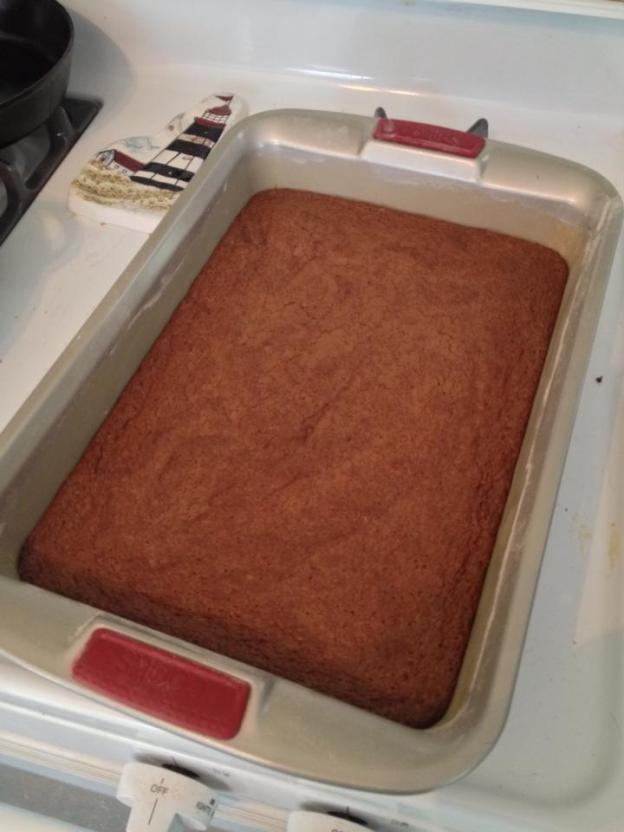
Photo used with permission from April Fool Virtual Bakery. Thanks, Mark!

Last weekend, as members of our church council gathered together, Jane S. gave a great devotional message about the importance of our various gifts. God has given each of us a particular set of talents and abilities, and God wants us to use these gifts well as we grow in our faith. But, as I was thinking about today’s scripture, it occurred to me that the same example Jane used to teach us about our gifts could also apply to the thing Jesus tells us today (Matthew 5:48). As Jesus was teaching his followers about the way God works, he kept telling them, “I expect more out of you than just following the rules. I want you to be changed into something new. I want you to be perfect, completely like God, so you can show the rest of the world how much God loves every single person on earth.”  That sounds impossible, doesn’t it? But we don’t change into something new by ourselves: God does it. And it doesn’t happen in the blink of an eye – it takes a while.

So here’s the deal: I have some ingredients here, and I need you to help me change them into something new. (Distribute ingredients for Brownies, each in its own resealable bag) Do all these ingredients look like something you would want to eat? If we mixed them up together, what do you think we would get? (Cream together butter and sugar, add egg, then flour, baking powder, cocoa, salt) Now what do we have? It has changed, but can we eat it yet? Can you tell what it’s going to be? (Spread batter into pan) They aren’t brownies until we bake them, so let’s get some help with that. (Give an adult the brownies for baking in the church kitchen during the rest of worship) Just like the brownies, we aren’t done yet. God is still working inside each of us to change us into people who make the world a better place. He’s making each of us more and more like him every day, just like those brownies, baking in the oven, will become more and more like something you could eat after church. Let’s pray.

God, keep working on us to make us more like you. Change us into people who care more, who help more, who love more, so we can be more like Jesus. Amen.

“But I say to you…” – Sermon on Matthew 5:21-37

Last week, we heard Jesus preaching about being Salt and Light, and you may remember that I gave you a homework assignment. How did you do? Have you noticed God at work in your life this week? How has God been changing you? What have you caught yourself doing that can only be explained by God’s hand directing you? Think back through your week … ask God to bring to your mind the ways He was working in you and through you to shine his light into the world. Now turn to your neighbors and tell them one thing. Go ahead, I’ll wait.

Anyone want to share with the whole congregation, just a sentence or two? … Thank you! Okay, we’re going to keep this exercise going another couple of weeks. I encourage you to ask God each day to make you aware of his work in you and through you. That’s what Jesus was trying to do for his disciples, as he preached to them on the side of that mountain. He was reminding them that God is at work, and we already are salt and light to the world, seasoning it with God’s love and shining God’s light into every dark corner. So keep it up!

While we are being salty and shiny, Jesus is asking more of us. Last week, we heard him insist that he did not come to abolish the Law, but to fulfill it. This week, as Jesus digs deeper into what it means to live into the spirit of the Law, he makes it clear that being his follower requires more from us than obeying a few rules. Following Jesus means holding ourselves to a higher standard of right living.

Hear the Word of the Lord, as given to us in the Gospel according to Matthew, chapter five, verses 21-37.

         “You have heard that it was said to those of ancient times, ‘You shall not murder’; and ‘whoever murders shall be liable to judgment.’ But I say to you that if you are angry with a brother or sister,you will be liable to judgment; and if you insulta brother or sister,you will be liable to the council; and if you say, ‘You fool,’ you will be liable to the hellof fire. So when you are offering your gift at the altar, if you remember that your brother or sisterhas something against you,leave your gift there before the altar and go; first be reconciled to your brother or sister, and then come and offer your gift.Come to terms quickly with your accuser while you are on the way to court with him, or your accuser may hand you over to the judge, and the judge to the guard, and you will be thrown into prison.Truly I tell you, you will never get out until you have paid the last penny.
“You have heard that it was said, ‘You shall not commit adultery.’ But I say to you that everyone who looks at a woman with lust has already committed adultery with her in his heart.If your right eye causes you to sin, tear it out and throw it away; it is better for you to lose one of your members than for your whole body to be thrown into hell. And if your right hand causes you to sin, cut it off and throw it away; it is better for you to lose one of your members than for your whole body to go into hell.

It was also said, ‘Whoever divorces his wife, let him give her a certificate of divorce.But I say to you that anyone who divorces his wife, except on the ground of unchastity, causes her to commit adultery; and whoever marries a divorced woman commits adultery.
“Again, you have heard that it was said to those of ancient times, ‘You shall not swear falsely, but carry out the vows you have made to the Lord.’But I say to you, Do not swear at all, either by heaven, for it is the throne of God,or by the earth, for it is his footstool, or by Jerusalem, for it is the city of the great King. And do not swear by your head, for you cannot make one hair white or black. Let your word be ‘Yes, Yes’ or ‘No, No’; anything more than this comes from the evil one.

We’ve come a long way from the Beatitudes that opened this Sermon on the Mount, haven’t we! If those were radical words when Jesus first spoke them, imagine how much more radical these words must have sounded to the people gathered on that hillside. Jesus was still trying to reframe the way his followers saw the world. He was urging his disciples to see the world through God’s eyes, to recognize that God’s Kingdom was at hand. Jesus borrowed from the tradition of rabbis who had taught before him, by exaggerating the points he was trying to make, but he also did something that no rabbi had ever done before. He spoke with authority. And the standard he was setting for true Kingdom behavior was higher than anyone thought possible.

If part of your body causes you to sin, cut it off! It’s better to go through life as a cripple than to risk the fires of hell. Moses told you that you shouldn’t commit adultery, but I tell you that looking at someone with lust in your heart is just as bad. Moses told you not to kill each other. But I tell you that it’s just as evil as murder to hold a grudge against someone. One by one, Jesus holds up the Commandments and forces us to look deeper into God’s intention behind the command, to discover the spirit of the Law. We could spend a whole sermon on each one of these commands, exploring how Jesus offers a new Law that transcends the one handed down from Moses.

But Jesus isn’t interested in giving us a new checklist of things we aren’t supposed to do. As we take stock of our lives at bedtime, Jesus isn’t impressed if we can say, “Well, I didn’t murder anyone today, and I didn’t commit adultery – I must be okay!” Jesus says, “I expect more from my followers than just ‘okay’.”

Jesus tells us we need to dig deeper into ourselves, to get at the root of our sinfulness and purge it out before a grudge turns into hatred and murder, before lust turns into a pornography addiction, or leads to adultery and divorce, before an idle word becomes a lie, before a little envy blossoms into full-blown jealousy, before our apathy turns us away from God’s grace and love. Jesus asks us to open our lives to him, to allow the Holy Spirit to search out our weaknesses before they become hardened habits of sin that separate us from God.

Rev. Dr. Delmer L. Chilton points out that, “Jesus is digging beneath the surface of outward observance to get at both the difficulty and the serious importance of being genuine and transparent in God’s new community of the church. For the writer of Matthew’s gospel, it is unimaginable that people who profess to be followers of Jesus should be Christians on the surface only.
“… All throughout this text, Jesus’ words are about dropping pretense and dealing with the real problems of being in relationship and community with others by being honest, straight-forward and humble with each other.” Dr. Chilton adds that the call of today’s text is an urgent one: “Do it now. Live by kingdom values now. Straighten out your life now. Make peace with others now. The kingdom of God is here, now. The spirit of God is giving you strength for whatever changes you need to make, now. The love of Christ is forgiving you and inviting you to forgive others, now.“[1]

Yesterday, fourteen of us gathered in an Upper Room at Martin Luther College to begin the process of discovering what God is calling our church to be and do here on the corner of Center and Broadway in New Ulm. We asked a lot of questions, and probably didn’t come up with very many answers, but the desire to be faithful to God’s call is evident among us. One thing we discovered is that it’s a lot easier to come up with a list of things to do than it is to say why we do them. It’s a lot easier to remember stories of vital ministry in days gone by, than it is to imagine how our ministry can be more effective in the here and now. But we aren’t throwing in the towel just because the task isn’t easy. We know the call on our lives, and on our church, is an urgent one. God has a plan for us, and work for us to do. Our job is to make our hearts and lives ready to be and do what God calls us toward.

So, if Jesus were here today, preaching his Sermon on the Mount directly to us in this sanctuary, what would it sound like? What higher standard of behavior would he be expecting from us, the people who claim to be his followers? Would he pat us on the back and tell us what a good job we are doing of bringing his kingdom to reality? Or would he say something more like:

“You have heard it said that reading a paragraph or two from a devotional book will make you a better person, but I say to you that Christ longs for you to cultivate a deep hunger for God’s Word, and a personal relationship that keeps you connected to him through prayer as an ongoing conversation, not a recitation of memorized phrases.

“You have heard it said that pastors and paid staff members are the ones who are trained to do the work of the church, but I say to you that everyone who claims to follow me has been given gifts and talents for the purpose of ministry, and wasting those gifts is a sin.

“You have heard it said that going to church is a good thing. But I say to you that you ARE the church, and everything you do or say or think makes the church what it is. Again, you have heard it said that volunteering in the community once a month helps others. But I say to you that the word “Volunteer” needs to be struck from your vocabulary. Volunteers give away their discretionary time as an optional activity. There’s nothing optional about following Jesus. Being a disciple is a 24/7 commitment.”

Christ calls us to a higher standard of living into the Kingdom of God. To answer that call, we need to reorient our thinking, just as those disciples on the hillside had to do. We can choose to stick with the familiar “way we’ve always done things” as the scribes and Pharisees of Jesus’ day tried to do, or we can choose to follow Jesus, to stay close to him, to serve him, to be the people of his kingdom. Because that’s what he’s calling us to be.