Category Archives: Faith

Without a Doubt – Sermon on John 20:19-31

It had been a crazy day. It started early in the morning, with all that confusion at the tomb, all that running back and forth. Now it was evening, and the disciples were huddled together again, just as they had been over the Sabbath. Only now, the room was filled with fear and confusion, instead of sadness and despair. Instead of asking “What shall we do now?” the disciples were asking, “Can it be true?” Somewhere in all the chaos, Hope tried to work its way into their minds, but most of the disciples were giving in to Fear. That’s why they had locked the door. They were afraid.

Some might have been afraid of Jesus himself. After all, if he was alive, as those undependable, weepy women kept insisting, he probably would have a thing or two to say about the way they had all abandoned him. Guilt and shame at their failure might have given some of the disciples a reason to fear rebuke from the teacher they had promised to follow, no matter what.

Some were afraid of the religious leaders, certainly. If Jesus’ body was gone, the high priest’s henchmen would be scrambling to find it. The first place they’d look would be here, among the Lord’s closest friends and followers. A few remembered Jesus telling them that he would be killed, but that he would rise on the third day. Didn’t it make sense that the religious leaders would figure one of them had taken the body, to make it look like Jesus had arisen? But, if that were true, who would have done such a thing? Probably someone who was not in the room when they’d locked the doors. A quick glance around the room found the disciples in their usual little groups … but … where was Thomas? Hmm…

Suddenly, all the whispers and the talking stopped. Someone gasped. A familiar voice was coming from the center of the room. Hear the Word of the Lord, from the 20th chapter of John’s gospel, beginning in verse 19, right where we left off last week…

When it was evening on that day, the first day of the week, and the doors of the house where the disciples had met were locked for fear of the Jews, Jesus came and stood among them and said, “Peace be with you.” After he said this, he showed them his hands and his side. Then the disciples rejoiced when they saw the Lord. Jesus said to them again, “Peace be with you. As the Father has sent me, so I send you.” When he had said this, he breathed on them and said to them, “Receive the Holy Spirit. If you forgive the sins of any, they are forgiven them; if you retain the sins of any, they are retained.” But Thomas (who was called the Twin), one of the twelve, was not with them when Jesus came. So the other disciples told him, “We have seen the Lord.” But he said to them, “Unless I see the mark of the nails in his hands, and put my finger in the mark of the nails and my hand in his side, I will not believe.”

A week later his disciples were again in the house, and Thomas was with them. Although the doors were shut, Jesus came and stood among them and said, “Peace be with you.” Then he said to Thomas, “Put your finger here and see my hands. Reach out your hand and put it in my side. Do not doubt but believe.” Thomas answered him, “My Lord and my God!” Jesus said to him, “Have you believed because you have seen me? Blessed are those who have not seen and yet have come to believe.” Now Jesus did many other signs in the presence of his disciples, which are not written in this book. But these are written so that you may come to believe that Jesus is the Messiah, the Son of God, and that through believing you may have life in his name.

I think Thomas gets a bum rap. He’s been nicknamed “Doubting Thomas” because he demanded to see the evidence with his own eyes, before he would believe that Jesus was really alive. We could joke about Thomas being from Missouri, the Show Me State, where seeing is believing and the proof is in the pudding. But in reality, Thomas is no more skeptical than the other disciples, whose hopes had been dashed by the crucifixion. He just happened to be late for dinner on that first night.

Earlier that morning, Mary Magdalene had repeatedly complained, “They’ve taken him away, and I don’t know where they’ve laid him.” She thought that Jesus was still dead, right up to the moment he said her name in the garden. And when Peter and the other disciple ran to the tomb, to see for themselves, they walked away scratching their heads. None of the eleven really believed that Jesus was alive, as far as scripture tells us. All of them were filled with doubt, even after Mary had come back to say, “I have seen the Lord.” So Jesus has to put in a personal appearance, to convince them all that he really is alive.

If you compare the two appearances in today’s passage, they are nearly the same. The door is locked. Jesus suddenly stands in the middle of the room and says, “Peace be with you.” Then he shows his hands and side to prove he is the same Jesus they saw die on the cross, but who now is very much alive. After the disciples respond to this good news, Jesus says a few more words. The stories are almost identical.

But not quite.

For one thing, at the first appearance, Jesus commissions his disciples to go out and share the good news, and he breathes on them as he says, “receive the Holy Spirit.” In Matthew’s gospel, the Great Commission happens moments before Jesus ascends into heaven, and in Luke’s version of the story, the disciples don’t receive the Holy Spirit until Pentecost, but John never was much for chronology. His story is less concerned with making the dates match up, and more concerned with getting the word out: Christ has died, Christ has risen, Christ will come again. Believe the Good News! And keep in mind that for John, believing is always a verb, never the noun “belief.” Believing is what John is very eager for us to do. And once we believe, it is a short leap to receive the Holy Spirit and be sent out to help others see, so they, too, may believe.

Jesus tells his disciples, “If you forgive the sins of any, they are forgiven them; if you retain the sins of any, they are retained” (20:23). John isn’t talking about sin as moral failure so much as refusing to believe in Jesus.

Theologian Elisabeth Johnson writes, “Jesus is not giving his disciples some special power to decide whose sins will be forgiven and whose will not. Rather, he is further specifying what it means to be sent, to make known the love of God that Jesus himself has made known. As people come to know and abide in Jesus, they will be “released” (aphiemi) from their sins. If, however, those sent by Jesus fail to bear witness, people will remain stuck in their unbelief; their sins will be “retained” or “held onto” (kratéo). The stakes of this mission are very high indeed.”

And because the stakes are high, Jesus has to make sure each disciple is convinced of the truth. All the disciples must see for themselves that Jesus has been raised from death to new life.

Seeing is believing throughout John’s gospel. “Come and see” weaves its way throughout the story John presents. We find it in the first chapter, when Jesus meets the first disciples who have been following John the Baptist, and they ask where he is staying. “Come and see,” he says (Jn 1:39). A few verses later, when Philip invites Nathaniel to meet Jesus, Nate asks, “Can any thing good come out of Nazareth?” and Philip says, “Come and see” (1:46). Then the Samaritan woman at the well runs to tell her neighbors, “Come and see a man who told me everything I ever did. Could this be the Messiah?” (4:29) and when Jesus arrives four days too late in Bethany, he asks Mary and Martha where they’ve buried Lazarus. “Come and see,” they tell him (11:34). In fact, we find some form of the word “see” more than twenty times throughout John’s gospel, and “seeing” means everything from physical sight to full understanding[1].

But Thomas wasn’t there when Jesus appeared to his friends. Thomas did not see Jesus. The disciples tell him later, just as Mary told them last week, “We have seen the Lord.” Thomas is skeptical, just as they had been, only moments before Jesus showed up.

So, a week later, Jesus goes through the whole appearing routine again, only this time, it’s for Thomas’ benefit. While the other disciples simply rejoiced when they recognized the risen Savior, Thomas offers a confession that is profound and personal: “MY Lord and MY God,” he cries out. Not just “the” Lord. Not just “Son of the Living God,” but MY Lord and MY God. In an instant, he moves from skepticism to trust. Thomas “sees.” All the disciples see.

Because Jesus keeps showing up. He repeatedly appears to those who need some visual proof he has risen. He doesn’t judge or criticize, he just keeps showing up until they get it. He offers shalom – not the familiar “fear not,” even though they are obviously afraid – but “peace be with you” three times, twice in the first visit and then again, just for Tom.

Remember last week’s question, “What keeps us from recognizing Jesus, when he’s standing right in front of us?” Is it fear? What are we afraid of? Are we afraid of Jesus himself, convinced that he would judge us for our unbelief if he stood in our midst? Are we afraid of the people outside the door, the ones who threaten our sense of safety whenever we try to talk about our faith? Those disciples who huddled in that locked room were afraid for their very lives. Unlocking the door and going out into the world to offer forgiveness of sins would have put them at great risk. Are we willing to take such a risk as that, to put our lives on the line for the sake of the Gospel?

On Thursday, Dr. Jerry Umanos was one of three people who were shot as they walked out of the CURE International Hospital in Kabul. Jerry was a pediatrician who worked six months of every year at the Lawndale Christian Health Center in Chicago’s inner city, so he could spend the other six months of each year treating children and training local doctors in Afghanistan.

In a televised statement, Dr. Umanos’ wife said, “Jerry always wanted to serve underserved populations. Afghanistan was just one of them. He always had a desire to be the hands and feet of Christ. He was always a light for Christ, and he had a love and commitment that he expressed for the Afghan people because of that love for Christ.” Jerry Umanos put his own life on the line for the sake of the gospel. You probably know stories of others who have done the same thing, risking everything in order to share the good news of Jesus Christ’s resurrection. These are people who dared to unlock the door and step out when they heard Jesus say to them, “Peace be with you. As the Father has sent me, so I send you.” We need to unlock the door and go out into the scary world with the peace of Christ, so that all may believe and have eternal life.

Not only do we need to see the resurrected Christ, we need to realize that the world is looking to us to see him. How are we showing resurrection to a desperate world? How are we offering shalom instead of fear? Jesus sends us out, just as surely as he sent those cowering disciples. And we don’t have to go to Afghanistan to find people who need to see Jesus. Some of them are right here in front of us, just as surely as Jesus stood right in front of Mary and Thomas, urging them to believe.

This week, a young man came here looking for help that I could not give him. He needed a place to live. The most I could offer him was a night in the New Ulm Motel, but he needed more than that. The best the county could offer him was a trip to the homeless shelter up in St. Cloud. And his situation is not unique. The school counselor at Jefferson Elementary School will tell you that there are currently about nine students who are officially classified as homeless. There are many more who do not meet the official criteria, but who are functionally without a permanent home.

How are we helping them to see the resurrected Christ? How are we helping them to know the love of Jesus, to believe in him, so that they might have eternal life?

Can we let go of our own fear long enough to unlock the doors that keep us from reaching out in Jesus’ name? Can we dispense with our own doubt long enough to see where Christ is sending us to share good news?

The final verses of today’s passage give the purpose statement for John’s entire Gospel:

Now Jesus did many other signs in the presence of his disciples, which are not written in this book. But these are written so that you may come to believe that Jesus is the Messiah, the Son of God, and that through believing you may have life in his name.”

The disciples who had lived and walked with Jesus, the ones who had watched him die and be buried, they all needed some visible sign that he was really alive again. Jesus gave it to them, as often as they needed to see it, so that they might believe. But we should not feel left out, just because we weren’t in that room on Easter night.

“Blessed are those who have not seen and yet have come to believe,” Jesus says to Thomas. That’s us. We are the ones for whom John wrote his book, so that we may come to believe that Jesus is the Messiah, the Son of God, and that through believing, we may have life in his name.

As we live that life in the name of Jesus, let us show others what we have come to see, that Jesus died for our sins, and he rose again to give us eternal life. Let us join Mary and the disciples in boldly saying, “We have seen the Lord,” as we proclaim “The Lord is risen, he is risen indeed!” Let us join with Thomas in naming Jesus as our Lord and our God, so that through our witness all may see him, all may know him, all may believe and have life in his name. Alleluia! Amen.

[1] Richard Dietrich, Feasting on the Word,Year A Vol. 2,  397.

A New Commandment

Meditation for Holy Thursday – John 13:1-17, 31-35

We gather soon, as they did in that upper room. Some will take off shoes and socks, and let the warm water bathe tired feet. Some will wash another’s hands instead. Some will receive bread and wine (or juice) and remember, as we were commanded to remember, that night when Jesus said, “this is my body, this is my blood.”

That same night, Jesus also said, “I have set you an example, that you also should do as I have done to you.” Washing feet, wearing a towel, kneeling in front of each disciple, serving. That’s the example Christ shows us.

And he gives a new commandment: “Love each other, just as I have loved you.”

It’s easier to remember bread and cup, Lord Jesus.

I’d rather wear a towel and serve, dear Lord.

But love? The way you love?

Lord help me.

Whatever you have to do…

Meditation for Holy Wednesday on John 13:21-32

Get on with it.

Get a move on.

Hurry up!

We’re burnin’ daylight, people!

What are you waiting for?

Hustle!

Jesus said, “Do quickly what you are going to do.”

Get on with it. If you’ve decided to betray the Savior of the World, there is no time to waste.

Get a move on. This betrayal sets everything in motion. There are lots of players involved. They are waiting for their cue from you.

Hurry up! The time has come. Get going. There is no reason to wait any longer.

What are you waiting for? It’s too late to change your mind. What’s done is done.

We’re burnin’ daylight, people! Did you hear “Walk while you have the light” only yesterday?

Hustle! Time is of the essence. Go. Now.

Do quickly what you are going to do. Get it over with, for your own sake. Don’t draw out the agony of knowing you have caused an irreversible sequence of events to unfold, events that will lead to the death of the One you call Lord, Master, Teacher.

Oh, I’m sorry, Jesus. Were you talking to Judas?

I thought you meant me.


We Would See Jesus

Meditation for Holy Tuesday – John 12:20-36

I’ve always wondered what happened to those Greeks who approached Philip. Did they stand aside, waiting for a private audience, while Philip found his brother to go with him to Jesus on their behalf? Did they tag along behind the brothers, hoping for a word with the Word made flesh? Or did they merge into the crowd as Jesus began to teach about his own death?

We never learn the answer. By the end of this passage, Jesus has slipped away to hide from the crowd. Interesting … Many times, Jesus has escaped the pressure of the crowd around him, leaving them to pray, to be alone with his inner circle of disciples, or to rest. But I don’t recall anywhere before this that Jesus has left the crowd specifically to hide.

It is doubly ironic that, just before Jesus hid from the crowd, he told them to “walk in the light.” Just before sneaking off into the shadows, Jesus says, “If you walk in the darkness, you do not know where you are going.” Yet Jesus knew exactly where he was going. The Light of the World was about to enter his darkest days on earth. 

Lord, help me to follow you through the shadows of my own fear, my own blindness, into the light of your glorious resurrection. Keep me focused on you, sweet Lord Jesus. Amen.

A Pound of Nard

Holy Week Meditation on John 12:1-11

This was NOT a funeral dinner. It was supposed to be a funeral dinner. Martha had been working on it for days  – but Jesus had changed all those plans when he’d shown up at Lazarus’ tomb. Now, instead of sharing fond memories of the deceased, the friends gathered around this table were talking and laughing with him. Lazarus had become an overnight celebrity: The One Who Was No Longer Dead. This was a celebration dinner.

But Death does not get to sit at this table. Lazarus offers visible proof that Death has no power over Jesus, and even if those enjoying Martha’s fine cooking don’t fully comprehend it yet, we know that Jesus will completely defeat death before John’s story is finished. For now, let’s take a closer look at this feast in Bethany, and especially at the gift Mary brings to the guest of honor.

The other gospels tell us that the nard was in an alabaster jar. The only way to open the sealed jar was to break it, so this was an all-or-nothing gift. It’s possible that the nard might have belonged to Mary’s dowry, so pouring out this perfume on Jesus’ feet could have signified a substantial sacrifice on Mary’s part. If she had been saving the nard for her own bride price, this gift has suddenly reduced her marriage chances to practically zero.

But Mary gave it all. She poured the entire contents of that jar onto Jesus’ feet, and rubbed it in with her hair.

What an intimate, scandalous thing to do! For an unmarried woman to touch a man was shocking. For a woman to let down her hair in public was also considered completely inappropriate behavior. Yet, here she was, abandoning all decorum as she wiped the perfume on Jesus’ feet with her hair. In a few days, Jesus would kneel at the feet of his disciples and wipe them with a towel in exactly the same way. But Mary was not using perfume like soap and water. Jesus said that Mary was anointing him for burial. Mary could not know the details of what was to happen in just a few short days, but she could worship her Lord now, in the present moment, with all she had to offer.

These last days of Lent are always the hardest for me. I get weary of lamenting my sins. I want to say, “Enough already! I’ve repented! I’ve confessed! I’ve submitted myself to discipline! I’m tired of all this introspection and self-examination! I’m ready for Easter! Let me get on with my life!” But do you hear those words? “I,” “Myself,” “Me,” “My?” It’s easy to fall into that trap of self-absorption, to become self-centered, instead of Christ-centered. These forty days of Lent, like the forty days Jesus spent in the wilderness, are just enough time to weaken us so Satan can tempt us to lose our focus on Christ. Mary comes to remind us to choose the better part, to keep our eyes on Jesus, to serve him with all that we are and all that we have.

As we enter Holy Week, let us ponder what we can offer the Lord of All. What would cost us as much as Mary’s perfume cost her? What are we willing to sacrifice to bring honor and glory to the One who died so that we might live?


Unsubscribed

On the first Sunday of Lent, I sat down after lunch to tackle my daily e-mail chore.  Usually, this consists of reading a couple of messages from my family, then deleting a long string of unread messages. Every time I delete one without reading it, I feel a little twinge of guilt, but I delete it anyway. Some of these messages come from companies that have sold me items in the past.  The subject lines indicate that they have something new to offer me, at a price I can’t refuse. Some of the messages are from blogs to which I subscribed a long time ago. Let me be clear: none of these messages are really “spam.” I subscribed to them all at some point in time. I just don’t read them anymore.

On the first Sunday of Lent, I discovered a new Lenten discipline: I decided to repent of my e-mail sin. One by one, I opened each message, scrolled down to find the “Unsubscribe” button, and clicked it. One by one, my inbox filled up again with confirmation messages that I had successfully unsubscribed.  One even said, “We’re sorry to see you go, but it’s your e-mail. We respect that.”

On the first Monday of Lent, I checked my morning e-mail to find three messages from websites I had missed the day before. Three. Scroll, click, click, they were gone. Screenshot 2014-03-10 17.06.52

This isn’t exactly 40 bags in 40 days, but it has the same effect as de-cluttering a corner of my house: I am free from the nagging guilt I feel every time I delete a message I haven’t read.  I am free from using my time to scan messages I don’t want to read. I am free to focus on what really matters, as I try to be a little more like Jesus each day of this Lenten season.  I’m giving up junk e-mail for Lent, so I can take on the discipline of spending more time with God. I’ll let you know how it goes…

No One But Jesus – Sermon on Matthew 17:1-8 (Transfiguration A)

It was no big deal for the guys to go on a hike. Mountain climbing was something they did together quite often. Sometimes their Teacher would take the whole class, sometimes just a few would go. They wouldn’t be gone long – an afternoon, maybe they’d camp overnight and climb back down the next morning. So no one thought much of it when the Teacher asked his three best students if they’d like to take a hike. It had been a pretty intense week, and the physical challenge of climbing a taller mountain would do them good, give their minds a break, get them up into the cooler mountain air. So they didn’t think twice, they just followed.

And it wasn’t much of a climb, really. They didn’t need any special gear or equipment. There were places where they could even walk side by side, instead of following single file up the mountain. The view was amazing, looking out over the valley. They didn’t talk much. It was just good to be together with trusted friends, taking time for some much needed R&R. By the time they reached the top of the mountain, it was already late afternoon, and the shadows were getting long. They took a break before starting the long climb back down.

That’s when it happened.

Continue reading

Nobody’s Perfect? – Sermon on Matthew 5:38-48

Anybody here like kosher pickles? How about kosher beef franks? As Gentiles, my guess is that we don’t think much about what “kosher” means, beyond its application to certain foods. The reading we heard from Leviticus earlier today gives us the origins of the word “kosher.” It comes from the Hebrew word kedosh, and it means something that is holy, or set apart.

“Be holy (kedoshim) because I, your God, am holy,” God tells his people. (Leviticus 19:2). God’s holiness might never be a question for us, but how can we be holy? Jewish rabbis point us back to Genesis, reminding us that we are made in God’s image, and this image is not so much a physical picture as it is a reflection of God’s character.[1] Our passage from Leviticus introduces the how-to manual for living a kosher life. It teaches us how to be holy as God is holy, through godly behavior in our everyday living. Telling the truth, treating others fairly, taking care of our families and the poor, protecting the weak and forgiving those who have hurt us – all these choices contribute to the spiritual discipline of holiness outlined in Leviticus. So, where did it all go wrong? How did following the rules in the manual become more important than living a truly holy life?

As Jesus spoke to his followers in the Sermon on the Mount, he was trying to teach them what it means to be truly holy. Two weeks ago, we heard Jesus announce that he had not come to abolish the Law, but to fulfill it. Last week, we heard him describe how living into the spirit of the Law requires more of us than simply following the letter of the Law. Jesus talked of obeying the laws by practicing a more rigorous observance of God’s intent behind each of the rules. “Of course God doesn’t want you to kill each other,” Jesus is saying – “God doesn’t even want you to be angry with each other! Of course God doesn’t want you to commit adultery. He knows that such a betrayal of trust can lead to pain and divorce, and God’s deep desire is for marriage to reflect the loving relationship God has with his people. Of course God doesn’t want you to make idle promises and use his holy Name to give them greater importance than they deserve. Let your word stand on its own: say Yes, or No, and mean it.”

Today’s passage brings us to the heart of the Sermon on the Mount. As Jesus continues to teach us what it means to be truly holy, the focus is on reconciliation instead of retribution. Here the Word of the Lord, as given to us in Matthew 5:38-48.

“You have heard that it was said, ‘An eye for an eye and a tooth for a tooth.’ But I say to you, Do not resist an evildoer. But if anyone strikes you on the right cheek, turn the other also; and if anyone wants to sue you and take your coat, give your cloak as well; and if anyone forces you to go one mile, go also the second mile. Give to everyone who begs from you, and do not refuse anyone who wants to borrow from you.
“You have heard that it was said, ‘You shall love your neighbor and hate your enemy.’ But I say to you, Love your enemies and pray for those who persecute you,so that you may be children of your Father in heaven; for he makes his sun rise on the evil and on the good, and sends rain on the righteous and on the unrighteous.For if you love those who love you, what reward do you have? Do not even the tax collectors do the same? And if you greet only your brothers and sisters what more are you doing than others? Do not even the Gentiles do the same? Be perfect, therefore, as your heavenly Father is perfect.”

Jesus continues to teach from a three-part formula. First, he offers the common understanding of Levite law. Second, he gives the law a new twist, by outlining higher expectations for applying it to Kingdom living, and third, he explains God’s intent for the law in practical terms and examples. So far, so good. Jesus gets an “A” for three-point preaching outlines. But at the end of the lesson, Jesus is asking more of us than we think is possible. “Be perfect,” he says. We know Jesus likes to use hyperbole, exaggerating a point to make it stick, so we’re hoping this is another case of overstatement! But it isn’t. “Be perfect, therefore, as your heavenly Father is perfect.” How are we supposed to do that?

It starts with right relationship. The Law made allowance for justice that demanded an eye for an eye and a tooth for a tooth. Give as good as you get, in other words. But in that system, everyone goes around half blind. Rather than retribution, Jesus says, seek reconciliation. Rather than demanding fair treatment that hurts everyone, be willing to go the second mile. Literally.

By Roman law, a soldier could compel a civilian to carry his pack for one mile, or 1520 paces. But at the end of that mile, the soldier was required to take the pack back, unless he wanted to be punished for forcing a civilian to carry it further. Jesus was actually challenging Roman authority, by encouraging his followers to exceed the demands put on them by their oppressors.[2]

You may remember that, when we heard Luke’s version of the teaching about turning the other cheek, I explained that striking someone on the right cheek was a way of establishing superiority. It was a back-handed insult. A fight between equals would require hitting the left cheek with an open palm or fist. When Jesus tells us to turn our left cheek to someone who insults us by assuming superiority over us, he is telling us to affirm our own value as a beloved child of God. In essence, turning the other cheek is like saying, “I refuse to accept your arrogant insult. I dare you to consider me your equal.”

Instead of retribution, Jesus tells us to seek reconciliation. Instead of accepting oppression, Jesus encourages us to remember that we are God’s own beloved children. Since we have been so deeply loved, we are called to be agents of love in the world. But when Jesus quotes Leviticus this time, he doesn’t exactly quote Leviticus. Yes, the Law tells us to love our neighbor, but nowhere does it say to hate our enemies. Perhaps Jesus is quoting the way that particular law had been re-interpreted by the culture of the day. Or maybe Jesus was trying to emphasize what loving your neighbor really means. English author and mystery novelist G. K. Chesterton once quipped, “The Bible tells us to love our neighbors, and also to love our enemies; probably because they are generally the same people.”[3]

But in this case, Jesus is not talking about the person who lives next door to you, or even on your side of town. Jesus is not talking about the people who are most like you, the people with whom you most closely identify. Jesus is talking about the Other. With a capital O.

It’s easy to love the people you choose to love. It’s not so easy to love the people God puts in front of us every single day who are not like us at all, who don’t share our values or our tastes or our educational backgrounds, or our ideas about money and politics. Love your enemy, Jesus says. Love the Other.

Jesus is not talking about an emotion or a sentiment. He is talking about loving the way God loves. If you think back to the words we heard last week, the theme of reconciliation is running just under the surface of the whole passage. Back in verses 23-24, Jesus said, “So when you are offering your gift at the altar, if you remember that your brother or sister has something against you, leave your gift there before the altar and go; first be reconciled to your brother or sister, and then come and offer your gift.”

In his book, Exclusion and Embrace, theologian Miroslav Volf describes the process of reconciliation through something he calls “the drama of embrace.” There are four steps to this drama:

  • First, I open my arms to welcome the Other into my personal space, making myself vulnerable to the Other.
  • Second, I wait, allowing the Other to decide whether or not to accept my embrace.
  • Third, we step into each other’s open arms, and close our arms around one another. We are each distinct, with our own identities and personal boundaries intact, yet we have welcomed each other into our personal spaces, eliminating the distance between us. We remain in the embrace long enough to give it meaning – but not too long, or it becomes a stranglehold.
  • Fourth, in opening our arms, we release each other back into the world, giving freedom to one another.

But we have been changed by this embrace. Neither of us can ever be the same again, having welcomed the other into ourselves.

This transformation, this change of self, is exactly what Jesus did on the cross for us. He opened his arms, welcoming our sinfulness into his own perfection. As we accept that welcome, and step into Christ’s embrace, we are changed. But Jesus does not hold us against our will. Instead, he releases us back into the world, to be salt and light to others, welcoming them into the embrace of faith.

How has God been working in you and through you this week, to be salt and light? (I’ll bet you thought I had forgotten your homework assignment – I didn’t!) Turn to a neighbor, and keep in mind that your neighbor might be someone across the room from you, and share with one another one way you’ve seen God changing you, or changing the world through you. Go ahead, I’ll wait…

You see, God is working among us. Last weekend, I showed the Church Council a TED Talk by Simon Sinek that explained “It doesn’t matter what you do, it matters why you do it.”  Back in Leviticus, God states the reason behind the rules for godly behavior at least five times: you do these things “because I AM THE LORD,” God says. But what is our reason for being here, as this congregation? When I asked the council, “What are we leading people toward? Why are we here?” the first answer on the board was, “to know Christ.” Other good answers followed: to develop a close relationship with God, to live lives of integrity, caring for others, and many other good ideas. But if the only thing we ever did at First United Methodist Church was to help people to know Christ, wouldn’t that include developing a close relationship with God and living a life of integrity and caring for others? Because, to know Christ is to be changed. To know Christ is to be transformed into a new creation. To know Christ is to be … perfect.

“Be perfect, therefore, as your heavenly Father is perfect,” Jesus says. This is one of those statements we hope Jesus doesn’t mean literally, and the good news is that the word translated as “perfect” really means something more than our English language can convey in one word. Telos is the Greek word for “goal,” “end,” or “purpose.” It’s more about becoming what was intended, accomplishing one’s God-given purpose, becoming complete. Eugene Peterson’s The Message translates it, “You’re kingdom subjects. Now live like it. Live out your God-created identity.” Moral perfection may be beyond our human reach, but our telos is our goal, our desired outcome, what happens when we are completely mature and have found our identity in Christ alone.

Being perfect isn’t impossible; it’s what we’re made for. Being perfect isn’t even something we can do on our own – it’s something God does in and through us, as we allow him to transform us. Jesus came, not to abolish the Law, but to fulfill it. Just as he transformed the way people heard God’s Law, he wants to transform us into the perfect children of God we were created to be. Reconciliation more than retribution, loving our enemies as well as our neighbors – these are how God’s transformation is shown to be completed in us. That’s our telos.

We are people who have experienced grace. We know what it is to receive God’s unmerited favor, love we couldn’t possibly earn. God offered his grace to us before we knew we needed it. When we accept that justifying grace, made real in the person of Jesus Christ, we begin the transforming journey toward perfection that marks us as holy, set apart, completed in God’s eyes, and welcomed into his family. This is the essence of Wesleyan theology. It’s why we are here.

But we aren’t there yet. Perfection seems a long way down the road sometimes, doesn’t it? What is preventing us from being perfect, from becoming complete? Right now, I invite you to write down just one thing you believe is holding you back from living into your God-given identity. There’s blank space on the back of your Grapevine, so use that. Write down just one thing — one fear, one memory, one hurt, one resentment — that keeps you from embracing and becoming the person God wants you to be. This week, as you check the Grapevine for events on the calendar, pray over that one thing. Ask God to help you turn it over to him, so you can be transformed, changed, made perfect.

God only wants one thing for each of us, and that is to be transformed into his likeness, to become perfect and complete, as God is perfect and complete. I invite you to share your life in this community of faith with people who are not in this community of faith, not so we can fill the pews – because those numbers really don’t mean anything – but so that you can experience what happens in you when you do that. Just as it is true that teaching someone else how to do something we’ve just learned will solidify that learning for us, and help us internalize it, sharing your faith with others will deepen that faith within you. And that’s what I’m eager to see. Not numbers, but change. Not more bodies, but deeper, richer, more complete faith. Then together, as we let God work on us, we can join the United Methodist Church in its mission to “Make disciples of Jesus Christ for the transformation of the world.” Amen.

A Word for Children – Brownies Aren’t Done Until…

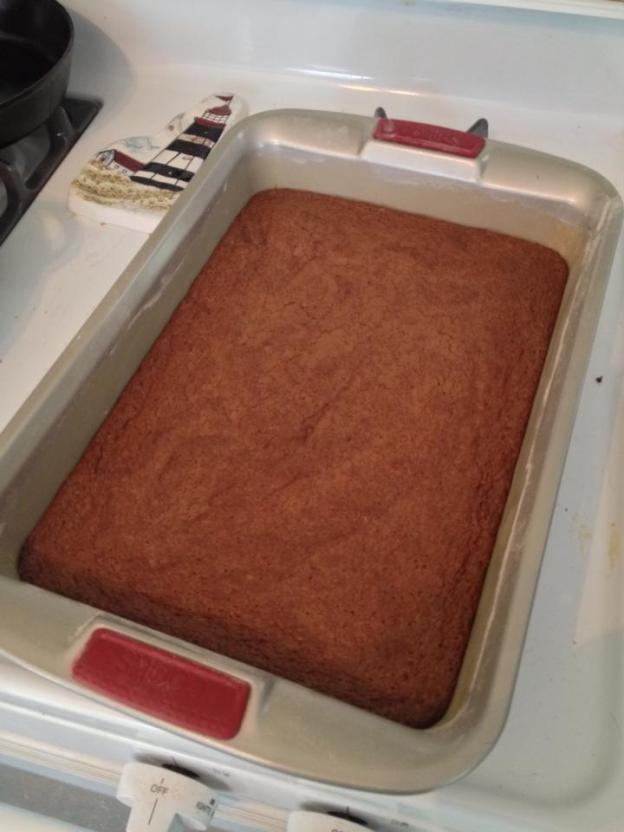
Photo used with permission from April Fool Virtual Bakery. Thanks, Mark!

Last weekend, as members of our church council gathered together, Jane S. gave a great devotional message about the importance of our various gifts. God has given each of us a particular set of talents and abilities, and God wants us to use these gifts well as we grow in our faith. But, as I was thinking about today’s scripture, it occurred to me that the same example Jane used to teach us about our gifts could also apply to the thing Jesus tells us today (Matthew 5:48). As Jesus was teaching his followers about the way God works, he kept telling them, “I expect more out of you than just following the rules. I want you to be changed into something new. I want you to be perfect, completely like God, so you can show the rest of the world how much God loves every single person on earth.”  That sounds impossible, doesn’t it? But we don’t change into something new by ourselves: God does it. And it doesn’t happen in the blink of an eye – it takes a while.

So here’s the deal: I have some ingredients here, and I need you to help me change them into something new. (Distribute ingredients for Brownies, each in its own resealable bag) Do all these ingredients look like something you would want to eat? If we mixed them up together, what do you think we would get? (Cream together butter and sugar, add egg, then flour, baking powder, cocoa, salt) Now what do we have? It has changed, but can we eat it yet? Can you tell what it’s going to be? (Spread batter into pan) They aren’t brownies until we bake them, so let’s get some help with that. (Give an adult the brownies for baking in the church kitchen during the rest of worship) Just like the brownies, we aren’t done yet. God is still working inside each of us to change us into people who make the world a better place. He’s making each of us more and more like him every day, just like those brownies, baking in the oven, will become more and more like something you could eat after church. Let’s pray.

God, keep working on us to make us more like you. Change us into people who care more, who help more, who love more, so we can be more like Jesus. Amen.

Quiet Time

Never underestimate the value of silence. As a music teacher, I rarely listened to the radio on my way home from school. I had been singing. listening, and playing music all day. What I needed more than anything was simple silence. As a pastor, I am finding that the time I spend in silence is what grounds me and makes it possible for me to listen fully to others. “Be still, and know that I am God,” we read in Psalm 46:10, but do we really know how to do that?

Of course, the moment I sit down to “be still” with God is the moment I am bombarded with thoughts that drown out God’s voice. It takes a conscious effort to stop the constant chatter of my brain, and be present and still before my Maker, Redeemer, and Sustainer. Yet, I am learning that this stillness before the Lord is more than an opportunity to “fill my spiritual fuel tank” or reorganize my thoughts. It is the very essence of following Jesus to draw near to him and listen. As I do this, I am transformed more and more into the grace-filled creature I was always meant to be.

It would be so sweet to stay in that silent space, to remain apart and “just be” with Jesus. But I can’t do that. While Jesus often sought solitude, he never stayed alone for long. There is a tender balance between quiet solitude and the noisy, messy business of doing ministry. Following Jesus means embracing both worlds with passion and joy. Let it be so.