Category Archives: Sermons

Preaching in Eastertide – Year B

I’m a lectionary preacher, but that doesn’t mean I preach the same text every three years. The sermon getting the most hits this week for the Second Sunday in Easter comes from a series I preached on 1 John back in 2015. You can find “Living in the Light” here.

If you are more interested in a sermon from the Gospel of John for this Sunday, here’s the link to “Without A Doubt” originally from 2014, but an updated (and better, in my humble opinion) version of that same message for 2017 is “So You Might Believe”.

This year, I will be preaching a series on the readings from Acts, which replace the Old Testament readings during Eastertide. I developed this series specifically for interim ministry, to help churches in transition “get their acts together” as they move forward into a new season. I will be updating each sermon in the week before I preach it, so the links below will get you to the most recent version of each message.

Whichever lectionary strand you choose, I hope God’s Word is illuminated by what you read here, and your own walk with Jesus is enriched. Blessings on your Eastertide!

Getting Our Acts Together: All Things In Common (Acts 4:32-35 for Easter 2B)

Getting Our Acts Together: Why Do You Wonder? (Acts 3:12-19 for Easter 3B)

Getting Our Acts Together: Cornerstone (Acts 4:5-12 for Easter 4B)

Getting Our Acts Together: Four Questions (Acts 8:26-40 for Easter 5B)

Getting Our Acts Together: Astounded by Grace (Acts 10:44-48 for Easter 6B)

Getting Our Acts Together: Right Here, Right Now (Acts 1:1-11 for Easter 7B/Ascension)

Measure for Measure – Sermon on Matthew 7:1-6

Preached at Hilltop UMC Mankato, June 25, 2023

Let’s start with a Pop Quiz! This one is called, “Who Said It?” These are all quotes by famous theologians, on the topic of judging others. Ready? Here we go!
Question number one:

Continue reading

Fourth Sunday after Pentecost, Year A

Dear Lectionary Preachers,

I’m sorry but I can’t help you with the Gospel this Sunday. There is nothing in my archives. In 2014 I preached the Epistle passage from Romans. In 2017, I was taking the vacation I would otherwise lose. In 2020, I was between appointments. So the files are empty for Matthew 10:24-39. And that’s a shame, because it’s a great text. Maybe someday I will get to preach it.

In the meantime, I will be posting a sermon later this week on Matthew 7:1-6, where Jesus says “Don’t be so judgy!” And the Saturday Prayer will be up as usual. God be with you as you prepare to share the Good News!

In Christ’s Peace,

Jo Anne

Trouble Enough – Sermon on Matthew 6:24-34

When you lie awake at night, what is it you worry about?
Your children?
Your parents?
Your ever-growing “To Do” list?
The bills you need to pay?
Whether you have enough to feed and clothe your family, buy gas, pay your taxes, make your car payment, pay the rent or the mortgage? Save for retirement?

We are often preoccupied with the basic question: Do I have enough? And if not, how can I get more, so I will have enough? A recent study shows that most of us worry about money. A lot.

Continue reading

Growing Pains: A Sermon from the Book of Acts

This sermon was preached for Winthrop Evangelical Covenant Church on October 23, 2022, as part of a series on Understanding the New Testament. A video of this message is available here.

Grace to you and peace from God our Father, and from our Lord Jesus Christ. It’s an honor to be with you today, as you continue your journey through scripture to discover God’s great plan of redemption. God is on a mission to redeem the world, and God is fulfilling that mission through the church, in the power of the Holy Spirit.

So, to recap the last few weeks, or bring you up to date if you are joining us now for the first time, we know that:

Continue reading

Rocky Road – Wednesday of Holy Week

Read Psalm 70 and John 13:21-32

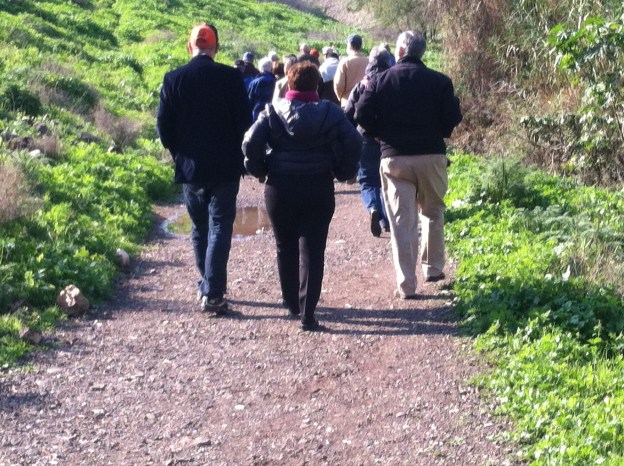
The farmer from North Dakota shook his head as he looked out the bus window. “I don’t think I’ve ever seen so many rocks,” he said. We were in the middle of day three of our pilgrimage to the Holy Land, and I realized a farmer from North Dakota probably had a unique view of the landscape of Israel.

Rocks mean work. Rocks must be cleared before plowing and planting can happen. And the farmer was right: rocks were everywhere we looked. In the Parable of the Sower, Jesus talked about seed landing on rocky soil. Here was clear evidence that Jesus used common experience to get through to his listeners. They would have known exactly what he meant by “rocky soil.” Rocks dotted every green hillside, every lush valley. I don’t think I’ve ever seen so many rocks.

The season of Lent is nearing its end. We often describe the season of Lent as a journey toward the Cross, a path we follow to become more faithful disciples of Jesus Christ.

But that path can be a rocky one. Judas had a hard time keeping up, because Jesus wasn’t going the direction Judas thought he should. Judas stumbled over his own ideas about what Messiah should be. In the end, it cost him everything.

The roads Jesus walked were not always smoothly paved. When we choose to follow Jesus, we accept the challenge of walking where we might not otherwise want to go. The season of Lent gives us an opportunity to examine our hearts, and to recommit ourselves to the Way of the Cross. This Way is often steep and difficult to follow. It may be littered with rocks that can trip us up if we aren’t careful. But Jesus leads us on, giving us sure footing if we look to him.

Will you join the journey to the Cross, and learn what it means to be a disciple of Jesus Christ?

“Blessed is anyone who does not stumble on account of me.” – Matthew 11:6

Original artwork by Rev. Chris Suerdieck, used with permission.

Welcome to Holy Week 2022 – Palm Sunday


Read Luke 19:29-44.

Luke’s gospel doesn’t include waving palms or shouts of “Hosanna!” in the story of Christ’s entry into Jerusalem. I mentioned in the Palm Sunday sermon that the story we know can make it hard for us to accept the story we hear. But what about the other stories that are happening at the same time?

For example, it might be important for us to know there were two parades into Jerusalem that day. While Jesus entered Jerusalem from the east, approaching the Temple from the Mount of Olives, Herod entered the city from the west, demonstrating his military strength and allegiance to Rome.

Throughout this coming week, you will need to make some choices. Which parade will you join? Which leader will you follow? Each day this week, I will post a scripture passage to read, a short devotional, and original artwork generously shared by Methodist pastor Chris Suerdieck. May your Holy Week devotions bring you nearer to Christ.

Art by Rev. Chris Suerdieck, used with permission.

Unbinding Your Heart: A Converted Community – sermon on Acts 2:14, 32-39

March 13, 2022 – Lent 2C
Video

The story of Pentecost boggles our minds to this day. In Acts 2, we read about how the Holy Spirit comes and touches all of the disciples. They suddenly are able to speak in different languages. Many people, 3000 the text says, get baptized and start following Jesus that day.

The miraculous stuff of this story steals the show. It’s usually what we focus on when we think of Pentecost. But there’s something more ordinary going on that we need to see. In the midst of all the hubbub, in the middle of the bold signs of God’s presence, something is quietly happening that is essential to the story.

Continue reading

Remember you are baptized! Reflection on Luke 3:15-17, 21-22

January 9, 2022
Video

Look! The wise men have arrived at the manger. It just so happens that this service is being recorded on the Day of Epiphany! (practice saying it) An epiphany is a moment when something is revealed to you. It’s an “Aha!” moment when you recognize something that didn’t make sense before. We celebrate the day of Epiphany on January 6th, as an “Aha!” moment when people realized Jesus was God’s own Son. Specifically, Jesus was revealed to people who weren’t Jews – Gentiles like us. But today, we are celebrating TWO things – not only Jesus giving the wise men their “Aha!” moment, but also Jesus being baptized, and revealed as God’s Son by the Holy Spirit.

Do you know your purpose in life? Do you have a clear idea of why God made you, and what you are supposed to do with this one precious life you’ve been given?

Jesus did. He understood that his primary purpose was to bring us humans into right relationship with God. That was the whole reason he came into the world – God With Us, Emmanuel – not to condemn the world (John 3:17), but to save it. To accomplish that, he had to become one of us.

The people were waiting expectantly and were all wondering in their hearts if John might possibly be the Messiah. John answered them all,
“I baptize you with water. But one who is more powerful than I will come, the straps of whose sandals I am not worthy to untie. He will baptize you with the Holy Spirit and fire. His winnowing fork is in his hand to clear his threshing floor and to gather the wheat into his barn, but he will burn up the chaff with unquenchable fire.” And with many other words John exhorted the people and proclaimed the good news to them.

When all the people were being baptized, Jesus was baptized too. And as he was praying, heaven was opened and the Holy Spirit descended on him in bodily form like a dove. And a voice came from heaven: “You are my Son, whom I love; with you I am well pleased.”

Luke 3:15-17, 21-22

The first thing Luke wants us to know is that John the Baptist isn’t Jesus. That may seem like a no-brainer to us, but at the time these events take place, people weren’t so sure. People think maybe he IS Messiah. But John compares what he is doing to what Messiah will do in terms of the elements. “I can get you wet,” he says, “But Messiah will do much more than that.”

John’s emphasis is on action – what Messiah will do. John may bathe you with water to symbolize the washing away of your sins, but the One who is coming will breathe Holy Spirit into you and burn away all the chaff.

Jesus is not only immersed in water,  he is immersed in the light of God’s presence, and the breath of Holy Spirit. His baptism is not for the forgiveness of sins, like all those other people coming to be baptized. Jesus is baptized into his mission, the mission the Father has given him – to redeem the world, to save us from our sins.

And God is pleased with him. “This is my son, whom I love, and with whom I am well pleased.”

When we allow ourselves to become fully immersed in God’s mission to make right what is wrong, to heal what is hurt, to save what is headed for destruction, we can know God’s pleasure just as surely as Jesus did there on the banks of the Jordan river.

When we commit ourselves completely to following Jesus – not only in baptism, but in every aspect of living, we can experience the full depth of God’s love for us.

See what love the Father has lavished on us, that we should be called children of God – and that is what we are! (1 John 3:1)

Let’s pray.

Almighty and loving Father, we want to dive in, but we aren’t sure how deep the water is. We want to submerge ourselves in your life-giving floods, but we are afraid of drowning, Lord. Help us to know the peace that comes with trusting in you. Give us the courage to dive into your promises and help us submit our wills to your will. Make us your own. Fill us with the life-giving breath of your Holy Spirit. Let your fire burn in our hearts, we pray in the name of your Son, Jesus Christ our Lord, Amen.

I invite you, if you have some water at home with you – a bowl, a pitcher or a glass of water – to dip your fingers in it and remember your own baptism. And be thankful!

Now, on this Baptism of our Lord Sunday, I am going to try to get you wet… because I want everyone to feel the water, and to know that God loves us so much, he washes away our sins in the act of baptism, and makes us his very own. So, remember that you are baptized! And be thankful! (asperges).

God With Us: Repent and Rejoice! – sermon on Zephaniah 3:14-20

Advent 3C – December 12, 2021
VIdeo

This is Gaudete Sunday! It’s the Latin word for ‘rejoice’ taken from the first word in the New Testament reading for today. Rejoice in the Lord always we just heard Paul say to the Philippians – Again I say Rejoice! And why? Because the Lord is near.

Last week we heard John the Baptist calling us to a ‘baptism of repentance for the forgiveness of sins” as he cried out in the wilderness to prepare the way of the Lord. And why? Because the Lord is near!

You just heard the gospel reading for today, describing John’s ministry in greater detail. As he called people to repentance, they had some questions about how, exactly, to go about that. Yes, we know repenting means turning away from one thing so we can turn toward something else, but how do we do that?

So John gives some specific examples. He encourages his listeners to look for ways to make things right and fair, to be generous with what we have, so that others who don’t have anything can be clothed and fed and cared for. He starts out calling people a brood of vipers, but ends up proclaiming the good news that … the Lord is near!

We are three fourths of the way through the season of Advent. And while we might think of these four weeks of preparation as leading up to Christmas, our focus should probably be looking forward to Christ’s coming again in glory as much as remembering his first coming in human form.

In fact, during medieval times, the four Sundays of Advent had nothing to do with Hope, Peace, Joy, and Love – the themes of Advent in the middle ages were Death, Judgement, Heaven, and Hell. Put that in your Christmas stocking! The truth is that Advent simply means Arrival. We look for Jesus to come among us, to be God with us – Emmanuel. So today, we hear the Old Testament prophet Zephaniah describe what that will be like, how God with us changes everything, and why God wants to be with us in the first place.

Sing aloud, O daughter Zion; shout, O Israel! Rejoice and exult with all your heart, O daughter Jerusalem! The Lord has taken away the judgments against you, he has turned away your enemies. The king of Israel, the Lord, is in your midst; you shall fear disaster no more. On that day it shall be said to Jerusalem: Do not fear, O Zion; do not let your hands grow weak.
The Lord, your God, is in your midst, a warrior who gives victory; he will rejoice over you with gladness, he will renew you in his love; he will exult over you with loud singing as on a day of festival.
I will remove disaster from you so that you will not bear reproach for it. I will deal with all your oppressors at that time. And I will save the lame and gather the outcast, and I will change their shame into praise and renown in all the earth. At that time I will bring you home, at the time when I gather you; for I will make you renowned and praised among all the peoples of the earth, when I restore your fortunes before your eyes, says the Lord.
(Zephaniah 3:14-20)

Rejoice! Exult! I wonder if we even know what those words mean anymore. The short definition of “exult” is to ‘feel or show triumphant elation or jubilation.’ Try explaining that to a kindergartener.

Let me give you an example: It’s the sound you make and the way you act when a player from your favorite football team intercepts a pass and runs it in for a touchdown. Especially if that touchdown puts your team in the lead.

You exult when you watch your child ride a bike unassisted for the first time. I exult every time I get a sermon written in time to preach it. It’s that “Woohoo!” feeling of gratitude that things are good – really good! – and we are filled with joy and gladness we can’t contain. So why does the prophet Zephaniah, who has spent so much breath telling the nation of Israel how bad things are going to be for them because of their disobedience, suddenly do a 180 turn and start telling us to rejoice?

Because God has taken away the judgments against you. The first two chapters of Zephaniah are all about the punishment God intends for those who have rejected God. It’s pretty dire. A lot worse than being called a brood of vipers. Then, suddenly, here in chapter three, God does an about face – God repents. Now hear me out, I’m not spouting heresy here. There are several places in scripture where God repents:

  • God repented that he had made humans, because they would only do evil, and it ‘grieved him at his heart,’ so he told Noah to build an ark before God flooded the earth (Genesis 6:6)
  • God repented from destroying Jerusalem because of King David’s sin, and stopped the angel of death at the threshing floor which eventually would become the land where Solomon would build the first Temple (Chronicles 21:15)
  • When Nineveh repented of its sin in Jonah 3:10, God repented of destroying Nineveh.

Do you notice what all this repenting has in common? God gets disgusted with humans who have rejected God’s love, and decides to destroy them – then repents, or changes direction, and shows mercy instead. You could almost say that God is the model of repentance. God shows us how to repent of our sin, by repenting of punishment and turning toward mercy and life.

Here in Zephaniah, that’s exactly what God does. Zephaniah describes the Day of the Lord as a time of doom and destruction, but God says, “On that day, you won’t be ashamed … no longer will you be haughty on my holy mountain … no one will make you afraid,” (3:11-13) because God will shower God’s people with love and forgiveness. And like everything else God does, this new message of love and joy goes over the top.

“Rejoice,” Zephaniah says, “God is in your midst, so you do not need to be afraid anymore.” Your judgment, your punishment for all the ways you have abandoned God or ignored God or rebelled against God – all that is cleared away. You have no reason to be afraid, because God is in your midst. God is with us. And that brings us to my favorite verse in the whole Bible, and the central idea of this passage. It is a five-fold blessing:

  1. The Lord your God is in your midst,
  2. a warrior who gives victory;
  3. he will rejoice over you with gladness,
  4. he will renew (or quiet) you in his love,
  5. he will exult over you with loud singing …

All that rejoicing and exulting Zephaniah tells us to do back in verse 14 is merely a reflection of God’s rejoicing and exulting. All our loud singing is simply an answer to the singing God does over us. Have you ever considered that God sings? And when God sings, it’s because of you?

Ponder that for a moment. You are so precious to God, so deeply loved, that God rejoices over you and sings your name, even as God is in your midst, right beside you, God with you. I know the first time this verse hit me, it wasn’t with the realization that God cared so much for me, it was the fact that God sings! And if God sings, and we are made in God’s image, that’s why we sing. Not for our own pleasure, but for God’s.

It has only been with time and deeper understanding that I have come to realize it isn’t the singing that’s important here. It’s the love. Sometimes that love actually prohibits us from indulging in the pleasure of singing – as it has over these past months of pandemic restrictions. But if love is more important that anything else in this passage, surely we can express that love for God and for one another in other expressions of joy, at least for now.

And that brings us to the final part of this passage, this message of hope, peace, and joy for the third Sunday in Advent. Finally, we come to God’s promises, God’s pledge to do what God says he will do.

In the Day of the Lord, the day of rejoicing and exultation, God says “I will…”

I will remove disaster.
I will deal with your oppressors.
I will save the lame.
I will gather the outcast.
I will change your shame into your fame.

And best of all, because God is with us,
“I will bring you home.”

Isn’t that exactly where we want to be? At home with God, as God is at home with us? This is what matters. This is what Advent is preparing us for – the time when time is no more, when all the promises of the ages have been fulfilled, and God brings us home.