
Category Archives: Sermons

What’s it worth to you? – Sermon on Luke 14:25-33

September 8, 2013
Note: There’s a newer (and I think better) sermon on this text here. 

As we prepared to move to New Ulm, Bruce became an expert at selling things on EBay. Books and other items we had accumulated over the years went out the door each week, and Bruce’s PayPal account grew accordingly. The people who shop on eBay are constantly looking for deals, but they also search for one-of-a-kind items that are simply not available anywhere else. For example, Bruce once sold an out-of-print book to the author who had written it. On eBay, any item is worth exactly what the market for that item will bear. It’s worth what the buyer is willing to pay – no more, and no less. EBay shoppers know how to count the cost.

A high school economics teacher summarized her subject to a group of parents by telling them, “Everything has a cost. Everything has a benefit. In this class, students learn how to weigh the benefit against the cost, with the goal of gaining the greatest benefit at the lowest cost.” Even high school students know how to count the cost.

I am not a “shopper.” I don’t really enjoy strolling through store after store, admiring merchandise and looking for deals. But I have friends who like to shop, and when we get together, we inevitably end up at the mall or in a department store. Once, as we browsed through an exclusive furniture store, I did see a chair that I liked. I looked for a price tag, but couldn’t find one. My friend nudged me and whispered that familiar adage: “If you have to ask how much it costs, you can’t afford it.”

In today’s passage, Jesus explains the cost of true discipleship to his followers. Jesus is on the move again. He has left the hospitality of the Pharisee’s table, and is headed once again toward Jerusalem. The crowds are gathering. Can you imagine what it must have been like to work out in the field and see this cloud of dust rising from the road off in the distance, to see the swarm of people moving along that road, and to hear the distant buzz of their conversation? It wouldn’t take much to compel you to run in that direction, just to see what all the commotion was about, would it? The question is, once you got close enough to see and hear Jesus, to realize who this must be, and to listen to his teaching, would you mosey back to work, or leave it all behind to join the crowds that flocked after him? Hear the word of the Lord, from the Gospel of Luke, chapter 14, verses 25-33.

25 Now large crowds were traveling with him; and he turned and said to them, 26 Whoever comes to me and does not hate father and mother, wife and children, brothers and sisters, yes, and even life itself, cannot be my disciple. 27 Whoever does not carry the cross and follow me cannot be my disciple. 28 For which of you, intending to build a tower, does not first sit down and estimate the cost, to see whether he has enough to complete it?  29 Otherwise, when he has laid a foundation and is not able to finish, all who see it will begin to ridicule him, 30 saying, ‘This fellow began to build and was not able to finish.’ 31 Or what king, going out to wage war against another king, will not sit down first and consider whether he is able with ten thousand to oppose the one who comes against him with twenty thousand? 32 If he cannot, then, while the other is still far away, he sends a delegation and asks for the terms of peace. 33 So therefore, none of you can become my disciple if you do not give up all your possessions.

Wow. It almost sounds as if Jesus is trying to get people to stop following him, doesn’t it? Have we ever heard Jesus be so negative? Ten times in these few verses, he uses the word “not” – three of those are in the phrase “cannot be my disciple.” Jesus has seen the crowds growing behind him, and he knows that some of these followers are only tagging along to see another miracle, especially if that miracle includes getting a free lunch! Some of them are following only because they’ve been caught up in the mob mentality that has begun to develop around Jesus and his disciples. With the noise of this growing rabble rising, I’m sure it was difficult for Jesus to talk with his true disciples along the way. So he turns to the crowd and says, in essence, “Unless you’re serious about following me, go away!”

It reminds me of walking to school with my older sister when we were young. Though our mother had asked her to watch out for me on the way to and from school, she wanted no part of this assignment. As soon as we turned the corner, and were out of my mother’s sight, my sister would make me walk behind her – and the farther behind her I could get, the better! “You’re too close!” she would say. “Stop following me!” To her credit, she would always wait for me at the curb when it was time to cross the street. To her relief, I’m sure, we only lived four blocks from school.

But Jesus is not trying to get rid of followers. He just wants them – and us – to know what is involved in being a true disciple. The cost is high, and we need to know what we’re getting into when we say we want to follow Jesus.

This brings us to another problem with this passage: the word, “hate.” Specifically, Jesus says we must hate our families if we want to follow him. This was pretty strong stuff in a culture where family was everything, and loyalty to one’s family was the highest loyalty expected. So let’s take a look at that word, “hate,” to see what Jesus means.

To quote Inigo Montoya in The Princess Bride, “ You keep using that word. I do not think it means what you think it means.” First, we must realize that this kind of “hate” is not an emotion – it’s an attitude of perspective. Keep in mind that the Greek vocabulary Luke used had relatively few words in it. Fewer than 6,000 words or word stems can be found in the New Testament. By comparison,

“the Second Edition of the 20-volume  Oxford English Dictionary contains full entries for 171,476 words in current use, and 47,156 obsolete words. To this may be added around 9,500 derivative words included as subentries.”[1]

Rather than creating new words for every nuance as we do in English, first century Greek gave each word a broad range of meaning. So, the Greek word miséo can be translated as “hate” but it also means despise, disregard, be indifferent to, or love less. In this particular instance, Jesus is offering a comparison between the devotion one would normally hold sacred only for family members and the devotion required to become one of his disciples. Jesus is saying, “Love me more than you would even love your family, as important as that is to you.” To us, he says, “Love me more than whatever holds first place in your life, whatever matters most to you.”

Not only must we be willing to put Jesus ahead of all other priorities, he raises the price of discipleship even higher. “Whoever does not carry the cross and follow me cannot be my disciple,” he says. Keep in mind that, at this point in his ministry, his own cross wasn’t even on the horizon yet. His original listeners would not have been aware, as we are twenty-one centuries later, of the connection between this challenge and the suffering Jesus would soon experience at his own crucifixion. To them, taking up one’s cross was a general expression of accepting the burden of great suffering, suffering that would surely end in death. It was the same responsibility a soldier would accept, going into war. If following Jesus meant taking up a cross, it meant staying loyal to him through certain suffering, to the point of death.

Jesus must have seen the joyful faces around him become more somber as his words started to sink in. When Jesus found that his teaching was too hard for people to hear, he often turned to one of his favorite strategies – parables.

“If you were going to build a tower, wouldn’t you first figure out if you could afford it? You wouldn’t want to become a laughingstock because you failed to plan your project well! And if you were a king going into battle, wouldn’t you first figure out if your army had the strength to defeat the enemy?”

But here’s the thing we may miss if we gloss over these little parables too quickly. In both cases, the building and the battle, Jesus indicates that the cost is too high for the resources available. No matter what accounting system you use, no matter what assets you think you have, when it comes to following Jesus, you don’t have enough to pay the cost on your own. Your resources are not sufficient.

This is where God’s economy takes over, and our attempts to balance the books fall woefully short. If we are willing to commit everything we are and everything we hold dear to the purpose of following Jesus, God will be faithful to do what he has promised. God has already offered us his entire Kingdom. God gives us eternal life with him.

Jesus isn’t finished. “So therefore, none of you can become my disciple if you do not give up all your possessions,” he says. Remember the rich and foolish farmer from a month ago? The one who decided to tear down his barns in the middle of harvest, to build bigger ones? It seems we are back where we started, with Jesus preaching a stewardship sermon. But he isn’t talking about our tithes and offerings. Another way to translate “give up” might be “leave behind” or “bid farewell.” Bidding farewell to all we have, leaving it behind us, might be an appropriate image, given the setting of Jesus on the road to Jerusalem. But here’s another Greek lesson for you. Present tense in Greek doesn’t just mean “now.” It also means that the action has not yet been completed, that it is continuing, in progress. When Jesus says you have to leave behind everything that matters to you, whether it is family, or good standing in the community, or the things you own, he means you have to leave it behind now, and keep leaving it behind.

Our response must be all or nothing. All those lessons Jesus has been teaching us the past few weeks about hypocrisy, letting our fears get the best of us, placing a higher value on material wealth than spiritual wealth – it all boils down to this: go all in, or go home.

The cost is high, but the cost of not following Jesus is even higher. The theologian and martyr Dietrich Bonhoeffer wrote The Cost of Discipleshipand I recommend it to you if you have never read it. Bonhoeffer practiced what he preached as a member of the Confessing Church in Germany, a group of clergy who resisted Hitler’s regime. Bonhoeffer was executed near the end of World War II for his participation in a plot to assassinate Hitler. Bonhoeffer knew the cost of remaining loyal to Jesus, but theologian Dallas Willard takes it a step further. In his book, The Spirit of the Disciplines,  Willard considers that the cost of NON-discipleship is even higher than the cost of following Jesus. Yes, Jesus asks us to leave everything else behind, to make him our first priority, but what price do we pay if we decide to not follow Jesus? What is the cost of refusing to be a true disciple? Willard writes:

Non-discipleship costs abiding peace, a life penetrated throughout by love, faith that sees everything in the light of God’s overriding governance for good, hopefulness that stands firm in the most discouraging of circumstances, power to do what is right and withstand the forces of evil. In short, it costs exactly that abundance of life Jesus said he came to bring.

So what does it mean to be a true disciple? What does it look like? How do we do it? Following Jesus is an ongoing process that begins with doing the things Jesus did, and caring about the things Jesus cares about. Bishop Bruce R. Ough says in his September column on the Minnesota Conference website:

“The scriptural imperatives to cultivate spiritual vitality, reach new people, and heal a broken world are more than a vision for every United Methodist congregation in Minnesota; these imperatives are Jesus’ very methodology for fulfilling his mission.”

Friends, it’s hard to reach new people and heal a broken world if we haven’t already begun to cultivate spiritual vitality first. Let’s start there, and see what God might do among us as we become more and more like Jesus. Here are some possibilities:

Jesus prayed. A lot. To be a true disciple, we need to maintain an ongoing conversation with God through an active prayer life. 

You could join the prayer team. Every endeavor of this church must begin and end in prayer. Otherwise, we are not being faithful disciples who do the things Jesus did. Maybe you think you don’t have any special gift or talent to offer the ministry of this church, but every single person here can pray. For some of you, this is your spiritual gift. We need you to be on the prayer team. I urge you to prayerfully consider being part of an active and vital prayer ministry here at First United Methodist Church. Check the prayer insert in your bulletin, and contact the prayer team coordinators.

Jesus knew the Scriptures, and referred to them often. His true disciples need to be students of the Word.

New Bible Study small groups are forming for October and November. See Dennis J. for more information. Better yet, tell him you’d like to lead a group. During October and November, on the table in the narthex, you will find study questions for the day’s sermon text, and the text for the coming week, so you can go deeper into the Word with other disciples. Our hope is that there will be groups meeting throughout the week, so you can find a time that works for your schedule. If you’re already involved in a Bible Study group, be faithful in your attendance and participate actively in the discussion of Scripture. The Word of God is not just marks on a page – it is God’s living, breathing means of showing us how we can be transformed into the people God created us to be.

Jesus enjoyed fellowship – table fellowship whenever possible! – and true disciples also enjoy spending time with other believers.

You can participate in the Wednesday night Family time. There’s no better way to do that “fellowship” thing than over a meal! Come share food and life together as we grow more and more into the church God calls us to be.

If you are not already a member of First United Methodist Church, think about joining the church. Bruce and I would like to invite you to join us after worship on Sunday, September 22 – that’s two weeks from today – for brunch and an opportunity to learn what it means to belong to this congregation. We’ll talk a little about what it means to be a Methodist, but mostly what it means to follow Jesus in this place with these people. If you are curious and want to know more, just make a note of that on the friendship register – have you signed the friendship register in your pew today? Please do, whether you’re a member or not.

Which brings us to service.

Jesus served others through acts of compassion, mercy, and justice, and he calls us to find ways to serve others. Help cook a Wednesday night meal. Help with one of the many Wednesday night activities. Volunteer in the nursery. Mentor a confirmand. Serve on a committee. Join me next month at Ridgeway on 23rd for a hymn sing with the residents of the memory unit. Carry communion to someone who isn’t able to come to church. Be the hands and feet of Christ.

True disciples do what Jesus did, and care about the things Jesus cares about. Are you willing to commit to a life of following Jesus? Can you leave behind the things that matter most to you, and make the things that matter most to God your highest priority? The cost is great, but the cost of non-discipleship is even greater. The choice is yours. What’s it worth to you, to follow Jesus?
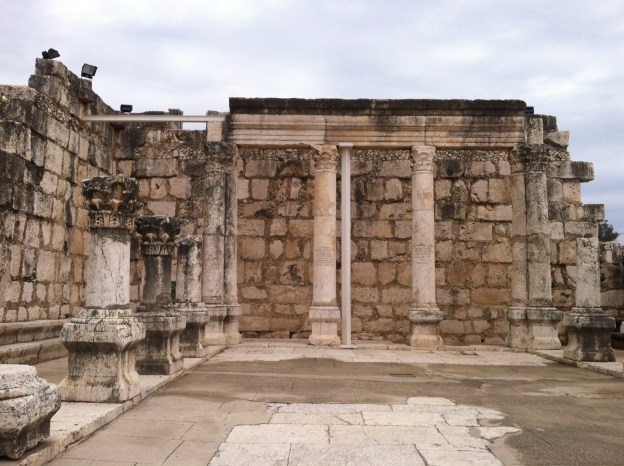
Where Will You Sit? – Sermon on Luke 14:1, 7-14

September 1, 2013
An updated sermon on this text can be found here. 

Several celebrations this week focused on civil rights and equality for all. On Wednesday, you may have heard excerpts from Martin Luther King’s famous “I have a dream” speech as the nation remembered the fiftieth anniversary of the March on Washington, a major event in the struggle for racial equality, a struggle that continues even today. On Monday, we also observed Women’s Equality Day, celebrating the 93rd anniversary of the certification of the 19th Amendment, which gave women the right to vote. Were you aware that Monday was Women’s Equality Day? Among the historic events noted in that celebration was the women’s equal pay act of 1963, the same year of the March on Washington.

This particular law had a great impact on my family. My mother had been working two jobs as a single parent of five children, and we were all happy for her when she landed a job at the local company that printed city directories, because this meant she could work one job. She ran one of two large Xerox machines, and often came home with black printing dust spattered on her clothes. But it was a good job, and the hours roughly coincided with our school day, so she didn’t have to feel guilty about leaving us at home alone. An added plus was that the print shop was only a couple of blocks from our house – within walking distance! – and even at 29 cents a gallon, gas for the car was a precious commodity. One day, her supervisor called her into his office to give her good news – she was getting a raise! She thanked him, then asked how much the guy was getting who ran the other Xerox machine, doing exactly the same work as my mom. The supervisor spluttered and stuttered. The other guy had a family to support, after all. “What on earth do you think I’m doing?” my mother asked him. Equality isn’t always something you can legislate.

In the passage we have before us today, Jesus is talking about Kingdom equality. Hear the word of the Lord, as given to us through the Gospel of Luke, chapter 14, verse 1, then skipping to verses 7 through 14. Luke writes:

Luke 14:1  On one occasion when Jesus was going to the house of a leader of the Pharisees to eat a meal on the sabbath, they were watching him closely.

7  When he noticed how the guests chose the places of honor, he told them a parable. 8 “When you are invited by someone to a wedding banquet, do not sit down at the place of honor, in case someone more distinguished than you has been invited by your host; 9 and the host who invited both of you may come and say to you, ‘Give this person your place,’ and then in disgrace you would start to take the lowest place. 10 But when you are invited, go and sit down at the lowest place, so that when your host comes, he may say to you, ‘Friend, move up higher’; then you will be honored in the presence of all who sit at the table with you. 11 For all who exalt themselves will be humbled, and those who humble themselves will be exalted.”12  He said also to the one who had invited him, “When you give a luncheon or a dinner, do not invite your friends or your brothers or your relatives or rich neighbors, in case they may invite you in return, and you would be repaid. 13 But when you give a banquet, invite the poor, the crippled, the lame, and the blind. 14 And you will be blessed, because they cannot repay you, for you will be repaid at the resurrection of the righteous.”

The Jesus of Luke’s gospel has a strong interest in eating. There are more references to eating, banquets, and being at table in Luke than in any other gospel. Maybe that’s one of the reasons I like reading Luke so much – I share his affinity for all things associated with food! So here we find Jesus at table with a large group of people, and –as is his habit – Jesus is teaching while everyone eats. Jesus isn’t particularly interested in the food being served. What he’s really interested in is the people at the table.

Jesus was not giving a Miss Manners lesson for table etiquette here. He was explaining, once again, how different the rules are in the Kingdom of God. To understand just how radical this teaching was for the people gathered at that Pharisee’s table, we need to remember the social system that was in place at the time.

Jewish Palestine, where Jesus lived, was a part of the Roman Empire and governed by the Roman class structure. Birth, wealth, position and citizenship determined the social classes. You were either a patrician eligible for the senate, an equestrian – one small step down from a patrician, or a plebian – of the lowest class, just above slaves. There was no middle class. Women were in the same class as their fathers or husbands.[1]

The foundation of Roman class structure was Patronage, an intricate system of benefactors and their clients. Favors were the currency of this system, and the more favors that were owed to you as a benefactor, the higher you could rank in society. That ranking was also affected by the number of favors you, as a client, owed yourself. Tied up in this system of favors owed and collected was a strong sense of honor and shame. It would be extremely embarrassing to owe someone a favor and be unable to repay that debt when the benefactor requested it. Such an embarrassment would certainly lower your social standing. At the same time, there was some stigma attached to calling in a debt that you knew could not be repaid. Social advancement was everyone’s goal, and putting yourself forward by associating with those who were one rung above you on the social ladder, while making sure you were owed enough favors by others who were one rung below you, required constant maneuvering – and a good memory for who owed what to whom.

But Jesus has a different idea for the way things ought to work. By now, we should be familiar with Luke’s focus on turning expectations upside down. As Jesus watched the guests at this Pharisee’s house jockeying for good positions at the table, he saw a double teaching opportunity, and he grabbed it.

First, he addressed the guests. He reminded them of the advice found in Proverbs: “Do not put yourself forward in the king’s presence or stand in the place of the great; for it is better to be told, “Come up here,” than to be put lower in the presence of a noble.”[2] While this was practical social advice for his listeners, it carried with it a reminder that the people present at the table belonged to God, not Rome. Jesus was reinforcing their identity as children of Israel, an identity that had eroded as Roman customs and attitudes had been adopted over time. The Roman practice of self-promotion did not fit well with the prophets of old, who had encouraged “walking humbly with your God.”[3]

Within a few years, the early church would sing a hymn about Jesus that the Apostle Paul would record in his letter to the Philippians. Paul writes:

Do nothing out of selfish ambition or vain conceit. Rather, in humility value others above yourselves, not looking to your own interests but each of you to the interests of the others. In your relationships with one another, have the same mindset as Christ Jesus: Who, being in very natureGod, did not consider equality with God something to be used to his own advantage; rather, he made himself nothing by taking the very natureof a servant, being made in human likeness. And being found in appearance as a man, he humbled himself by becoming obedient to death— even death on a cross!

Therefore God exalted him to the highest place and gave him the name that is above every name, 10 that at the name of Jesus every knee should bow, in heaven and on earth and under the earth, 11 and every tongue acknowledge that Jesus Christ is Lord, to the glory of God the Father.[4]

Jesus was telling the guests at this feast, “Instead of seeking glory for yourself, spend your time and energy giving glory to God.” While the guests chewed on that food for thought, Jesus turned to his host, the leader of the Pharisees.

Knowing what we do about social customs of the time, and recognizing that any self-respecting Pharisee would invite to a dinner only those who could be considered at least equals, one has to wonder what Jesus was doing there in the first place. Granted, not all Pharisees were opposed to Jesus – in fact, some had warned him earlier when Herod was looking for Jesus to kill him. And it’s possible that Jesus was invited to this particular banquet simply so the Pharisees present could watch him, to see if he broke Sabbath rules again. But it is also possible that this particular Pharisee did, in fact, consider Jesus to be at least an equal. He may have even seen Jesus as a step up the social ladder from himself. Jesus had demonstrated a keen understanding of scripture, and had been an effective teacher in synagogues wherever he traveled. Jesus certainly had a following. Whatever the connection was, Jesus had no intention of letting his host off the hook when it came to table etiquette in the Kingdom of God.

“You’re inviting the wrong people,” Jesus told him. “By including only friends, family, and those who can advance your status, you are no better than these guests who are fighting over the best seat in the house. You’re trying to make yourself look good by surrounding yourself with “important” people, while you ignore the ones who should be enjoying your hospitality.”

Jesus always knows how to cut to the chase, doesn’t he? He recognized both the guests and their host as social climbers, and he wanted to urge them toward true generosity, real hospitality that expected nothing in return. It was time to throw out the old guest list of relatives and members of the same social class, and replace it with a list of people who would never be the natural choice, people who could never return the favor. It was time to throw out the old order of self-promotion and realize that we are all in equal need of grace and mercy in the eyes of God. And if we are in equal need of grace, how can we continue to participate in a system that places more value on some people and less value on others?

Treating others, such as the poor, the sick, the blind, the crippled in spirit, as if they were our equals still places barriers between “us” and “them.” Treating others as equals is only the first step toward becoming equal as joint-heirs in the family of God. And this is what Jesus came to accomplish. Jesus came to level the playing field between the haves and the have nots, between the wealthy and the poor, between the healthy and the sick. For all have sinned and fall short of the glory of God. All of us need grace. Jesus wants us to understand that our all-too-human drive to seek the best seat in the house does not show genuine participation in God’s mercy or love. Even treating others as if they were our equals is not enough. Only true humility can give us the right perspective.

Think about it. How often do we draw attention to what we are doing for God, in an attempt to justify ourselves? This is the same thing as taking a “better seat” at the table. We do not need to justify ourselves before God – he has already justified us through the death and resurrection of his Son, Jesus Christ.

Or maybe we are trying to prove to others that we are good Christians by doing more and more. We wear our hyperactivity like a badge of honor – see how much I love Jesus? Look at all the good works I am doing for the Lord!

But Jesus says, you don’t need to try to impress anyone with your righteousness. The only one whose opinion of you matters is God, and he knows your heart. He knows how far short of his righteousness you really fall. And he loves you anyway.

The one who issues the invitation has the final say about the ranking of guests. As we accept Christ’s invitation to join him at Table in the Kingdom of God we must admit that we are only there by grace. We don’t deserve such grace, and we aren’t any better than anyone else because of it. Taking our place at the bottom of the table, where we know we belong if we’re really honest, allows us to respond with joy when Jesus, our host, taps us on the shoulder and says, “What are you doing down here? Come on up and sit by me.”

Getting Unbent – Sermon on Luke 13:10-17

August 25, 2013
An updated version of this sermon can be found here. 

10 Now he was teaching in one of the synagogues on the sabbath. 11 And just then there appeared a woman with a spirit that had crippled her for eighteen years. She was bent over and was quite unable to stand up straight. 12 When Jesus saw her, he called her over and said, “Woman, you are set free from your ailment.” 13 When he laid his hands on her, immediately she stood up straight and began praising God. 14 But the leader of the synagogue, indignant because Jesus had cured on the sabbath, kept saying to the crowd, “There are six days on which work ought to be done; come on those days and be cured, and not on the sabbath day.” 15 But the Lord answered him and said, “You hypocrites! Does not each of you on the sabbath untie his ox or his donkey from the manger, and lead it away to give it water? 16 And ought not this woman, a daughter of Abraham whom Satan bound for eighteen long years, be set free from this bondage on the sabbath day?” 17 When he said this, all his opponents were put to shame; and the entire crowd was rejoicing at all the wonderful things that he was doing. (Luke 13:10-17)

It was extraordinary, really. I mean, I didn’t even know Jesus was going to be teaching at the synagogue that week. I only wanted to come in from the heat, and hear the Word of the Lord. I waited until all the others were in their usual places before I slipped in at the back. I knew that some of the women would look down their noses at me, but I was past caring about what others thought of me.  I knew that some people were convinced I had committed some terrible sin, to have suffered for as long as I had.

Eighteen years. My back had been bent for eighteen long, painful years. At first, it was just a little hunching over, poor posture you would probably have called it. But the fact was I couldn’t straighten my back, no matter how hard I tried. And over the years, it had grown worse, until I was completely bent over, completely crippled. Oh, I could walk with a stick to lean on. But I could never stand up straight. I couldn’t look you in the eye, or see the stars at night. I couldn’t watch a hawk soar through the sky or admire a rainbow. Mostly, the only direction I could see was down. If I craned my neck, I could see what lay ahead of me in the street, but that took a lot of effort, and the pain was just unbearable. It was easier to stick to pathways I knew well, stay out of the way, and get by as best I could. I had resigned myself to being bent. I managed.

So on that Sabbath, when I slipped into the back of the synagogue, behind all the other women, I wasn’t expecting much more than rest in a cool place while I listened to the readings from the Law and the Prophets. When I heard a strange voice speaking, I tried to look up to see who was teaching. I knew it wasn’t one of our regular rabbis. It was some visiting teacher – someone who spoke with authority, but also with kindness in his voice. It was good teaching, too. I actually understood most of what he was saying, as he explained the scriptures in words that were simple, yet somehow profound at the same time. As this new teacher spoke, I felt – I don’t know how to describe it – peaceful isn’t really the right word, but there was peace in it. I know what it was.

I felt … loved.

The other women were whispering about him. I caught a name – Jesus of Nazareth – and I remembered hearing about this man. He was the one who had nearly started a riot when he taught in his own hometown synagogue a couple of years before. Everything had started out well, as he read the words of the prophet Isaiah:

“The Spirit of the Lord is upon me,
because he has anointed me
to bring good news to the poor.
He has sent me to proclaim release to the captives
and recovery of sight to the blind,
to let the oppressed go free,
to proclaim the year of the Lord’s favor.”[1]

When he had rolled up the scroll to teach, he said, “Today this scripture has been fulfilled in your hearing.” But when the people asked him to give them some sign, he reminded them of the way God’s own people had rejected him, and how God had been merciful to people who were not even children of Abraham. This made the crowd angry, and they even tried to throw him off a cliff! Somehow, he got away. And now, here he was, teaching in our synagogue.

Suddenly, everything got quiet. Jesus had stood and was walking into the room, past all the men in front, through the women, and …. right to me. I was so embarrassed! Here I had tried so hard to slip in quietly so no one would notice me, and this stranger, this Jesus fellow, was calling out to me, making everyone look right at me.

 “Woman,” he said, “You are released from your sickness.” All at once, I felt the pain go away and my back loosen up. When I looked up, he was reaching out toward me, and the look on his face was so kind, so full of compassion. He wasn’t trying to embarrass me. He actually cared about me! Then he put his hands on my shoulders, and it was like a lightning bolt had struck. Such power in those hands! Such warmth and tenderness, too! My back straightened up for the first time in eighteen years, and I stood up! I stood straight up!

What else could I do? “Hallelujah!” I shouted. “Praise God! I have been set free by the power of the Almighty God! Praise the Lord!” The other women around me were astounded. A couple of them hurried over to help me, but I didn’t need any help! The room buzzed as we all began to realize what had just happened. This teacher, this Jesus, had healed me.

I didn’t ask him to do it. I wasn’t even hoping for healing. But he came to me, right where I was, and put his hands on me, and I stood up straight.  He touched me – something no one had ever done. They were all afraid that touching me would make them unclean, so – for eighteen years – people had been careful to stay away from me. No one wanted to risk being made unclean. But when Jesus touched me, it was as if he welcomed me back into life. He made it okay for others to touch me, too. He made me clean again, after eighteen years.

Of course, the ruler of the synagogue wasn’t too happy. He started yelling at the crowd, “There are six days in the week for work, come get healed on those days!” He didn’t yell at Jesus – that would have been rude, since he was probably the one who had invited Jesus to teach that day. But it seemed so silly for him to be ranting about when it was okay to be healed, as if such a miracle could be bothered with checking to see what day it was!

To be fair, it’s his job to make sure the Sabbath is kept holy. He’s the one responsible for making sure we all follow the rules, and if you start making exceptions for miracles, pretty soon you find yourself making exceptions for other things, and before you know it, the Sabbath isn’t set apart for rest anymore. But still…. no one had asked Jesus to work a miracle. He just did it.

I wonder if the synagogue ruler was more worried about losing his own position of importance. I mean, no one had ever seen him heal anyone! If this visiting rabbi Jesus was going to be a better teacher and go around healing people, it stood to reason people would start following him instead of the local rabbi, right? I wonder if he was a little jealous of Jesus. But he had to be careful not to show it, for that would be breaking the tenth commandment. So he lashed out at the crowd about the fourth commandment, instead of facing Jesus directly.

But Jesus knew his heart.

Even though the rabbi would not talk directly to Jesus, Jesus spoke directly to him. “You hypocrites!” he said. “Don’t each of you untie your donkey and lead it to water on the sabbath? Isn’t this woman worth more than a donkey? Shouldn’t this daughter of Abraham, whom Satan bound for eighteen long years, be set free from this bondage on the sabbath day?

When Jesus called the rabbi a hypocrite, or “actor,” the crowd gasped. But, as I thought about it later, I began to see what he meant. The rabbi was worried about sticking to the letter of the law, but he really wasn’t concerned with fulfilling the spirit of the law. Sabbath rest is supposed to give us rest and refreshment, to renew life after a hard week of work. Healing a poor old woman’s bent back certainly does that.

Some people think my story is strange. Some people think I made it up. But I know what happened that day in the synagogue, and I’m standing here in front of you as living proof that my back is straight, and my spirit rejoices in God my Savior. I don’t know why Jesus decided to walk into a huddle of unimportant women and put his hands on my back, but I do know that I cannot stop giving thanks to God that he did. I will praise the Lord my whole life long, for he came to me and touched me. He released me from the pain and humiliation of my poor, stooped back, and set me free. Praise God! Hallelujah!

So, if you don’t mind my asking, what is Jesus calling out to you to do? How is Jesus calling you to stand up straight, to be released from your bound up spirit?

And what is your response to such grace?

You don’t even need to ask him – Jesus is already working among you. Jesus is calling out to you, inviting you into his presence, inviting you into his grace. Jesus is reaching out to touch each one here, to heal you and to include you in his love.

How will you respond? Will you keep acting out your traditions and rules, like the synagogue leader? Or will you stand up and join me in heartfelt praise?

Are you willing to applaud the One who made you? Will you sing and pray and give thanks with joyful abandon? Will you bow the knees of your heart and humbly adore the God who reigns over heaven and earth? Will you live a life that oozes joy out of every pore of your being, a life that makes others turn and say, “That one is a child of God!”

For Jesus is walking toward you, reaching out to touch you, ready to heal you of your brokenness, to restore you to wholeness, to claim you as his own.

Hallelujah! Praise the Lord!


[1] Luke 4:16-21

How’s the Weather? – Sermon on Luke 12:49-56

“It’s been a busy week in Lake Wobegon,” Garrison Keillor likes to say.  There have been meetings and e-mails, phone calls and road trips, people to meet, places to go, and things to do.  We’ve cooked meals, done laundry, had maintenance done, and fixed things that were broken.  On top of all that, some of us have prepared and taught lessons, or served in a multitude of other ways for Vacation Bible School.  We’ve attended funerals and weddings, bought groceries, fed the dog, and picked flowers.  Business as usual, right?  The constant hum of busy-ness fools us into thinking we have everything under control, as long as we can keep checking things off our “To Do” lists.

And in the middle of our long list of tasks to complete, Jesus shows up and calls us nasty names.  Just when we think we know what we are supposed to do and how we are supposed to do it, the King of Kings and Prince of Peace lashes out at us in shrill frustration at our blindness, our foolishness.  You think I’m making this up?  If a preacher were looking for trouble in a preaching text, this one has plenty.  Hear the Word of the Lord, as given to us in the Gospel of Luke, twelfth chapter, beginning at verse 49.

Jesus said to his disciples:

49 “I came to bring fire to the earth, and how I wish it were already kindled!  50 I have a baptism with which to be baptized, and what stress I am under until it is completed!  51 Do you think that I have come to bring peace to the earth?  No, I tell you, but rather division!  52 From now on five in one household will be divided, three against two and two against three; 53 they will be divided: father against son and son against father, mother against daughter and daughter against mother, mother-in-law against her daughter-in-law and daughter-in-law against mother-in-law.”

54 He also said to the crowds, “When you see a cloud rising in the west, you immediately say, ‘It is going to rain’; and so it happens.  55 And when you see the south wind blowing, you say, ‘There will be scorching heat’; and it happens.  56 You hypocrites!  You know how to interpret the appearance of earth and sky, but why do you not know how to interpret the present time? – Luke 12:49-56

This is the Word of the Lord. Thanks be to God.

Not a very cheerful passage, is it?  Remember that Jesus and his disciples were on their final journey to Jerusalem.  As Jesus moved closer and closer to his destination – his death – a sense of urgency must have been rising in him.  There was so much his disciples still did not understand about the Kingdom he had been born to rule.  They were still looking for a Messiah who would be a military champion, someone to bring down Rome in a great show of armed strength.  They were looking for a king who would restore the throne of David.  They were not looking for a King reigning on the throne of heaven, or a king who would be a servant, or one who would be tortured and executed.  Not that kind of king.

It must have been very frustrating for Jesus.  Here he had been teaching with stories and parables about the way the Kingdom of God works, and they still didn’t get it.  Once in a while, there would be a glimmer of understanding, but it would quickly fade, as the disciples who knew Jesus best kept trying to put him into the box of their own expectations.  Can you hear the exasperation in his voice, as Jesus breaks out of his mild-mannered Clark Kent persona, and starts yelling – first at the twelve, and then at the crowds that were always gathering wherever he went?

Jesus, who only recently was rebuking James and John for wanting to bring down fire on some Samaritans who had not welcomed them[1], suddenly declares that he cannot wait to bring down fire himself.  (Can’t you just hear James and John complaining, “How come you get to when we don’t?)”

There is a difference between cleansing fire and fire that consumes.  James and John were eager to destroy, but Jesus is talking about cleansing, purifying fire.  He knows what lies ahead for him, and for his disciples, and he wants to be sure they have been refined and tested, so that they can remain strong when the time comes.

And that time is very near.  Very soon, Jesus will ride a donkey into Jerusalem while the crowds shout “Hosanna!  Blessed is he who comes in the name of the Lord!”  A few days later, these same crowds will cry out “Crucify him!  Crucify him!” and he will be led to the place of the skull, hung on a cross, and crucified.  There isn’t much time left before the prophets’ words will be fulfilled.  The baptism Jesus is about to undergo is a flood of anguish, as he takes on the sins of the entire world.

The Jesus we see in this passage seems out of character with the Jesus who loves and heals and cares for the poor.  This is not the sweet baby Jesus for whom the angels sang, “Peace on earth, good will to all” back in Luke 2.  No, this Jesus announces division instead of peace.  His rant sounds more like John the Baptist than the Beatitudes.  On the other hand, Jesus has not come to validate human institutions and the values those institutions promote.  Jesus has come to set into motion God’s radical will for the world.  The stress Jesus is under is not anxiety, but a total absorption in his mission.  That mission is to redeem a broken world.

Isn’t it interesting that Jesus pits “peace” against “division,” treating them as opposites?  We often think of the opposite of peace as war, and the opposite of division as unity.  But here Jesus turns the dial a notch.  It’s as if Jesus is saying any division is war, and there can be no peace without complete unity.  He is not satisfied with half measures.

But maybe the confusion and tension of Jesus’ teachings here cannot, and should not, be resolved.  If we look at this passage in light of the whole gospel story, perhaps we find it may describe rather than prescribe division among us.  That is, it is not Jesus’ purpose to set children against their parent or parents against their children, but this sort of rupture can be the result of the changes brought about by Christ’s work.

Did you notice that all the divisions Jesus lists are between generations?  Jesus is not saying that it is his intent to separate family members from one another, but that family ties no longer determine a person’s identity, vocation, allegiance, and status.  Instead, they will be determined by whether or not that person accepts or denies Jesus as Lord.  What ties believers together is not the covenant of ancestry, but the covenant of blood, poured out for those who find fellowship in the family of God.

The harsh sayings and indictments resounding in this text remind us that Jesus has not come to validate the social realities and values we have constructed.  Such social realities and values often end up favoring those who hold positions of power at the expense of those who are powerless. The radical purposes of God have completely demolished the status quo.  Jesus shatters it with his mission of compassion, mercy, and justice.  Staking our claim with Jesus will inevitably separate us from those who deny his Lordship.  Coming alongside Jesus in his mission will most certainly divide us from those who fear giving up their positions of power in order to bring peace and justice to others.  God’s divine plan for peace is not always welcome.

A watershed determines which direction water will flow.  The hills and ridges between two rivers set the boundaries between the two watershed areas.  The weather on one side of the ridge can be quite different from the weather in the neighboring watershed.  Some of you may have experienced this, since New Ulm has one of those ridges running through it, between the Cottonwood and the Minnesota Rivers.  I can remember driving from southeast Kansas to Kansas City when I was younger, and about the time we hit Fort Scott, Kansas, the weather would always change.  It would suddenly be colder, or hotter, or it would start raining, or the sun would come out.  We had climbed to the top of a ridge between two watersheds, and that dividing line made all the difference in what the weather would be.

We are quite interested in predicting the weather, aren’t we?  Even those of us who aren’t farmers will check the weather report before we go to bed, and again first thing in the morning, so we can order our lives accordingly.  The people crowding around Jesus were no different.  They could tell if it was going to rain by noticing the smallest cloud in the west.  And if the wind was out of the south, coming off the desert, it was going to be a scorcher.

Jesus is saying that it is nothing less than hypocrisy when the same skills are not brought to bear on recognizing that the day of the Lord is near.  In Luke 11, Jesus chastises the crowds because they keep asking for a sign that he is the Messiah.  Now, he chastises them for their complete inability to interpret the signs they are given.  We are faced with the ridge, the dividing line, between two watersheds.  On one side of the hill, the water runs toward destruction and ruin.  On the other side of the hill, the water runs toward the new age of Christ’s reign on earth.  If we can read the weather cues on either side of the dividing line, why can’t we tell what time it is?

The problem is not so much that we are unable to interpret the signs of the times, but more that we are unwilling to do so.  It’s interesting that Jesus uses this word “interpret,” because the root words of hypocrite – that nasty name Jesus aims in our direction – also refer to an actor, or interpreter.  Just as an actor puts on a character different from his own and interprets a role, so a hypocrite interprets the weather but not the more obvious current state of affairs.  This kind of interpretation is superficial, not authentic, just like an actor dressed in costume and stage makeup.  It is hypocrisy.

So what does the weather look like today, here in New Ulm?  What time is it getting to be?  What are the current concerns of the Kingdom, which Jesus is so eager to bring to completion?  How are we being hypocrites, acting out our own short-sighted interpretation of “the way things are,” and missing the point of the way things ought to be?  As I get to know you and the city of New Ulm a little better each week, I am discovering some of the things that we tend to ignore.  Maybe we think the problem is too big, like making sure there is enough affordable housing available.  Maybe we think the problem has been around so long, there’s nothing anyone can do about it.  Division among institutions such as churches and their associated education systems is just easier to work around than it is to try to change.  Within our own congregation, there has been, at one time or another, division about worship styles, how to do children’s ministry, youth programming, discipleship.   While these issues may seem to have been resolved, there may still be scars and even unhealed hurts that remain.  On the surface, like an actor dressed in costume and stage makeup, we look fine.  But are we really paying attention to what time it is?

Sometimes, the presenting issue that divides us is not the real issue.

I suggested once that it might work better for the organist at a former church if the piano were on the same side of the sanctuary as the organ console, much as we have here at First UMC.  A flurry of opposition arose, and the senior pastor heard many complaints about the possibility of ruining the beauty and symmetry of the sanctuary.  But it wasn’t the piano that was the real issue.  When we said, “fine, leave the piano where it is.  Let’s talk about what’s really bothering you,” we learned that the real issue was confusion about a new contemporary service, being introduced at about that same time.  There was division, but it wasn’t about the piano.

Jesus holds division and peace in tension, and asks us to interpret the times through God’s clock.  What time is it?  The same time it was 2000 years ago.  Time to wake up.  Time to take off the blinders and see what God sees.  Time to repent of our complacency, our hypocrisy, our willingness to act one way in public and be something else in private, our willingness to maintain the status quo instead of moving radically into the demands of Kingdom living.  It’s time to take a good hard look at who we are, and what we do, and see how far it is from what Jesus asks of us.  It’s time to realize that the weather is shifting.  In his second letter to the church at Corinth Paul writes, “See, now is the acceptable time; see, now is the day of salvation![2]”  It’s time to become true followers of Jesus Christ.  The time is now.  The Kingdom of God is at hand.


[1] Luke 9:51-56

[2] 2 Corinthians 6:2

Be Prepared – Sermon on Luke 12:32-40

Another sermon on this text can be found here. It’s focus is on the first verse of the passage: “Have no fear, little flock …”

Last week, we considered what it means to be “rich toward God” and this Sunday’s text picks up almost where we left off.  As we join the disciples in trying to figure out how to be rich toward God, Jesus continues to teach us what the Kingdom of God is like, and how different that Kingdom is from anything we might imagine.  Jesus must have noticed some looks of concern around him as the disciples tried to grasp this up-ended view of how the world should be.  He addressed this concern with assurances that we each matter to God, so we can stop worrying about our basic needs, because God will provide for us.  If he feeds the birds and clothes the flowers of the field, God can be depended on to care for every detail of our lives, because God loves us so very, very much.  Let’s join Jesus and his disciples again, as they travel toward Jerusalem, and the story continues.

Hear the Word of the Lord.

32 “Do not be afraid, little flock, for it is your Father’s good pleasure to give you the kingdom. 33 Sell your possessions, and give alms. Make purses for yourselves that do not wear out, an unfailing treasure in heaven, where no thief comes near and no moth destroys. 34 For where your treasure is, there your heart will be also.35 “Be dressed for action and have your lamps lit; 36 be like those who are waiting for their master to return from the wedding banquet, so that they may open the door for him as soon as he comes and knocks. 37 Blessed are those slaves whom the master finds alert when he comes; truly I tell you, he will fasten his belt and have them sit down to eat, and he will come and serve them. 38 If he comes during the middle of the night, or near dawn, and finds them so, blessed are those slaves.39 “But know this: if the owner of the house had known at what hour the thief was coming, he would not have let his house be broken into. 40 You also must be ready, for the Son of Man is coming at an unexpected hour.” – Luke 12:32-40

This passage offers us three things to consider, as we continue to learn how to be rich toward God.  First, do not be afraid.  Second, store up heavenly treasure, and third, be ready for the Kingdom of God.  I have to tell you that this might be the first time I’ve ever preached a standard, three-point sermon, and on the surface, it may seem that these three points have very little to do with one another.  In reality, they are closely connected.  Let’s figure out how.

We heard the opening phrase, “Do not be afraid” earlier this morning, in the reading from Genesis 15.  When God spoke to Abram, his very first words were, “Be not afraid, Abram.”  Just like Mary, when the angel Gabriel appeared to her, Abram probably was shocked when God spoke to him.  Just like Mary, Abram accepted the Word of the Lord on faith, “and the Lord reckoned it to him as righteousness.”[1]

The Greek verb phobeomai gives us the root for our word “phobia” and it means “fear” or “be afraid.” But me phobou means a bit more than “Fear not,” or even “be not afraid.”  A better translation might be: “Stop being afraid,” or “fear no more.”  We aren’t talking about hypothetical fear that might occur sometime down the road here.  This isn’t even a warning against becoming afraid.  The angel Gabriel didn’t say, “Heads up, Mary, I don’t want to startle you, but I’ve got a Word from God for you.”  We are talking about real fear that is already present, fear that has been with us for some time already, fear that won’t let go of us.  And Jesus says, “Stop it.  Stop being afraid.”

What are we afraid of?

Despite Franklin Delano Roosevelt’s inspiring words, we’re pretty sure we have more to fear than fear itself, right?  We fear what we can’t see, what we don’t know.  We fear losing control of our lives, making ourselves vulnerable to someone else.  We fear getting hurt.  We fear what others might think of us.  We fear shame.

We may try to escape our fear by ignoring it, or by building elaborate fantasies to hide from it.  We may even try to escape our fear by “drowning our sorrows” or “getting high.”  We may try to stockpile comfort to offset our fear.  Maybe we overeat.  Maybe we seek attention, even if it’s negative attention.  Have you ever heard of “the law of the soggy potato chip?”  Back in the late 70s, Psychologist Fitzhugh Dodson wrote a parenting book called, How to Discipline With Love (1977).  His premise for the Law of the Soggy Potato Chip was that children would rather have negative attention than no attention at all, just as children would rather have a soggy potato chip than no potato chip at all.  But potato chips won’t get it, no matter how crisp they are.  None of these things will take away our fear.

Yet Jesus says, “Stop being afraid.”  Just stop it.

Fear motivated the rich farmer from last week to stockpile all his goods.  He was willing to tear down all his barns right before harvest, in order to build bigger barns to keep all his stuff for himself, remember? It’s easy to call him a fool, since Jesus did, but are we any better?

Bruce and I have been “purging” our belongings as we prepare to move to New Ulm from the house where we’ve lived for fifteen years.  At first, we carefully selected items that we thought might have value to someone else, and we sold many of them on eBay and Craigslist.  This weekend, we held a garage sale to get rid of even more things.  We have noticed that it gets easier and easier to let go of stuff, the closer we get to moving day.  We wonder why we didn’t do this sooner.  And we wonder how we managed to accumulate so much stuff in the first place.  Are we afraid we might need something and not be able to get it when we need it?

Yet Jesus says, “Your Father in Heaven knows what you need.”
And Jesus also says:

Store up treasure in heaven

Get rid of your fear

Get rid of your need to be in control

Get rid of your stuff

Instead, deposit your treasure into the bank of the Holy Spirit

Remember what Paul wrote to the Galatians?  “The fruit of the Spirit is love, joy, peace, patience, kindness, generosity, faithfulness, 23 gentleness, self-control; against such things there is no law.”[2]

In ancient Rome, gifts were given to create a sense of obligation for repayment.  It was the way one climbed the social ladder – making sure others were in your debt and owed you favors.  But in Kingdom Economy, God lavishly gives away his entire Kingdom to us, and when we, in turn, give without expecting anything in return, we participate in that Kingdom and receive even more from God.  More love, more joy, more peace, more patience, more kindness, more generosity, more faithfulness, more self-control, more, more, more.

More … treasure.

Your treasure is the Kingdom of God, which he has already decided it is his pleasure to give you.  What stands at the core of this Good News is not the fear of shame, but God’s amazingly tender concern for us, his own little flock.  This is an invitation to trust that our future rests in the gracious promises and presence of God.  The Gospel invites us to put first things first.  The Gospel says, “seek first the Kingdom of God and his righteousness, and all these things will be added unto you.”[3]

Because it was God’s good pleasure to give you the Kingdom in the first place.

This is the same good pleasure (or “delightful decision”) that the angels announced at Jesus’ birth when they sang, “Glory to God in the highest heaven, and on earth peace among those whom he favors!”[4]  It is the same good pleasure God announced at Jesus’ baptism when he said, “You are my Son, the Beloved;with you I am well pleased.”[5] And this good pleasure, or “delightful decision” has already happened.  God has already given us the Kingdom through his Son, Jesus Christ.  The Kingdom of God is not just eternal life in the sweet by and by; the Kingdom of God’s active and current reign over heaven has begun on earth through Jesus’ ministry, and continues to the present time.  It is here, now.

God has already given us the Kingdom. We respond by carrying out the values and standards of that Kingdom, which include getting rid of possessions, giving to the poor, and making purses that contain ultimate, inexhaustible, heavenly treasure.

Instead of getting rich by accumulating human treasure, our hearts are set on what God ultimately treasures, which is compassion and mercy for those in need.

Since God, in his own good pleasure, has already given us the Kingdom, we are called to be prepared for its fulfillment when Christ comes again.  While Jesus is certainly talking about the end of time, when he will come again in glory to reign over a new heaven and a new earth, we should not be distracted by attempts to pinpoint the day and the hour this will happen.  We should also not be lulled into passively twiddling our thumbs while we wait for Jesus to return.

Luke offers the certainty that Christ will come again, and the uncertainty of when that will be.  This certain uncertainty focuses on the point of this passage: instead of twiddling our thumbs – or, at the other extreme, living wildly – because the end is near, we need to be faithful and alert.

Stop being afraid.  Invest in the heavenly treasure of God’s kingdom, and be ready for Christ to return.

“Being ready for Jesus’ coming is less about any actual time and place and more about imagining Jesus’ activity in the world, when and where you least expect it or imagine seeing it.  In other words, waiting around, waiting for instructions is not going to cut it.  Being without fear, knowing the sources of your treasure – that is, your identity, your worth as a child of God – makes it possible to be prepared for full participation in God’s Kingdom.” In this passage, the focus is not so much on the end times as on the end ways.  The consistent message throughout the passage is not  “be ready so that you will avoid punishment,” but rather, “be ready so that you will receive blessing.”

It is like keeping your house staged like a picture out of Better Homes and Gardens, because you never know when the realtor is going to want to show your home to a prospective buyer.  This kind of “being prepared” is less about being on high alert 24/7, and more about focusing on the things of God, while developing our peripheral vision in anticipation of being happily surprised when the time comes.

Have you ever seen the kitchen of a really excellent restaurant?  Every tool, every ingredient, is within easy reach of the chef who prepares the food.  Everything has a place, and there is a place for everything.  What you may not notice is the army of prep cooks, dishwashers, and other staff who make sure that every tool, every ingredient is within the chef’s reach. Meals leave the kitchen with elegant precision because the kitchen is prepared to anticipate every guest’s order.  The room hums with activity.  Maybe you’ve seen the joke “Jesus is coming back soon. Look busy.”  Looking busy isn’t enough.  Our waiting is an active participation in the Kingdom.

Remember how Luke likes to flip the tables of our expectations?  He gives us one more image in this story to do this again in the short parable about the master returning from the wedding banquet.  To understand this parable, we need to know what it means when the master “Fastens his belt.”  Older translations called this  “girding the loins.”  This quaint term simply means to gather up your robe, your garment, and tuck it into your belt so you can run, or do physical labor.

According to first-century wedding customs, the bridegroom would go out to meet his bride and return with her to his own home.  His servants would be properly attired, ready to serve, and their lights burning as they waited eagerly for him to bring his bride back to his home.  But when he arrives, what does the master do?  He girds up his own loins, and serves his servants!

Look at the image of Jesus in our window here above the chancel.  Is he looking at you with love and compassion?  As you look on this image, has it ever occurred to you that you might be viewing the reverse side of it?  That maybe the direction of Jesus’ gaze is outward, over the city of New Ulm, as much as it is inward, looking down on us gathered here in this sanctuary?  The light shines through the glass in both directions.  Are we being bright enough in here to let Christ be seen out there?

Stop being afraid.

Know that your treasure is the Kingdom of God, which in his own good pleasure God has already given to you.

Be prepared for his coming, with all the spiritual tools and ingredients you need within easy reach, and your garment tucked up into your belt so you are ready to work.  Then look out the window and see who Jesus sees.  Be prepared. The Kingdom of God is at hand.


[1] Genesis 15:6

[2] Galatians 5:22-23

[3] Matthew 6:33

[4] Luke 2:14

[5] Luke 3:22

Rich Toward God – Sermon on Luke 12:13-21

This was the first sermon I preached at First UMC New Ulm, on August 4, 2013, as I began my first appointment to full-time ministry. To find an updated (and possibly improved) version of this message for August 4, 2019, click here. 

In today’s passage from the gospel of Luke, we find Jesus in the middle of a long journey.  The trip from Nazareth to Jerusalem only takes about three days to walk, but Luke spends nearly ten chapters getting Jesus and his disciples from point A to point B, as they travel to the place where Jesus will ultimately die for the sins of the world.

This has not been a speedy trip, by any means.  Jesus has been stopping along the way to teach his disciples about the Kingdom of God.  Because the locals also gathered to hear what Jesus had to say, many of his teachings have taken the form of parables.  These short stories featured familiar, everyday characters and common events that cut right to the heart of what Jesus wanted his disciples to learn.  Over and over again, throughout the gospel of Luke, Jesus told stories like these to point out that the Kingdom of God is not what we humans might expect.

The Kingdom of God flips our understanding of power upside down, and our values right side up.  You heard this reversal a couple of weeks ago, in the story of Martha and her sister Mary.  You even heard it last week, when the theme of worship was “change.”  Now, Jesus is about to challenge some commonly accepted ideas concerning wealth and greed.  But this lesson is not a “render to Caesar that which is Caesar’s” kind of lesson.  Jesus is more concerned with attitudes of the heart than the difference between tithes and taxes.

Hear the Word of the Lord, as given to us through the Gospel of Luke, chapter 12, beginning in verse 13.

13 Someone in the crowd said to him, “Teacher, tell my brother to divide the family inheritance with me.”  14 But he said to him, “Friend, who set me to be a judge or arbitrator over you?” 15 And he said to them, “Take care! Be on your guard against all kinds of greed; for one’s life does not consist in the abundance of possessions.” 16 Then he told them a parable: “The land of a rich man produced abundantly. 17 And he thought to himself, ‘What should I do, for I have no place to store my crops?’ 18 Then he said, ‘I will do this: I will pull down my barns and build larger ones, and there I will store all my grain and my goods. 19 And I will say to my soul, Soul, you have ample goods laid up for many years; relax, eat, drink, be merry.’ 20 But God said to him, ‘You fool! This very night your life is being demanded of you. And the things you have prepared, whose will they be?’ 21 So it is with those who store up treasures for themselves but are not rich toward God.”  – Luke 12:13-21

This is the Word of the Lord. Thanks be to God.

A wise pastor once told me, “Interruptions are where true ministry begins.”  He went on to explain that it is in the interruptions to our daily routine that God breaks in with reminders that we are here to do the work of the Kingdom, and that work is far more important than ticking things of our “to do” lists.

So here is Jesus, in the middle of his daily routine of teaching, interrupted by someone who has apparently not even been listening to what Jesus has been saying.  Jesus has been instructing his disciples on the need for faithfulness in situations of persecution[1] when he is abruptly interrupted by this person from the crowd, who demands assistance.

How rude, right?

To be fair, it would not have been unusual for someone who needed to resolve a legal matter to appeal to a local rabbi for help.  Law and religion were so closely intertwined, that there was barely any distinction between a judge and a teacher.  If this was a young man whose older brother had refused to share the father’s inheritance, he might have seen Jesus as one who would have the legal authority to resolve the dispute.  On the other hand, it may be that this young man was behaving selfishly, rebelling against an older brother who was trying to keep the family together by keeping the property together.  We don’t know.  But Jesus saw straight into this young man’s heart, and knew immediately that the man’s legal concern was not the real problem. The real problem was greed.

I’m sure the young man was surprised when Jesus refused to help him. Wasn’t this the same guy who had worked miracles everywhere he went?  If he could make blind people see and crippled people walk, didn’t he have the authority to do a simple thing like force an older brother to do what the law said he should do with their father’s property?  And what did all this talk about greed have to do with fairness?  Instead of helping, Jesus was giving this young man the brush off!  How rude, right?

The misuse of wealth was actually a major topic of discussion in first century Palestine, and almost every chapter of Luke’s Gospel has some reference to money and material resources.[2]  The tenth Commandment – thou shalt not covet – was familiar to everyone.  Greed is nothing more than a desire to have more than we actually have, and Jesus used this “teachable moment” to explain why greed has no place in the Kingdom of God.  Instead of an interruption, Jesus treated the man’s demand as an opportunity to upset the apple cart of expectations one more time, teaching that the ways of God are nothing like our ways.

So Jesus tells a story, a story with a twist.  We’ve heard it often enough that it doesn’t hold much surprise for us, so let me tell it again, to show you where the surprise came for these people who heard it the very first time.

There was this rich farmer, who had a really good year.  The ratio of sunshine to rain had been perfect, and the timing of the weather couldn’t have been better.  Without any more labor than he usually put into his farm, the land had produced a bumper crop, and harvest was going to be greatIn first century Palestine, this would have been evidence of God’s blessing on a good man.  Good fortune meant you’d been doing what you were supposed to do, and God was smiling on you.

What shall I do with all this good fortune?” the farmer asks himselfWait a minute, the crowd is thinking. We know what a guy talking to himself means in story language – and it isn’t good. People who talk to themselves are usually the bad guy in the story – but this must be a good guy, right? I mean, look at all these abundant crops?  So the crowd leans in to listen to Jesus more closely, wondering which way the punch line is going to fall.

“I know!” says the farmer. “I will tear down my barns and build bigger ones, to store all my wealth! Then I can relax, eat, drink, and be merry!”  Okay, this just doesn’t make sense, some in the crowd start to grumble. You don’t tear down your barns right before harvest!  And why is he storing his wealth?  … Unless he’s planning to manipulate the corn futures.  No, no, others argue.  He’s just being a good agri-businessman!  He knows how to play the market! You’re not listening, a third group chimes in.  Apparently, he plans to hoard it all for himself!

While the people hearing the story start to argue among themselves, Jesus delivers the punch line:You fool!”  God says (and this is very unusual, for God to be an actual character in the drama of one of these stories, by the way). “This very night your life is required of you.  So now, who’s going to get all that wealth you accumulated?”  The crowd simmers down to think about this unexpected twist.  Death hadn’t been part of the picture until now.  And, if they were honest with themselves, God hadn’t been part of the picture, either.

That’s the point.  That’s why we call this story the Parable of the Rich Fool.  Jesus wasn’t saying that there is anything wrong with wealth.  Jesus was saying this: instead of foolishly focusing your effort on getting rich for yourself, be rich toward God.

Almost a year ago, an article appeared in the Minneapolis Star Tribune that was titled, “Possessed by Money.”  The article described some research done by Kathleen Vohs,  from the Carlson School of Management at the University of Minnesota.  This research explored the psychological effects of wealth, and used a number of different tests with a wide range of subjects.  What she discovered to be consistent among all the findings was this: “Subjects with money on their minds are self-sufficient, self-focused, and anything but selfless.”  In all of the experiments, Vohs found that “people who are reminded of money are really good at pursuing goals, but they’re not that interpersonally kind or warm.  They’re kind of standoffish, keeping in their own head, not interested in being friends with anyone.”[3]  Vohs describes these people as “siloed” more than anti-social, and she is quick to say that we are not talking about wealthy people, necessarily, but those who are pursuing wealth, people who think about money a lot.  Some really wealthy people don’t think about money very much at all, while some middle class and very poor people think about money all the time.  It’s the thinking about money that creates the isolation Vohs describes in her work.

No wonder Jesus calls this rich farmer a fool!  By focusing on his own accumulation of wealth and goods, he has isolated himself from others.  Friends, this is not what the Kingdom of God is about.  The Kingdom of God is about community, interconnectedness, living and working together for the glory of God.

So, how can we be rich toward God?  Let me be clear here.  This is not a sermon on financial stewardship.  I am not talking about increasing your pledge or tithing.  That would be a pretty foolish way for me to begin my ministry here with you at First United Methodist Church of New Ulm!  But it is possible that, as we begin this work together, you might have some high hopes, some expectation of things changing, adding new members, balancing the budget with ease, paying 100 per cent of our apportionment this year, being able to just relax, eat, drink, and be merry on Wednesday nights.

These might all seem like really good goals.  But none of them will be achieved until we, as a church, and as individuals, can honestly say that we are being rich toward God.  What, exactly, does that mean?

Being rich toward God means placing value on the same things God values.  It means loving the Lord your God with all your heart, and with all your soul, and with all your mind, and with all your strength, and your neighbor as yourself.[4]  It means loving mercy, acting justly, and walking humbly with your God.[5] It means enjoying a rich spiritual life of prayer, Bible study, and fellowship with other believers as we seek to follow Jesus Christ and learn from him together.  It means being honest with ourselves about our own hoarding of God’s riches, the talents and gifts he has given to each one of us to use for his glory.  It means living lives of forgiveness, asking for it when we need it, and offering forgiveness to others.  It means repenting of the sin of self-sufficiency, and trusting that God will provide for all our needs if we will be rich toward God in the way we live our lives.

As I have visited with some of you this past week, and observed your faith in action, I have seen many ways in which this congregation is already being rich toward God.  You may not notice this.  You might take for granted the many things you already do that put God at the center and bring him glory, so let me take a moment to tell you what I’ve seen.

I’ve seen the Lord’s Laborers painstakingly cutting up shopping bags, so that others can crochet them into sleeping mats for the homeless.  I’ve seen children loved and fed on Wednesday nights, I’ve seen evidence that this congregation wants to participate in the mission of the whole church, by gathering school supplies for United Way, and pooling efforts and resources with neighboring churches for Vacation Bible School.  I’ve seen a calendar get posted on the bulletin board, where you can sign up to provide a meal for the family of one of our members who is recovering from surgery.  I’ve seen a church council bowed in prayer together, and resources shared with those who come to this church looking for help with gas or food.  I’ve seen a multi-generational group of people become an inter-generational part of the body of Christ, loving our children, valuing the wisdom of our elders, working together to share Christ’s love.  And that’s just in my first week among you.

In Paul’s first letter to the church at Thessolonika, he commended his co-workers there for doing all the right things in ministry.  And then he wrote, “Finally, then, brothers and sisters, we ask and urge you in the Lord Jesus, that as you received from us how you ought to walk and to please God, just as you are doing, that you do so more and more.”[6]

Do what you are already doing more and more, thinking less about possessions and money, and more and more about God at the very center of your lives.  The Psalmist writes, “Whom have I in heaven but you?  And there is nothing on earth that I desire besides you.  My flesh and my heart may fail, but God is the strength of my heart and my portion forever.”[7]

As we approach this Table today, as we offer up our worship and praise and thanks to the God who saves us, may we strive to strive less. May we hope to hope more. May we love without reservation, less concerned with ourselves and more dependent on God to provide for us, to care for us, to be rich toward us in grace and mercy. May we be rich toward God. Amen.

[1] Luke 12:1-12

[2] Klyne Snodgrass, Stories with Intent, 389-390.

[3] Bill Ward, Star Tribune, August 30, 2012, Variety section, page 1.

[4] Mark 12:30-31

[5] Micah 6:8

[6] 1 Thessalonians 4:1

[7] Psalm 73:25-26

How Will You Build? Sermon on 1 Corinthians 3:10-11,16-23

Sermon for June 9, 2013
Click here to listen to this sermon.

For the past couple of weeks, we’ve explored the theme of wisdom, found in the opening chapters First Corinthians.  We know that Paul was writing to the church at Corinth to set them straight on a few matters of theology, but he also was writing to guide them, as they figured out what it meant to be the church in first century Corinth.  We know that the Corinthians were proud of their knowledge, or their “wisdom,” and Paul opens his letter to them with strong words of warning against seeking earthly wisdom over God’s wisdom.

We also know that, like any group of humans living together in community, the church at Corinth suffered its share of discord.  Arguments over leadership had divided the church into factions, and these factions were threatening to destroy the church.  Paul’s concern for this congregation is not limited to Corinth alone.  He sees how squabbling in Corinth holds implications for the other churches under his care, and he is eager to resolve issues before they develop into full-blown schism.

In the passage we heard a moment ago, Paul admonishes the believers for acting childishly and foolishly.  He uses two images to describe the church.  One is a field that Paul has planted and Apollos has watered, but a field that depends on God alone for its growth into fruitfulness.  The other image is one we often mistakenly associate with the word “church.”  Paul tells the Corinthians that they are like a building.

Remember the story of the Three Little Pigs?  When it was time for the pigs to head out into the world and build houses of their own, each had a perfect plan for building.  They chose their materials to suit their personalities.  One chose straw, another chose sticks, and the third pig decided to build a house out of bricks.  When the Big Bad Wolf came around, it took no time at all for that wolf to huff and puff and blow down the house of straw.  The pig that had built the straw house went running to the next pig’s house.  Together they huddled in the house of sticks, but the Big Bad Wolf huffed and puffed and blew in that house, too.

When two very frightened pigs showed up at the third pig’s door, it would have been easy to say, “Sorry, you got what you deserved!”  But that didn’t happen.

The third pig let the other two in, and bolted the sturdy door and shutters against the Big Bad Wolf.  Safe at last!  But when the Big Bad Wolf couldn’t blow down the brick house, no matter how hard he tried, he climbed onto the roof, and found the one opening that the pigs had left open: the chimney!

As the wolf came down the chimney, however, he discovered – now here you can insert your favorite ending to the story.  Some folks end it with the wolf falling into a boiling kettle that was hanging over the fire (but in that version, the first two pigs get eaten by the wolf!), while others have the wolf falling into the fire itself.

I learned that second one, thanks to Walt Disney.  –  So the wolf fell right into the flames, where his tail caught fire.  He went running out of the house as fast as he could, straight to the pond, and jumped in the water to cool off his burning tail.  The Big Bad Wolf never bothered those three pigs again, and they lived happily ever after in their strong, brick house.

Great story, right?

But it is a fairy tale.  Literary historians cannot identify the origins of the story, though it first appeared in print in the mid 1800s.  It’s been classified, analyzed, adapted, parodied, and even turned into a children’s opera, using music by Mozart.  Though I’m pretty sure the Apostle Paul never heard the story of the Three Little Pigs, I’m also pretty sure he would have liked the moral of the story: When you build a house, the materials and method you chose matter.  Straw and twigs won’t work, when put to the test.  A building that will last, must not only be made of sterner stuff, it must be built on a solid foundation.  As Paul writes to his friends in Corinth, he has some important construction advice for them.

Let’s turn now to Paul’s first letter to the Corinthians, 3:10-11, and 16-23.

1 Cor. 3:10   According to the grace of God given to me, like a skilled master builder, I laid a foundation, and someone else is building on it.  Each builder must choose with care how to build on it.  11 For no one can lay any foundation other than the one that has been laid; that foundation is Jesus Christ.

1Cor. 3:16   Do you not know that you are God’s temple and that God’s Spirit dwells in you? 17 If anyone destroys God’s temple, God will destroy that person.  For God’s temple is holy, and you are that temple.  18    Do not deceive yourselves. If you think that you are wise in this age, you should become fools so that you may become wise. 19 For the wisdom of this world is foolishness with God.  For it is written,

“He catches the wise in their craftiness,”

20 and again,

“The Lord knows the thoughts of the wise, that they are futile.”

21 So let no one boast about human leaders.  For all things are yours,  22 whether Paul or Apollos or Cephas or the world or life or death or the present or the future—all belong to you, 23 and you belong to Christ, and Christ belongs to God.

At first glance, we might think this passage is really just a summary of Paul’s teaching from chapters one and two.  Back in chapter one, Paul wrote, “For God’s foolishness is wiser than human wisdom, and God’s weakness is stronger than human strength.”[1]  And now, we hear the corollary of that statement: “For the wisdom of this world is foolishness with God.”[2]  Instead of showing off how smart and wise they were, the Christians at Corinth had been demonstrating their spiritual foolishness.  They had done this by identifying themselves with particular leaders, saying “I belong to Paul” or “I belong to Apollos” or “I belong to Peter.”  Paul denounced this rivalry back in chapter one.  The rivalry is apparently not between leaders in the church, so much as it is between groups of followers who claim to belong to particular leaders.  He reminds the Corinthians that he and Apollos are both servants of Christ, working together.  He urges the church to be unified in Christ alone.

But this passage has more to offer than a simple summary of Paul’s argument up to now.  Paul uses this opportunity to explain to the Corinthians – and to us – why it is so important that they seek unity.  Paul is not only telling the early church to “Grow up!”, he is giving it good reason to do so.

First, Paul uses the image of a building to help his readers understand his point.  Like any good builder, Paul starts by laying a firm foundation, and that foundation is Jesus Christ.  Nothing more, nothing less will do.  The only viable foundation for the church is the Lord Jesus Christ.  In the verses we skipped, Paul goes on to explain that whatever material the church uses to build on that strong foundation must be able to withstand the test of fire.  Like the first two pigs in the fairy tale, the Corinthian Christians have settled for flimsy stuff to build their faith.  Paul is urging them to build with materials that will last.

Then, Paul goes on to explain why the materials they choose to build are so important.  “Do you not know,” he asks, “that you are God’s temple?”  The building under construction here is more than a simple hut.  It is the place where God’s spirit resides.  In fact, it isn’t a building at all – that’s just the metaphor Paul has been using.  This temple is the people of God, Christ’s church.

There is an important point of grammar here  in verse 16 that may not be clear in standard English: the “you” is plural, not singular.  It does not refer to an individual, but to the whole community of believers.  If we lived in the South, there would be a distinction between “y’all” and “all y’all.”  So Paul is saying:  “Do all y’all not know that all y’all are God’s temple and that God’s spirit dwells in all y’all?”

This is a radical notion in its original context, where God was believed to reside in the temple at Jerusalem.  Even in the pagan culture of Corinth, a temple was expected to be a building.  Yes, Paul says, God dwells in the temple but it is not a building.  It is a community of faith.  And it is up to you – all y’all – to build that community.

This idea is radical today for a different reason: our society focuses on individual experience, on self-fulfillment that centers attention on personal satisfaction rather than personal piety.  Contemporary culture values individualized spirituality, but our God is not a private God.  “Come, let us worship and bow down, and kneel before the Lord our Maker,” the Psalmist writes.[3]  While personal piety is important to our spiritual growth, worshipping as part of the Body of Christ, in community, is essential to the development of our faith, and to the building up of the Body to which we belong.  It may be possible to be a believer in isolation, but it is impossible to be a true disciple alone.  We need other disciples around us, living out our faith together in unity as the Body of Christ.  The Greek word Ekklesia, which is translated throughout the New Testament as “Church,” refers to a gathering of people, not a building – or even a location.  The church is a group of people, gathered together in Jesus’ Name.

But Paul isn’t finished.  Since you are God’s Temple, he continues, the holy place where God’s spirit lives, does it make any sense to destroy yourselves with petty feuding?  If you try to destroy God’s temple – which is all y’all – you will be destroyed in the process.  Don’t kid yourselves.  Not only is God’s foolishness wiser than your wisdom, your wisdom is foolishness to God.  So stop arguing about which leader you should follow.  You don’t belong to any of us; we belong to you.  And you belong to Christ.  And Christ belongs to God.

This is a new way of thinking for the people of Corinth.  The hierarchy has been turned upside down.  Or, more accurately, right side up.  Isn’t it true for us, too?  How often do we “try to fit God” into our overly busy lives, instead of ordering our lives around God?  How many of us are more likely to follow a celebrity on Twitter than to follow the one who saves us from our sins?  Isn’t it easy to buy into the “me first” culture that surrounds us?  I know my blood pressure rises every time someone cuts in front of me on the highway.  But if we get our priorities straight, God is at the center of everything we think and do.  Christ is not only our faith’s foundation, he also becomes Lord and King over all aspects of our lives.

Paul reminds us to keep God at the center of everything we do together as a church, too.  With Christ as the foundation of the church, “each one should be careful how he builds.”[4] Paul writes.  In other words, we need to be intentional with the process of being church.  How we build is important, if we are to live out faithfully our calling as God’s people.

When you paint a house, proper preparation is everything.  You have to replace the rotten wood, scrape, prime, and do the trim work before you can ever begin to lay on that first coat of paint.  Most of the work that goes into painting a house is the prep work.

When you plant a garden, I was reminded yesterday, you have to prepare the dirt if you want the plants to thrive.  The ground must be broken up, the sticks and weeds removed, and the soil enriched with compost or fertilizer before you put the seeds in the ground.

Right now, our little suburb is rebuilding its streets.  We are not talking about re-surfacing, like the work that is happening  around the church’s neighborhood right now.  These are new streets, with curbs and concrete driveway aprons, and run-off “rain gardens” and the whole works.  It has been a five-year project, and our street is part of the final phase of street rebuilding.  Before they start tearing up the asphalt and digging the new roadbed, however, the prep crews are putting in new sewer connections and new natural gas lines.  I don’t know about you, but I never really thought about sewers and utilities as part of a road-building project.  But the people who have planned it know what they are doing.  How you build matters.

Paul has given us a good “How To” guide for building the church in this passage.  Here are the ways Paul says we should build:

First, Paul writes “According to the grace God has given me, like a master builder.”[5]  We need to depend completely on God’s grace, recognizing that it is God who does a mighty work in us.

Second, We make Christ our foundation.[6]  With the focus of our attention on Jesus, we no longer worry about getting our own way.  When being like Christ becomes the foundation of everything we do and think and say, “our way” simply doesn’t matter any more.

Third, We work together, in unity. [7] There are so many ways we can allow ourselves to be irritated by one another, aren’t there?  But none of these differences of opinion should matter to us as much as being one in Christ Jesus.  We are the church together, the song goes.

Fourth, We remain Spirit-filled [8] – If we are God’s temple, then God’s spirit lives within us.  The Holy Spirit is “at home” among us.

And fifth, we must be Wise by God, but fools by human standards[9]  – When we turn our attention toward the values of the world around us, we get distracted by things that don’t matter to God, and we ignore what burdens God’s heart.  We look to the rich and successful for affirmation, instead of looking to the poor and powerless Christ calls us to serve.

The mission of Bethlehem Covenant Church is to be a welcoming neighborhood church with a heartfelt devotion to God.  Through our strategic planning process, our church has named four areas where we want to see God moving in and among us to carry out that mission.  Reading the Bible; Recognizing the Holy Spirit at work; Small Group ministry; and Demonstrating our Faith through Risk-Taking are those four areas.

These are the materials we use to build the church – our church.  These are our building blocks.  But we could have easily chosen other materials.  We could have decided on a different mission statement that would have been just as valid, and done just as much to further the Kingdom of God.  It is important to choose good materials.  Brick and stone is more durable than straw and sticks, when put to the test.

But how we build is just as important as the materials we use. When we do all these things together, according to the grace given us, filled with the Holy Spirit, fools to the world’s values, but wise by God’s standard, with Jesus Christ as our only foundation, then God’s Kingdom grows.  Then all things become ours, whether Paul or Apollos or Cephas or the world or life or death or the present or the future – all belong to us, and we belong to Christ, and Christ belongs to God.  Amen.


[1] 1 Corinthians 1:25

[2] 1 Cor 3:19

[3] Ps  95:6

[4] 1 Cor 3:10

[5] 1 Cor 3:10

[6] 1 Cor 3:11

[7] 1 Cor 3:16

[8] 1 Cor 3:16

[9] 1 Cor 3:18

Hannah’s Song (Sermon on 1 Samuel 2:1-10)

You can hear an audio recording of this sermon here.

Hannah’s Song

As I read Hannah’s story, I was reminded of Anne Lamott’s book, Traveling Mercies. Have you read it?  Anne Lamott claims the two best prayers she knows are: “Help me, help me, help me” and “Thank you, thank you, thank you.”  Anne Lamott’s newest book will be available in November, and you can pre-order it now at any online bookseller.  The title identifies Lamott’s spiritual growth since Traveling Mercies was published in 1999.  This new book is all about prayer.  Over the years, Lamott has refined “Help me, help me, help me” and “Thank you, thank you, thank you,” and added a third kind of prayer that she sees as essential to a healthy prayer life.

The new book is titled, “Help.  Thanks.  Wow.”

            In the story we just heard about Hannah, it is clear that Hannah knew how to pray all three of these prayers.  As she poured out her heart to the Lord, Hannah asked for God’s help, and her thanksgiving when God answered her prayer erupted in the song we will read together in a few minutes.  Through it all, Hannah’s complete dependence on God gave witness to the “Wow” of God’s power at work in her life.  Let’s take a closer look at the drama of Hannah’s story.

First, let’s set the stage, and introduce the important characters.  In the Hebrew Bible, 1st Samuel follows immediately after the book of Judges.  In this context, Hannah’s story becomes part of the continuing story of a people’s life with God.  The tension we find at the beginning of chapter one was not merely Hannah’s unhappy childlessness.  A greater tension is also carried forward from the book of Judges.  Its final verse reads: “In those days there was no king in Israel; all the people did what was right in their own eyes” (Judg 21:25).”  Life was chaos, and there was no spiritual leadership among God’s people.  The spiritual landscape of Israel was as barren as Hannah’s womb.  In the passage that follows today’s story, it’s clear that the practice of worship at Shiloh had deteriorated into meaningless ritual.  The two sons of Eli were anything but righteous priests.  Their version of performing sacrificial duties was marked by greed and oppression, and Eli did nothing to prevent them from abusing their authority.

All the people did what was right in their own eyes, but this was a far cry from what was right in God’s eyes.  The time had come for God to do a new thing in Israel, just as the time had come for God to do a new thing in Hannah’s life.

And Hannah’s life was pretty miserable.  Her husband, Elkanah, came from an important family.  We can tell this from verse one, where his family connections are noted in detail.  He was apparently wealthy enough to take a second wife when Hannah did not conceive an heir for his fortune.  Peninnah gave him the children he needed to perpetuate his family line, but his first and greatest love was for Hannah.  No matter how much he loved her, however, Elkanah could not make her pregnant, and that was what she longed for more than anything.

Childlessness was not only a practical difficulty, leaving no heir; it was also a moral issue, seen as a punishment from God for sinfulness.  Everywhere Hannah went, she felt the stares of women who wondered – perhaps even aloud, so Hannah could hear their suspicions – what had she done to deserve this?  Why had God closed her womb?  The stigma of childlessness was a double blow to Hannah, for she trusted God faithfully, and her faith must have been tested every time someone hinted that maybe her life wasn’t as pure and blameless as it seemed.

In our own time, couples who struggle with infertility may ask the same questions that troubled Hannah: “What are we doing wrong?  Why is it so easy for other couples to have babies, while we can’t?”  Even with advances in medical science that promise amazing possibilities, some couples simply never conceive.  There’s a website  – Hannah.org  – which offers encouragement and resources to those who struggle with fertility.  This ministry is founded in Hannah’s story, as it  “attempts to help meet the emotional and spiritual needs of married couples experiencing fertility-related difficulties through prayer, understanding, friendship, shared information, and biblical counsel.”

But, other families struggle with a different kind of childlessness.  Tomorrow, October 15th is Pregnancy and Infant Loss Remembrance Day.  This observance is designed to bring awareness to the pain that comes with miscarriage, stillbirth, and infant death.  This pain is real, and often misunderstood.  There are even websites dedicated to the task of educating us about what NOT to say when someone near to us experiences such loss or barrenness.

One theologian suggests that Elkanah might have benefited from some of this advice.  Instead of asking Hannah, “Am I not more to you than ten sons?” he might have done better to assure her that she was worth more to him than any number of children.  But even that assurance may not have eased her pain.  She was suffering, and her rival, Peninnah didn’t make things any better.  As they went up to worship at Shiloh every year, second helpings for Hannah still seemed small in comparison to the amount of sacrificial food it took to feed Peninnah and all her sons and daughters.  Peninnah made sure to add insult to injury by taunting Hannah as they feasted.  It was too much for Hannah.  She left the feast, and took her despair straight to God.

But Hannah’s barrenness was not without hope.  “In spite of – or perhaps because of  – her infertility, Hannah was a woman of faith.  In fact, Hannah is portrayed as the most pious woman in the Old Testament.  Here she is shown going up to the Lord’ house; no other woman in the Old Testament is mentioned doing this.  In addition, Hannah is the only woman shown making and fulfilling a vow to the Lord; she is also the only woman who is specifically said to pray (Hb. pll; 1:10, 12, 26-27, 2:1); her prayer is also among the longest recorded in the Old Testament.  Furthermore, her prayer includes the most recorded utterances of Yahweh’s name by a woman (eighteen).”[1]

“Hannah’s prayer was specifically addressed to the omnipotent deliverer of those in distress, “The LORD Almighty” … – no character in Scripture prior to Hannah had ever used this term to address the Lord.”[2]   As Hannah poured out her heart to The Lord Almighty, she introduced a new way to think of the God of Israel. God was about to do a new thing among his people, and it seems fitting that Hannah should call upon him using a new name.

We could end the lesson right here, and focus on Hannah as an example to follow when we are in distress.  Pouring her heart out to God and depending on his faithfulness, Hannah might offer us plenty to consider as we think of our own unwillingness to truly trust God in all things.  Her willingness to give back to God the very child she so deeply desired is a model of sacrificial living that we might think we could never come close to imitating.  But the story does not end here.

As Hannah pours out her heart to God, barely moving her lips as she prays, Eli assumes she must be drunk.  Here is a woman who barely avoids being an outcast because of her barrenness, and the priest who should recognize true piety when it’s right in front of him, gets it completely wrong.  This is how bad things are in Israel.  The one person who should be able to distinguish between drunken gibberish and heartfelt prayer cannot do so.  But Hannah is bold in her own defense, and when she tells Eli of her distress, he realizes his mistake, and offers her a blessing.

It isn’t much of a blessing, really.  It sounds rather formulaic.  But Hannah accepts it as a word from the man of God, and everything about her changes.  Her sorrow disappears, she rejoins her family, and returns to her home in joyful expectation.

In God’s good time, a son is born to Hannah and Elkanah, and she makes good on her promise to return him to God.  Just as Hannah’s barrenness is not without hope, the answer to her prayer does not come without sacrifice.  After she has weaned the child, which might have taken about three years, she brings him to Shiloh and presents him to Eli.  “Remember me?” she asks the old priest.  “I’m the one you thought was drunk, and here is the child, the answer to my prayers.  I give him into your care.  I dedicate him to God.”

And then Hannah does a remarkable thing.  She prays again, but this time her lips are not moving silently as she pours our her heart before the Lord.  This time, she lifts her voice in song, and sings of God’s victory, not only for herself, but for the whole nation of Israel, for all the people of God. The Lord God Almighty is about to do a new thing among his people, and Hannah’s song gives us a glimpse of what that new thing is to be.

Turn with me to 1 Samuel 2, verses 1-10, and let us hear Hannah’s song together.

1 Samuel 2:1-10
Hannah prayed and said,
“My heart exults in the Lord; my strength is exalted in my God.
My mouth derides my enemies,
because I rejoice in my victory.
“There is no Holy One like the Lord, no one besides you;
there is no Rock like our God.
Talk no more so very proudly,
let not arrogance come from your mouth;
for the Lord is a God of knowledge,
and by him actions are weighed.
The bows of the mighty are broken,
but the feeble gird on strength.
Those who were full have hired themselves out for bread,
but those who were hungry are fat with spoil.
The barren has borne seven,
but she who has many children is forlorn.
The Lord kills and brings to life;
he brings down to Sheol and raises up.
The Lord makes poor and makes rich;
he brings low, he also exalts.
He raises up the poor from the dust;
he lifts the needy from the ash heap,
to make them sit with princes and inherit a seat of honor.
For the pillars of the earth are the Lord’s,
and on them he has set the world.
“He will guard the feet of his faithful ones,
but the wicked shall be cut off in darkness;
for not by might does one prevail.
The Lord!
His adversaries shall be shattered;
the Most High will thunder in heaven.
The Lord will judge the ends of the earth;
he will give strength to his king,
and exalt the power of his anointed.”

Hannah’s song is more than a personal prayer of thanksgiving; it is a victory song for the whole nation of Israel.  And did you hear that part at the end of her prayer about a king?  This is new!  Israel had never had a king.  But Hannah’s own son will play a very important part in establishing God’s king on the throne of Israel.  The time of chaos, when all the people do whatever is good in their own eyes, is about to end.  The time of barrenness and frustration will soon be replaced with order and peace.

Here is the story so far: God created the world and everything in it.  People messed it up.  God wanted to reconcile the people of the world to himself, so he chose one man, Abraham, to become the father of many, and those many would become God’s own people.  Abraham believed God’s promise.  Abraham’s descendents, the nation of Israel, grew while slaves in Egypt, but God brought them out of slavery, into a land of their own.  They were not always faithful to God, but God was always faithful to his people.

Hannah’s story is but a short episode in the bigger story of God and his Kingdom.  Her faithfulness mirrors God’s faithfulness.  It also sets the stage for the transition from the time of the judges, when everyone did as they saw fit in their own eyes, to the anointing of Israel’s first king, Saul, and the subsequent reign of Israel’s greatest king, David.  Samuel, the child of Hannah’s fervent prayer, is the last of the judges, the prophet who identifies David as God’s chosen ruler over his people.  It is from David’s line that another son will be born under miraculous circumstances, and that child’s mother will echo Hannah’s song in her own, singing, “My soul magnifies the Lord, and my spirit rejoices in God my Savior.” Mary’s song will also remind us that God raises up the lowly and brings down the mighty.  God fills the hungry with good things and sends the rich away empty.  God’s ways are not our ways, and God’s thoughts are not our thoughts.  God’s timeline may not meet our expectations, but God’s timing always meets our deepest need.  Like Hannah, we need to trust that truth.

The connection to Mary’s song reminds me of that theme of reversal that threads its way throughout the gospel of Luke.  It’s an important theme, not only because it describes how the person of Jesus turns the expectation for a Messiah upside down, but also because that theme runs throughout the entire story of God and his people.  God almost never does what we would expect him to do, certainly not what we as humans would do if we were the ones in power.  God is always choosing the younger son, the weaker nation – the wrong answer, by human standards.  And it is precisely in this overturned reality that the Kingdom of God comes closest to us, shakes us up a bit, and calls our attention to the fact that God is doing a new thing in our midst.

So where do we fit in this great, amazing story of God and his love for his people?  How do we respond to such love?  What new thing is God about to work in our midst?  What are we waiting and hoping for, as Hannah waited and hoped for a son?  What are we willing to give up, as Hannah gave up Samuel to God, as soon as her cherished child was weaned?

Are we like Peninnah, proud of our status and arrogant toward those around us who don’t have it as good as we do?  Who might not be as righteous-looking as we are? If I’m honest, I have to admit that I sometimes fall into this category.  Like the Pharisee who passed by the poor man who had been beaten and robbed, I don’t want to get my hands dirty.  I’m on my way to an important meeting at church.  I don’t have time to stop and help someone I don’t know, whose need is obviously beyond my ability to meet it.

Or are we like Elkanah, eager to do the right thing, but unsure of the right way to do it?  So we follow the familiar rituals and say the things we think others want to hear from us, and never really get close enough to God to bare our souls?

Or maybe we are like Eli, the priest who is no longer effective because he has lost touch with God.  We once knew what it was like to follow obediently where God led us, but those days are gone, and now we stumble along and can’t tell the difference between drunken revelry and heartfelt prayer.  When God calls someone in our midst, it takes three attempts to get our attention.

Can we be like Hannah?  It seems so hard.  But here is the key to Hannah’s faithfulness, I think.  This is what made it possible for her to promise God she would give back to him her son, if God would only let her have one.  She poured out her distress to the Lord, fully believing that God would do the impossible.  She knew it was just a matter of time – God’s time – before her prayer would be answered.  But Hannah’s answered prayer was the result of more than persistence.  She fully trusted God to do the impossible because she knew that God does not act out of our strength, but shows his greatness in our weakness.

I am reminded of Paul’s experiences, as described in 2 Corinthians 12 as I consider Hannah’s suffering and her resulting song.  Paul writes:

7b . . .there was given me a thorn in the flesh, a messenger of Satan to buffet me– to keep me from exalting myself! 8 Concerning this I entreated the Lord three times that it might depart from me. 9 And He has said to me, “My grace is sufficient for you, for power is perfected in weakness.” Most gladly, therefore, I will rather boast about my weaknesses, that the power of Christ may dwell in me. 10 Therefore I am well content with weaknesses, with insults, with distresses, with persecutions, with difficulties, for Christ’s sake; for when I am weak, then I am strong (Corinthians 12:7b-10).

God’s power is demonstrated at the point of our weaknesses.  That is grace.  God’s grace does not seek out our strong points and enhance them, so much as His grace seeks out our weakest points so that it may be absolutely clear to all that it is God who accomplishes great things through us.  Those things that cause Hannah the greatest sorrow, the greatest pain, are the very things God uses to produce her greatest joys.[3]

This is the good news of the gospel.  …  Those who joyfully embrace the good news of the gospel know they are helplessly and hopelessly lost in their sins, just as Hannah was helpless before God.  They rejoice in the fact that what they cannot do to earn God’s salvation, Christ has done for them by His death, burial, and resurrection.  They gratefully receive the forgiveness of sins and the gift of righteousness as divine grace.  And they come to learn that the same grace which saves them is the grace by which God continues to work in their lives. 

I pray that you have received the gift of God’s salvation through faith in Jesus Christ.  If you have not yet accepted this grace, I pray that you will do so today.  And as you trust in Jesus, following him as a true disciple, give him your weakness, give him your sorrow, give him your distress. Pour out your heart before the Lord, and know, as Hannah knew, that God is about to do a new thing in you.  Amen.


[1] Robert Bergen, New American Commentary on 1 Samuel, 67.

[2] Ibid, 68.

[3] The Son and the Psalm of Hannah (1 Samuel 1:1–2:10) Study By: Bob Deffinbaugh