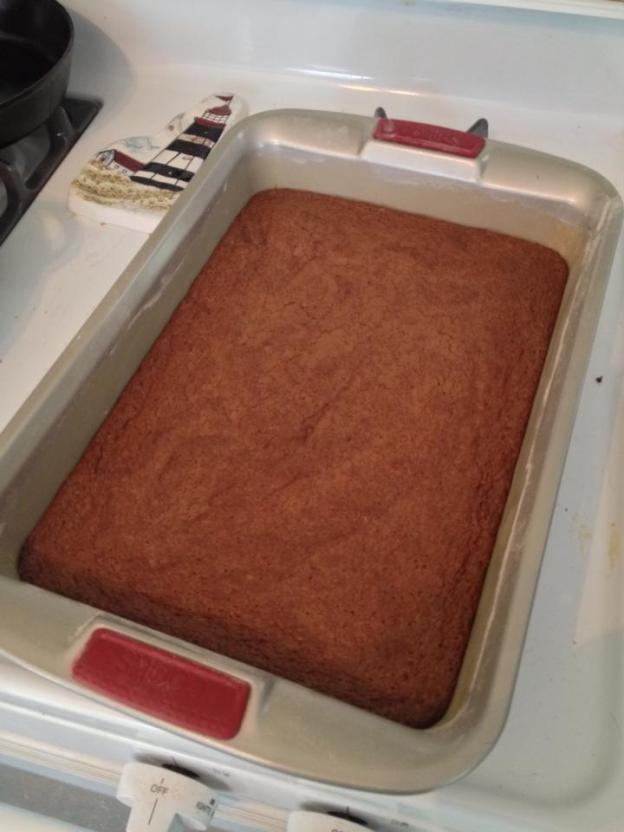
Perfect Cocoa Brownies

1 stick of butter, melted
1 c. granulated sugar
2 eggs
1/2 tsp vanilla
1/3 c. cocoa
1/2 c. flour
1/4 tsp baking powder
1/4 tsp salt

Preheat oven to 350 degrees. Butter an 8×8 pan. (If you double this recipe, which works well, use a 9×13 pan.) Mix together the melted butter and sugar, then add the eggs and vanilla, mixing well with a spatula. Add the remaining ingredients, mixing well. It’s okay if the batter is a little lumpy. Spread batter into prepared pan, and bake for 20-25 minutes (more if you doubled it in the larger pan). If you mix these up as a children’s message in church, baking them during the sermon, final prayers, and closing hymn/song, they will be warm and finger-lickin’ good for coffee hour after worship. (Get another adult to take charge of the baking part.)

Nobody’s Perfect? – Sermon on Matthew 5:38-48

Anybody here like kosher pickles? How about kosher beef franks? As Gentiles, my guess is that we don’t think much about what “kosher” means, beyond its application to certain foods. The reading we heard from Leviticus earlier today gives us the origins of the word “kosher.” It comes from the Hebrew word kedosh, and it means something that is holy, or set apart.

“Be holy (kedoshim) because I, your God, am holy,” God tells his people. (Leviticus 19:2). God’s holiness might never be a question for us, but how can we be holy? Jewish rabbis point us back to Genesis, reminding us that we are made in God’s image, and this image is not so much a physical picture as it is a reflection of God’s character.[1] Our passage from Leviticus introduces the how-to manual for living a kosher life. It teaches us how to be holy as God is holy, through godly behavior in our everyday living. Telling the truth, treating others fairly, taking care of our families and the poor, protecting the weak and forgiving those who have hurt us – all these choices contribute to the spiritual discipline of holiness outlined in Leviticus. So, where did it all go wrong? How did following the rules in the manual become more important than living a truly holy life?

As Jesus spoke to his followers in the Sermon on the Mount, he was trying to teach them what it means to be truly holy. Two weeks ago, we heard Jesus announce that he had not come to abolish the Law, but to fulfill it. Last week, we heard him describe how living into the spirit of the Law requires more of us than simply following the letter of the Law. Jesus talked of obeying the laws by practicing a more rigorous observance of God’s intent behind each of the rules. “Of course God doesn’t want you to kill each other,” Jesus is saying – “God doesn’t even want you to be angry with each other! Of course God doesn’t want you to commit adultery. He knows that such a betrayal of trust can lead to pain and divorce, and God’s deep desire is for marriage to reflect the loving relationship God has with his people. Of course God doesn’t want you to make idle promises and use his holy Name to give them greater importance than they deserve. Let your word stand on its own: say Yes, or No, and mean it.”

Today’s passage brings us to the heart of the Sermon on the Mount. As Jesus continues to teach us what it means to be truly holy, the focus is on reconciliation instead of retribution. Here the Word of the Lord, as given to us in Matthew 5:38-48.

“You have heard that it was said, ‘An eye for an eye and a tooth for a tooth.’ But I say to you, Do not resist an evildoer. But if anyone strikes you on the right cheek, turn the other also; and if anyone wants to sue you and take your coat, give your cloak as well; and if anyone forces you to go one mile, go also the second mile. Give to everyone who begs from you, and do not refuse anyone who wants to borrow from you.
“You have heard that it was said, ‘You shall love your neighbor and hate your enemy.’ But I say to you, Love your enemies and pray for those who persecute you,so that you may be children of your Father in heaven; for he makes his sun rise on the evil and on the good, and sends rain on the righteous and on the unrighteous.For if you love those who love you, what reward do you have? Do not even the tax collectors do the same? And if you greet only your brothers and sisters what more are you doing than others? Do not even the Gentiles do the same? Be perfect, therefore, as your heavenly Father is perfect.”

Jesus continues to teach from a three-part formula. First, he offers the common understanding of Levite law. Second, he gives the law a new twist, by outlining higher expectations for applying it to Kingdom living, and third, he explains God’s intent for the law in practical terms and examples. So far, so good. Jesus gets an “A” for three-point preaching outlines. But at the end of the lesson, Jesus is asking more of us than we think is possible. “Be perfect,” he says. We know Jesus likes to use hyperbole, exaggerating a point to make it stick, so we’re hoping this is another case of overstatement! But it isn’t. “Be perfect, therefore, as your heavenly Father is perfect.” How are we supposed to do that?

It starts with right relationship. The Law made allowance for justice that demanded an eye for an eye and a tooth for a tooth. Give as good as you get, in other words. But in that system, everyone goes around half blind. Rather than retribution, Jesus says, seek reconciliation. Rather than demanding fair treatment that hurts everyone, be willing to go the second mile. Literally.

By Roman law, a soldier could compel a civilian to carry his pack for one mile, or 1520 paces. But at the end of that mile, the soldier was required to take the pack back, unless he wanted to be punished for forcing a civilian to carry it further. Jesus was actually challenging Roman authority, by encouraging his followers to exceed the demands put on them by their oppressors.[2]

You may remember that, when we heard Luke’s version of the teaching about turning the other cheek, I explained that striking someone on the right cheek was a way of establishing superiority. It was a back-handed insult. A fight between equals would require hitting the left cheek with an open palm or fist. When Jesus tells us to turn our left cheek to someone who insults us by assuming superiority over us, he is telling us to affirm our own value as a beloved child of God. In essence, turning the other cheek is like saying, “I refuse to accept your arrogant insult. I dare you to consider me your equal.”

Instead of retribution, Jesus tells us to seek reconciliation. Instead of accepting oppression, Jesus encourages us to remember that we are God’s own beloved children. Since we have been so deeply loved, we are called to be agents of love in the world. But when Jesus quotes Leviticus this time, he doesn’t exactly quote Leviticus. Yes, the Law tells us to love our neighbor, but nowhere does it say to hate our enemies. Perhaps Jesus is quoting the way that particular law had been re-interpreted by the culture of the day. Or maybe Jesus was trying to emphasize what loving your neighbor really means. English author and mystery novelist G. K. Chesterton once quipped, “The Bible tells us to love our neighbors, and also to love our enemies; probably because they are generally the same people.”[3]

But in this case, Jesus is not talking about the person who lives next door to you, or even on your side of town. Jesus is not talking about the people who are most like you, the people with whom you most closely identify. Jesus is talking about the Other. With a capital O.

It’s easy to love the people you choose to love. It’s not so easy to love the people God puts in front of us every single day who are not like us at all, who don’t share our values or our tastes or our educational backgrounds, or our ideas about money and politics. Love your enemy, Jesus says. Love the Other.

Jesus is not talking about an emotion or a sentiment. He is talking about loving the way God loves. If you think back to the words we heard last week, the theme of reconciliation is running just under the surface of the whole passage. Back in verses 23-24, Jesus said, “So when you are offering your gift at the altar, if you remember that your brother or sister has something against you, leave your gift there before the altar and go; first be reconciled to your brother or sister, and then come and offer your gift.”

In his book, Exclusion and Embrace, theologian Miroslav Volf describes the process of reconciliation through something he calls “the drama of embrace.” There are four steps to this drama:

  • First, I open my arms to welcome the Other into my personal space, making myself vulnerable to the Other.
  • Second, I wait, allowing the Other to decide whether or not to accept my embrace.
  • Third, we step into each other’s open arms, and close our arms around one another. We are each distinct, with our own identities and personal boundaries intact, yet we have welcomed each other into our personal spaces, eliminating the distance between us. We remain in the embrace long enough to give it meaning – but not too long, or it becomes a stranglehold.
  • Fourth, in opening our arms, we release each other back into the world, giving freedom to one another.

But we have been changed by this embrace. Neither of us can ever be the same again, having welcomed the other into ourselves.

This transformation, this change of self, is exactly what Jesus did on the cross for us. He opened his arms, welcoming our sinfulness into his own perfection. As we accept that welcome, and step into Christ’s embrace, we are changed. But Jesus does not hold us against our will. Instead, he releases us back into the world, to be salt and light to others, welcoming them into the embrace of faith.

How has God been working in you and through you this week, to be salt and light? (I’ll bet you thought I had forgotten your homework assignment – I didn’t!) Turn to a neighbor, and keep in mind that your neighbor might be someone across the room from you, and share with one another one way you’ve seen God changing you, or changing the world through you. Go ahead, I’ll wait…

You see, God is working among us. Last weekend, I showed the Church Council a TED Talk by Simon Sinek that explained “It doesn’t matter what you do, it matters why you do it.”  Back in Leviticus, God states the reason behind the rules for godly behavior at least five times: you do these things “because I AM THE LORD,” God says. But what is our reason for being here, as this congregation? When I asked the council, “What are we leading people toward? Why are we here?” the first answer on the board was, “to know Christ.” Other good answers followed: to develop a close relationship with God, to live lives of integrity, caring for others, and many other good ideas. But if the only thing we ever did at First United Methodist Church was to help people to know Christ, wouldn’t that include developing a close relationship with God and living a life of integrity and caring for others? Because, to know Christ is to be changed. To know Christ is to be transformed into a new creation. To know Christ is to be … perfect.

“Be perfect, therefore, as your heavenly Father is perfect,” Jesus says. This is one of those statements we hope Jesus doesn’t mean literally, and the good news is that the word translated as “perfect” really means something more than our English language can convey in one word. Telos is the Greek word for “goal,” “end,” or “purpose.” It’s more about becoming what was intended, accomplishing one’s God-given purpose, becoming complete. Eugene Peterson’s The Message translates it, “You’re kingdom subjects. Now live like it. Live out your God-created identity.” Moral perfection may be beyond our human reach, but our telos is our goal, our desired outcome, what happens when we are completely mature and have found our identity in Christ alone.

Being perfect isn’t impossible; it’s what we’re made for. Being perfect isn’t even something we can do on our own – it’s something God does in and through us, as we allow him to transform us. Jesus came, not to abolish the Law, but to fulfill it. Just as he transformed the way people heard God’s Law, he wants to transform us into the perfect children of God we were created to be. Reconciliation more than retribution, loving our enemies as well as our neighbors – these are how God’s transformation is shown to be completed in us. That’s our telos.

We are people who have experienced grace. We know what it is to receive God’s unmerited favor, love we couldn’t possibly earn. God offered his grace to us before we knew we needed it. When we accept that justifying grace, made real in the person of Jesus Christ, we begin the transforming journey toward perfection that marks us as holy, set apart, completed in God’s eyes, and welcomed into his family. This is the essence of Wesleyan theology. It’s why we are here.

But we aren’t there yet. Perfection seems a long way down the road sometimes, doesn’t it? What is preventing us from being perfect, from becoming complete? Right now, I invite you to write down just one thing you believe is holding you back from living into your God-given identity. There’s blank space on the back of your Grapevine, so use that. Write down just one thing — one fear, one memory, one hurt, one resentment — that keeps you from embracing and becoming the person God wants you to be. This week, as you check the Grapevine for events on the calendar, pray over that one thing. Ask God to help you turn it over to him, so you can be transformed, changed, made perfect.

God only wants one thing for each of us, and that is to be transformed into his likeness, to become perfect and complete, as God is perfect and complete. I invite you to share your life in this community of faith with people who are not in this community of faith, not so we can fill the pews – because those numbers really don’t mean anything – but so that you can experience what happens in you when you do that. Just as it is true that teaching someone else how to do something we’ve just learned will solidify that learning for us, and help us internalize it, sharing your faith with others will deepen that faith within you. And that’s what I’m eager to see. Not numbers, but change. Not more bodies, but deeper, richer, more complete faith. Then together, as we let God work on us, we can join the United Methodist Church in its mission to “Make disciples of Jesus Christ for the transformation of the world.” Amen.


A Word for Children – Brownies Aren’t Done Until…

Photo used with permission from April Fool Virtual Bakery. Thanks, Mark!

Last weekend, as members of our church council gathered together, Jane S. gave a great devotional message about the importance of our various gifts. God has given each of us a particular set of talents and abilities, and God wants us to use these gifts well as we grow in our faith. But, as I was thinking about today’s scripture, it occurred to me that the same example Jane used to teach us about our gifts could also apply to the thing Jesus tells us today (Matthew 5:48). As Jesus was teaching his followers about the way God works, he kept telling them, “I expect more out of you than just following the rules. I want you to be changed into something new. I want you to be perfect, completely like God, so you can show the rest of the world how much God loves every single person on earth.”  That sounds impossible, doesn’t it? But we don’t change into something new by ourselves: God does it. And it doesn’t happen in the blink of an eye – it takes a while.

So here’s the deal: I have some ingredients here, and I need you to help me change them into something new. (Distribute ingredients for Brownies, each in its own resealable bag) Do all these ingredients look like something you would want to eat? If we mixed them up together, what do you think we would get? (Cream together butter and sugar, add egg, then flour, baking powder, cocoa, salt) Now what do we have? It has changed, but can we eat it yet? Can you tell what it’s going to be? (Spread batter into pan) They aren’t brownies until we bake them, so let’s get some help with that. (Give an adult the brownies for baking in the church kitchen during the rest of worship) Just like the brownies, we aren’t done yet. God is still working inside each of us to change us into people who make the world a better place. He’s making each of us more and more like him every day, just like those brownies, baking in the oven, will become more and more like something you could eat after church. Let’s pray.

God, keep working on us to make us more like you. Change us into people who care more, who help more, who love more, so we can be more like Jesus. Amen.

“But I say to you…” – Sermon on Matthew 5:21-37

Last week, we heard Jesus preaching about being Salt and Light, and you may remember that I gave you a homework assignment. How did you do? Have you noticed God at work in your life this week? How has God been changing you? What have you caught yourself doing that can only be explained by God’s hand directing you? Think back through your week … ask God to bring to your mind the ways He was working in you and through you to shine his light into the world. Now turn to your neighbors and tell them one thing. Go ahead, I’ll wait.

Anyone want to share with the whole congregation, just a sentence or two? … Thank you! Okay, we’re going to keep this exercise going another couple of weeks. I encourage you to ask God each day to make you aware of his work in you and through you. That’s what Jesus was trying to do for his disciples, as he preached to them on the side of that mountain. He was reminding them that God is at work, and we already are salt and light to the world, seasoning it with God’s love and shining God’s light into every dark corner. So keep it up!

While we are being salty and shiny, Jesus is asking more of us. Last week, we heard him insist that he did not come to abolish the Law, but to fulfill it. This week, as Jesus digs deeper into what it means to live into the spirit of the Law, he makes it clear that being his follower requires more from us than obeying a few rules. Following Jesus means holding ourselves to a higher standard of right living.

Hear the Word of the Lord, as given to us in the Gospel according to Matthew, chapter five, verses 21-37.

         “You have heard that it was said to those of ancient times, ‘You shall not murder’; and ‘whoever murders shall be liable to judgment.’ But I say to you that if you are angry with a brother or sister,you will be liable to judgment; and if you insulta brother or sister,you will be liable to the council; and if you say, ‘You fool,’ you will be liable to the hellof fire. So when you are offering your gift at the altar, if you remember that your brother or sisterhas something against you,leave your gift there before the altar and go; first be reconciled to your brother or sister, and then come and offer your gift.Come to terms quickly with your accuser while you are on the way to court with him, or your accuser may hand you over to the judge, and the judge to the guard, and you will be thrown into prison.Truly I tell you, you will never get out until you have paid the last penny.
“You have heard that it was said, ‘You shall not commit adultery.’ But I say to you that everyone who looks at a woman with lust has already committed adultery with her in his heart.If your right eye causes you to sin, tear it out and throw it away; it is better for you to lose one of your members than for your whole body to be thrown into hell. And if your right hand causes you to sin, cut it off and throw it away; it is better for you to lose one of your members than for your whole body to go into hell.

It was also said, ‘Whoever divorces his wife, let him give her a certificate of divorce.But I say to you that anyone who divorces his wife, except on the ground of unchastity, causes her to commit adultery; and whoever marries a divorced woman commits adultery.
“Again, you have heard that it was said to those of ancient times, ‘You shall not swear falsely, but carry out the vows you have made to the Lord.’But I say to you, Do not swear at all, either by heaven, for it is the throne of God,or by the earth, for it is his footstool, or by Jerusalem, for it is the city of the great King. And do not swear by your head, for you cannot make one hair white or black. Let your word be ‘Yes, Yes’ or ‘No, No’; anything more than this comes from the evil one.

We’ve come a long way from the Beatitudes that opened this Sermon on the Mount, haven’t we! If those were radical words when Jesus first spoke them, imagine how much more radical these words must have sounded to the people gathered on that hillside. Jesus was still trying to reframe the way his followers saw the world. He was urging his disciples to see the world through God’s eyes, to recognize that God’s Kingdom was at hand. Jesus borrowed from the tradition of rabbis who had taught before him, by exaggerating the points he was trying to make, but he also did something that no rabbi had ever done before. He spoke with authority. And the standard he was setting for true Kingdom behavior was higher than anyone thought possible.

If part of your body causes you to sin, cut it off! It’s better to go through life as a cripple than to risk the fires of hell. Moses told you that you shouldn’t commit adultery, but I tell you that looking at someone with lust in your heart is just as bad. Moses told you not to kill each other. But I tell you that it’s just as evil as murder to hold a grudge against someone. One by one, Jesus holds up the Commandments and forces us to look deeper into God’s intention behind the command, to discover the spirit of the Law. We could spend a whole sermon on each one of these commands, exploring how Jesus offers a new Law that transcends the one handed down from Moses.

But Jesus isn’t interested in giving us a new checklist of things we aren’t supposed to do. As we take stock of our lives at bedtime, Jesus isn’t impressed if we can say, “Well, I didn’t murder anyone today, and I didn’t commit adultery – I must be okay!” Jesus says, “I expect more from my followers than just ‘okay’.”

Jesus tells us we need to dig deeper into ourselves, to get at the root of our sinfulness and purge it out before a grudge turns into hatred and murder, before lust turns into a pornography addiction, or leads to adultery and divorce, before an idle word becomes a lie, before a little envy blossoms into full-blown jealousy, before our apathy turns us away from God’s grace and love. Jesus asks us to open our lives to him, to allow the Holy Spirit to search out our weaknesses before they become hardened habits of sin that separate us from God.

Rev. Dr. Delmer L. Chilton points out that, “Jesus is digging beneath the surface of outward observance to get at both the difficulty and the serious importance of being genuine and transparent in God’s new community of the church. For the writer of Matthew’s gospel, it is unimaginable that people who profess to be followers of Jesus should be Christians on the surface only.
“… All throughout this text, Jesus’ words are about dropping pretense and dealing with the real problems of being in relationship and community with others by being honest, straight-forward and humble with each other.” Dr. Chilton adds that the call of today’s text is an urgent one: “Do it now. Live by kingdom values now. Straighten out your life now. Make peace with others now. The kingdom of God is here, now. The spirit of God is giving you strength for whatever changes you need to make, now. The love of Christ is forgiving you and inviting you to forgive others, now.“[1]

Yesterday, fourteen of us gathered in an Upper Room at Martin Luther College to begin the process of discovering what God is calling our church to be and do here on the corner of Center and Broadway in New Ulm. We asked a lot of questions, and probably didn’t come up with very many answers, but the desire to be faithful to God’s call is evident among us. One thing we discovered is that it’s a lot easier to come up with a list of things to do than it is to say why we do them. It’s a lot easier to remember stories of vital ministry in days gone by, than it is to imagine how our ministry can be more effective in the here and now. But we aren’t throwing in the towel just because the task isn’t easy. We know the call on our lives, and on our church, is an urgent one. God has a plan for us, and work for us to do. Our job is to make our hearts and lives ready to be and do what God calls us toward.

So, if Jesus were here today, preaching his Sermon on the Mount directly to us in this sanctuary, what would it sound like? What higher standard of behavior would he be expecting from us, the people who claim to be his followers? Would he pat us on the back and tell us what a good job we are doing of bringing his kingdom to reality? Or would he say something more like:

“You have heard it said that reading a paragraph or two from a devotional book will make you a better person, but I say to you that Christ longs for you to cultivate a deep hunger for God’s Word, and a personal relationship that keeps you connected to him through prayer as an ongoing conversation, not a recitation of memorized phrases.

“You have heard it said that pastors and paid staff members are the ones who are trained to do the work of the church, but I say to you that everyone who claims to follow me has been given gifts and talents for the purpose of ministry, and wasting those gifts is a sin.

“You have heard it said that going to church is a good thing. But I say to you that you ARE the church, and everything you do or say or think makes the church what it is. Again, you have heard it said that volunteering in the community once a month helps others. But I say to you that the word “Volunteer” needs to be struck from your vocabulary. Volunteers give away their discretionary time as an optional activity. There’s nothing optional about following Jesus. Being a disciple is a 24/7 commitment.”

Christ calls us to a higher standard of living into the Kingdom of God. To answer that call, we need to reorient our thinking, just as those disciples on the hillside had to do. We can choose to stick with the familiar “way we’ve always done things” as the scribes and Pharisees of Jesus’ day tried to do, or we can choose to follow Jesus, to stay close to him, to serve him, to be the people of his kingdom. Because that’s what he’s calling us to be.

Quiet Time

Never underestimate the value of silence. As a music teacher, I rarely listened to the radio on my way home from school. I had been singing. listening, and playing music all day. What I needed more than anything was simple silence. As a pastor, I am finding that the time I spend in silence is what grounds me and makes it possible for me to listen fully to others. “Be still, and know that I am God,” we read in Psalm 46:10, but do we really know how to do that?

Of course, the moment I sit down to “be still” with God is the moment I am bombarded with thoughts that drown out God’s voice. It takes a conscious effort to stop the constant chatter of my brain, and be present and still before my Maker, Redeemer, and Sustainer. Yet, I am learning that this stillness before the Lord is more than an opportunity to “fill my spiritual fuel tank” or reorganize my thoughts. It is the very essence of following Jesus to draw near to him and listen. As I do this, I am transformed more and more into the grace-filled creature I was always meant to be.

It would be so sweet to stay in that silent space, to remain apart and “just be” with Jesus. But I can’t do that. While Jesus often sought solitude, he never stayed alone for long. There is a tender balance between quiet solitude and the noisy, messy business of doing ministry. Following Jesus means embracing both worlds with passion and joy. Let it be so.

Come and See – Sermon on John 1:29-42 for Epiphany 2A

(Video from Bethlehem Covenant Church January 15, 2023 – sermon begins at 32:09)

Last week, we heard Matthew’s version of the Baptism of Jesus. This week, John’s gospel takes us to the day after Jesus is baptized. John the Baptist sees Jesus walking down the street, and points out the Lamb of God to some of his own disciples. It could have been a casual encounter. John might have said, “Oh, hey – here comes that guy I was telling you about earlier.” And his followers might have glanced up long enough to see who John was talking about, and gone right back to whatever it was they had been doing. It could have happened like that. But it didn’t. Continue reading

“Disciple, disciple, what do you see?” “I see Jesus looking at me.”

Tomorrow’s gospel lesson comes from John 1:29-42. It’s a different version of the Baptism of Our Lord than you will find in the other gospels. For one thing, the story takes place on the day after Jesus was baptized. For another, John the Baptist gets to tell his own version of the story, describing his experience to a handful of his own disciples. No water is involved.

But there’s a lot of seeing going on. John sees Jesus coming. John testifies that this is the one on whom he saw the Spirit of God descend, after being told he would see this phenomenon. “And I myself have seen and have testified that this is the Son of God,” John says.

It doesn’t stop there. The next day John watches Jesus walk by, and tells a couple of his disciples, “See! There’s the Lamb of God I told you about yesterday!” They follow Jesus, who turns and sees them, then asks, “What are you looking for?” When they ask where he’s staying, Jesus says, “Come and” – you guessed it – “see.”

And that’s just the first half of the reading! It reminds me of Bill Martin, Jr. and Eric Carle’s predictable reading primer, “Brown Bear, Brown Bear, What Do You See?” that every preschool and kindergarten teacher knows by heart. Each colorful character in the story sees the next character “looking at me.” Except, in this case, the characters aren’t looking at, they are looking for. John the Baptist is looking for the One who has been promised. His disciples are looking for a conquering Messiah. Jesus is looking for disciples who will follow and learn from him.

We run into trouble when we stop looking, when we decline the invitation to “come and see.” But we also run into trouble when we start looking for the wrong thing, in the wrong places. There’s an old chorus that goes, “Turn your eyes upon Jesus; look full in his wonderful face, and the things of earth will grow strangely dim in the light of his glory and grace.” Keeping our eyes on Jesus, we can focus on God alone, the author and finisher of our faith. There, we find peace, forgiveness, rest, grace. Where, you ask? Come and see.


Water and Spirit – Sermon on Matthew 3:13-17 (Baptism of Our Lord 2014)

Can you remember your baptism?  If you were baptized as an infant, chances are good that you have no memory of the actual event. I was baptized by my pastor – who also happened to be my father – when I was a young girl. I am grateful that my baptism could happen in a clean, heated baptistery, instead of the cold muddy river our church used for baptisms in its earliest years. I remember stepping down into the water, wearing one of my dad’s white shirts with the sleeves rolled up. I remember losing my footing as my dad laid me down into the water, baptizing me in the name of the Father, and of the Son, and of the Holy Ghost. But Dad didn’t let me drown. He held onto me until I could get my feet back under me, and then helped me back up the steps, where my mom waited with a clean towel. It’s a good memory. I couldn’t really put my finger on it, but I knew something was different about me after that. I knew I’d been changed for good.

The third chapter of Matthew’s gospel describes a slightly different process, as John the Baptist preaches a message of judgment and baptizes repentant sinners in the Jordan River. The water is cold and murky. Since John’s call to repentance inspires a spontaneous desire to be baptized among his listeners, their Moms probably aren’t waiting on the riverbank with warm towels. But the people coming up out of the water know they’ve been changed for good. They might not be able to put their finger on it, but something is different.

Then, an amazing thing happens. The long line of baptismal candidates has dwindled down to the last three, then two, then only one person standing in front of John in the river, waiting to be baptized. And John recognizes this one. It’s his cousin, Jesus. Hear the Word of the Lord, as given to us in the third chapter of the Gospel of Matthew, beginning at the thirteenth verse:

Then Jesus came from Galilee to John at the Jordan, to be baptized by him. John would have prevented him, saying, “I need to be baptized by you, and do you come to me?”  But Jesus answered him “Let it be so now; for it is proper for us in this way to fulfill all righteousness.” Then he consented. And when Jesus had been baptized, just as he came up from the water, suddenly the heavens were opened to him and he saw the Spirit of God descending like a dove and alighting on him. And a voice from heaven said, “This is my Son, the Beloved, with whom I am well pleased.”  Matthew 3:13-17

Whether you were sprinkled, poured over, or dunked, your baptism required water. Water is essential to life, and we can’t live very many days without it. The average human body is about 65% water. Water plays a major role in the biblical story, all the way from Genesis, with Creation and Noah’s Flood, through the Exodus, as God provides water in the desert, into the New Testament, where Jesus lives and teaches by the Sea of Galilee, right through to Revelation, where the River of Life flows through the City of God. Jesus told the Samaritan woman at the well that he, himself, was the source of Living Water. Water also washes us, and the origins of baptism in Jewish worship included the symbolic act of washing and being purified through water. New converts to Judaism were baptized, you may remember, as part of the initiation ritual that demonstrated they were now clean, ready to enter the Temple. As John baptized repentant sinners in the Jordan River, I wonder if anyone remarked on the irony of being cleansed from sin in one of the dirtiest looking rivers around.

There’s a story in the Old Testament about another man, Naaman, who also walked down into the Jordan River. I have sometimes wondered why it isn’t one of the assigned readings for this Sunday, when we celebrate the baptism of our Lord. Naaman was a powerful general in the army of the King of Aram, during the time of the prophet Elisha. Naaman had a skin disease. His wife’s servant, a young girl who had been captured from Israel by an Aramean raiding party, told her mistress about Elisha the prophet, and said, “I wish my master would go to him and be healed.”  One thing led to another, and soon Naaman was on his way to Samaria with a load of gifts for the King of Israel. You can read the whole story in 2 Kings 5, but the short version is that the king sends Naaman to Elisha, and Elisha doesn’t even come out of his house to meet the great warrior. He sends his servant to tell Naaman to dip himself in the River Jordan seven times. Naaman is insulted. Aren’t there cleaner, nicer rivers back home?  And why doesn’t this prophet come out and wave a magic wand, say some mumbo jumbo and make the disease disappear?  Naaman leaves in disgust. But his servants, who are traveling with him, urge him to reconsider. They remind him that he would have done a great thing if he’d been asked, so why not do this little thing he’s been told to do?  Naaman changes his mind, does what he’s told, and is healed of his skin disease.

Naaman repented. He turned around and went back to the river, and did what he was told to do. He obeyed the Word of the Lord, given through the prophet Elisha, and he was changed for good. His disgust and unwillingness to submit to Elisha’s command was replaced with obedience.

Like Naaman, John also protested, but relented and became obedient. John knew Jesus. We don’t know if these two relatives spent any time together as children, but keep in mind that John was only about six months older than Jesus, and their mothers had been close. So we can speculate that they knew each other as “cousins” before Jesus waded into the river to meet John. But John knew Jesus as something more than a cousin. He recognized that the man standing in front of him was The One for whom he had been preparing the way. John knew that this was the Messiah. John knew that Jesus didn’t need to be baptized. John knew that his own ministry was about to come to a close, because here stood the whole reason for John’s preaching, teaching, and baptizing. John knew that the Kingdom of God was looking him in the eye.

John’s question has troubled Christians from the beginning. Why did Jesus think he needed to be baptized?  He had never sinned; he didn’t need to repent. Yet, here he was, asking John to baptize him along with all those repentant sinners. It’s quite possible that Matthew’s first-century church had argued over this question, and that is why Matthew makes a point of explaining a motive for this peculiar behavior by the Son of God. Jesus tells John, “Allow this to happen for the time being, to fulfill all righteousness.”  “Trust me on this one,” Jesus says to his cousin John. “Even if it seems weird to you, just trust me. God has a plan in mind, and this is part of it.”  So John is obedient, and baptizes Jesus, and righteousness is fulfilled.

That word, “righteousness,” is loaded with meaning. Matthew uses it seven times[1] in his Gospel, and each use signals a slightly different understanding of the word. For Matthew, righteousness is more than “being good.”  Righteousness is closely connected to an awareness of the coming Kingdom. Righteousness means following Jesus as a faithful disciple, and participating in that kingdom. Righteousness is becoming aligned with God’s deep desire to save us. When Jesus tells John, “permit it to be so now, to fulfill all righteousness,” he’s saying, “Let’s do this!  It’s part of God’s plan to redeem the world from sin!”

It’s important to see that Jesus includes John in the plan. They have to do this together. This moment when John lowers Jesus under the water connects the ministry that went before, preparing the way, with the ministry that is just beginning – that is the Way. As Jesus submits to baptism, he puts himself in the same position as the people he came to save, and he does it in a very literal, tangible way that they can see. Three years from this moment, he will take on the sins of the entire world as he hangs on a cross at Golgotha. But in a very real way, his baptism serves as the initiation for that saving work.

So, just as Naaman obeyed Elisha, and John obeyed Jesus, Jesus becomes obedient. In their obedience, Naaman and John are changed for good. In his obedience, Jesus changes us for good.

And then something else amazing happens. The heavens are opened, and Jesus sees the Spirit descend on him like a dove, and a voice says, “This is my Son, the Beloved, with whom I am well pleased.”

The Spirit moved over the waters at Creation, and over Mary at Jesus’ conception. Now the Spirit moves over the waters of Christ’s baptism, labeling him as God’s own beloved Son, and anointing him as both King and servant of all. When we baptize an infant or a new believer, we lay on hands and breathe over the one being baptized, to signify that a New Creation has begun in us. We anoint the newly baptized with oil, as a symbol that the Holy Spirit has marked this one as God’s own beloved child.

Theologian Greg Garrett writes that baptism symbolizes birth and rebirth throughout the Bible, and whenever this happens, “people enter the water as one thing,” [slaves out of Egypt, or wanderers entering the Promised Land, for example] … and emerge as something entirely different”[2]. Jesus entered the water as ‘just another guy’, as far as the crowds around John were concerned. But when he emerged from those baptismal waters, he’d been changed for good. Christ’s baptism marked the beginning of his public ministry on earth, but it also marked him as God’s own Son, the Beloved, in whom God took great pleasure. If Jesus was going to baptize with the Spirit, as John had announced, he had to first experience that anointing himself.

Baptism marks us as belonging to God. The old catechism calls it a visible, outward sign of an invisible, inward grace. It’s important to remember that the Holy Spirit does this work in us; it is not some transaction we perform. It is also important to remember that, once we are sealed with the mark of baptism, that seal is a permanent one. We belong to God, now and forever. He has claimed us as his own.

In a moment, we will renew our baptismal vows using a distinctive Wesleyan liturgy. As we each reflect on our own baptism, we must also consider how we ended up here, in this Methodist Church, living and working together for Christ’s kingdom through this particular congregation. How are we being called to obedience by God’s Spirit working among us?  What is the outward sign of our inward grace, and how are we to show that grace to the community of New Ulm?

You may have noticed that several elements of our worship this morning have drawn on the Wesleyan heritage that marks the United Methodist Church in a unique way. For over three hundred years, the Methodist movement has been “seeking the fulfillment of God’s reign and realm in the world.”[3]  John Wesley held three simple rules that have become known as “The Wesleyan Way.”  Those rules are to do no harm, to do good, and to stay in love with God. They are reflected in the Minnesota Annual Conference Gospel Imperatives to reach new people, cultivate spiritual vitality, and heal a broken world.

As we renew our baptismal promises, we need to make them count for something, to honor them in spirit and in truth as we live out our faith together in this time and place. If this is something you haven’t considered before, or if it’s been a while since you consciously thought about your own discipleship, I encourage you to focus first on Wesley’s third rule: stay in love with God. Cultivating a deep and rich friendship with God gives us a reason to do good, to reach new people, to heal a broken world.

Baptism won’t save you. Baptism isn’t some secret initiation rite with magical properties. Baptism is a sign of obedience. As you touch the water in a moment, maybe making the sign of the cross on your forehead with a wet finger, remember your baptism and be thankful. Remember the promises you made, or the promises that were made on your behalf by your parents and the congregation that witnessed your baptism. Renew those promises to be faithful, to love God and neighbor, to seek righteousness, to be a true follower of Jesus. Then go out, marked by grace, to be obedient to God.


[1] Matthew 3:15; 5:6, 10, 20; 6:1, 33; 21:32

[2] Greg Garrett, Feasting on the Word Year A, Volume 1, 239.

[3] 2012 Book of Discipline, ¶121.

Remember your baptism

A picture hangs in my office, taken sometime in the mid-1950s. A young boy is standing waist-deep in a river, holding a list of names, candidates for baptism.  Next to him is his father, a pastor, preparing to baptize a young girl. The busy river flows around these three figures, and makes me grateful that, by the time that same pastor, who also happened to be my father, baptized me, it was in a heated baptistery filled with clean water.

This Sunday is the celebration of the Baptism of Our Lord, the first Sunday in the season of Epiphany. Matthew’s gospel tells of Jesus going down into the Jordan River, where John was baptizing repentant sinners. Matthew makes it clear that Jesus wasn’t asking to be baptized because of sin, but in order to “fulfill all righteousness” (Matthew 3:13-17).

There’s a story in the Old Testament (2 Kings 5:1-14) about another man, Naaman, who also walked down into the Jordan River. But Naaman didn’t do it voluntarily. In fact, he was angry that the prophet Elisha had told him to do such a degrading thing, and turned away in disgust. But his servants reminded him that he would have done a great thing if he’d been asked, so why not do this little thing he’d been told to do? Naaman changed his mind, and was healed of his skin disease.

I see a connection between John’s baptism “with water for repentance” and Naaman’s repentant plunge into the Jordan River. But I see an even stronger connection between Naaman’s “baptism” and the baptism of Jesus, who had no need to repent, who knew no sin. Naaman may have balked at first, but in the end, he did what he was told to do.  John may have balked when Jesus came to him to be baptized, but in the end, Jesus did what he was told to do, too. Naaman was cleansed of his disease, while Jesus took on the sins of the world. Both  were obedient to God.

Baptism won’t save you. Baptism isn’t some secret initiation rite with magical properties. Baptism is a sign of obedience. As you touch the water this Sunday, maybe making the sign of the cross on your forehead with a wet finger, remember your baptism and be thankful. Remember the promises you made, or the promises that were made on your behalf by your parents and the congregation that witnessed your baptism. Renew those promises to be faithful, to love God and neighbor, to seek righteousness, to be a true follower of Jesus. Then go out, marked by grace, to be obedient to God.

Glory Next Door – Sermon on John 1:1-18 (Christmas 2A)

The prologue to John’s Gospel is one of the most read – and perhaps least understood – passages in Scripture. We hear part of it every Christmas Eve, just before the Christ Candle enters the room. The poetic structure of the first few verses has led some scholars to believe that it was  a hymn already being sung by the early church before John set down his version of the gospel story. Others, of course, dispute that theory. Whether the Evangelist borrowed this ‘Hymn to the Word’ from another source or composed it himself, countless Christians have been moved and encouraged by John’s simply worded, yet deeply profound, introduction to the story of Jesus, the Son of God.

John tells his gospel story differently than the other evangelists do. Unlike Matthew and Luke, there is no “birth story” in John’s gospel. Unlike Mark, John does not begin with an explanation of the ministry of John the Baptist, though the Baptizer does have an important role to play in this prologue to the gospel. We might wonder, “Why did John find it necessary to write  a gospel at all? Mark had already set down his urgent rough draft, and both Matthew and Luke had refined that telling, filling in gaps and explaining the confusing parts. And why did John begin his story in such  a peculiar way, leaving out those shepherds and magI we enjoy remembering during this season of Christmastide?

Ancient tradition holds that the Evangelist wrote from Ephesus, near the end of the first century. The temple had probably already been destroyed by the time John wrote, and the Jews had been dispersed, leaving Jerusalem behind as they resettled in other cities. John’s story is directed to these Jews, who have been scattered throughout the provinces, bereft of a location they could call their spiritual home. John also was writing for Greeks who had been converted to the Jewish faith.

John’s purpose for writing his distinctive gospel message is woven throughout today’s passage, but he states it most clearly in chapter 20, near the end of the story: “These things have been written that you might believe that Jesus is the Christ, the Son of God, and that believing, you may have life in his name.” This phrase “that you might believe” may be interpreted two ways. First, that you may come to faith, believing in Christ for salvation, but also, that you might persevere in faith, continuing to believe. John wrote the gospel story to convince those Jews who remained skeptical, that Jesus was, in fact, the Messiah for whom they longed. And to those who already believed, John hoped to encourage their faith and sustain them through the hardships the early church was beginning to face. Those Christians needed – as we often do –  a reminder of what they had first believed: that Jesus was the Christ, and that they belonged to God.

Today’s passage is the introduction, the prologue to John’s story. Let us prepare our hearts to hear the Word of the Lord, as given to us by John the Evangelist.

In the beginning was the Word,
and the Word was with God,
and the Word was God.
He was in the beginning with God.
All things came into being through him,
and without him not one thing came into being.
What has come into being in him was life,
and the life was the light of all people.
The light shines in the darkness,
and the darkness did not overcome it.

There was a man sent from God, whose name was John. He came as a witness to testify to the light so that all might believe through him. He himself was not the light, but he came to testify to the light. The true light, which enlightens everyone, was coming into the world.

He was in the world,
and the world came into being through him,
yet the world did not know him.
He came to what was his own,
and his own people did not accept him.
But to all who received him,
who believed in his name,
he gave power to become children of God;
who were born,
not of blood
nor of the will of the flesh
nor of the will of man,
but of God.
And the Word became flesh and lived among us,
and we have seen his glory,
the glory as of  a father’s only son,
full of grace and truth;

 (John testified to him, and cried out, “This was he of whom I said, ‘He who comes after me ranks ahead of me, because he was before me.'”)

From his fullness we have all received,
grace upon grace.
The law indeed was given through Moses;
grace and truth came through Jesus Christ.
No one has ever seen God;
It is God the only Son,
who is close to the Father’s heart,
who has made him known. – John 1:1-18

Scholars have puzzled over this prologue to the Gospel of John for centuries. John opens his story the same way Genesis starts; “In the beginning…”, drawing his Jewish readers into the creation story that is, for them, familiar, comfortable ground. Ah yes, “in the beginning” – we know how this goes, they think.  But John adds  a shocking twist to those familiar thoughts: In the beginning was the Word. And the Word was with God, and the Word WAS God. The Evangelist uses simple vocabulary, but his message is far from simple.

The Greek word ‘logos’ means ‘word,’ but it can indicate the action of speaking a word as well as the actual word being spoken. John’s use of logos to describe God’s act of creation draws on this idea. Both Jews and Greek converts to the Jewish faith would connect the action of God, speaking the world into existence, with the word God had pronounced to accomplish this creative act. The Word as  a flesh-and-blood person, however, would have been  a startling idea to both Greek and Hebrew readers. I think that was John’s intent. Identifying the Word of the Creation story with  a real human ought to have grabbed the attention of the Fourth Gospel’s first readers– and it should also grab ours.

Sometimes we need to be shaken up a little. We need to be reminded that this miracle of grace we have experienced cannot be taken for granted. Otherwise, we run the risk of becoming complacent, lukewarm. So John the Evangelist uses language meant to grab us and shake us up. First, he uses poetry when referring to the Word, then he interrupts the poem with a story about the witness of John the Baptist. Or maybe it’s the poetry doing the interrupting, giving us a summary of the whole gospel’s message. That message is this: God has broken in on our everyday lives, just as John’s poem about the Word breaks through the story of the Baptizer’s witness to the Son of God. God has come among us, interjecting himself into human lives through the person of Jesus Christ. John was among the last alive who had seen and known Jesus, and he feared for a church that might forget what it was to personally know the Savior. “I have seen him,” John says. “ I bear witness, just as John the Baptizer did, that this man who lived among us is God.”

A few years ago, archeologists uncovered a small house, about 900 square feet, in the old city of Nazareth, dating from the time Jesus lived there. Nazareth was a small village of maybe 50 families, probably very poor, and quite likely related to one another. As the archeologists were digging, it was easy to speculate how Jesus might have played and worked in the very spot where they were standing. The personhood of Jesus seems more real when holding a shard of  a pot he might actually have touched. The Word became flesh, John writes. And we have seen his glory.

Imagine, if you can, being told that a guy who went to high school with you, graduated in your class, grew up with you and hung out with you under the bleachers while your brothers played Little League together, spitting hulls from sunflower seeds  – that guy … is God. John was doing exactly that in this introduction to his gospel. John was bearing witness to what he himself had seen and heard. He knew ‘that guy’ – and he recognized that Jesus was more than just a buddy hanging out under the bleachers: he was God, and he was God from before the beginning, before the creation of the world. John’s point is that God has revealed himself in one very like us, and yet not like us at all. The light has come into the world, full of grace and truth, and we have beheld his glory.

Not only have we seen the Light, John tells us, that Light coming into the world, invading our reality, cannot be overcome – or even ‘understood’ by the darkness. But that light can transform our darkness, if we believe. Last week, we considered how God is present with us, even in the face of great darkness, even in the midst of unspeakable evil. While God is continually present with us in the brokenness of our world, God’s presence can only begin to change us and the darkness around us when we trust in God, when we believe in the saving grace God offers us through his Son, Jesus Christ. This is the question each of us must answer: Do you believe?

Do you believe that Jesus of Nazareth – that guy – is the Son of God? If you have not yet made that leap of faith, I urge you to take up John’s gospel and read it through, today. Football can wait. And if you haven’t taken down your Christmas tree yet, another day is not going to matter. It is John the Evangelist’s deepest desire that you come to believe that Jesus of Nazareth is the Christ, the Son of the Living God. As we approach the Communion Table today, this is also my deep desire for you.

John writes, “But to all who received him, who believed in his name, he gave power to become children of God.” Names mean something in the Bible.  A name represents all that a person is; it reflects a person’s character and identity. God’s name was considered sacred by the ancient Hebrews because it represents all that God is. For John, believing in the Name meant believing that Jesus bore God’s name, that he was, in fact, divine.

“… he gave power to become children of God.” We who believe in his Name, who believe that Jesus is the Son of God, we have the power to become children of God. This word, translated as ‘power’ in the NRSV, and as ‘right’ in the NIV, is the Greek word for ‘authority’. We have been given authority to become children of God. 1 John 3:1-2 exclaims, “How great is the love the Father has lavished on us, that we should be called children of God – and that is what we are!” God has granted us authority to claim God as our Father. And this authority bears with it some responsibility.

Just as Jesus humbled himself to go into the world to seek and to save that which was lost, so he calls us to go into the world, seeking out those who need God, who hunger for truth, who could use a little grace in their lives. Claiming our authority as God’s children, we have a job to do: we are to be salt and light in the world around us. And we are to be grace and glory for one other, too, as we receive grace and truth from our brothers and sisters within this faith community.

The language is simple, but the truth it expresses is deeply profound. It may be difficult to understand completely, but our task is not to try to make sense of it. Our task is to let it make sense of us.[1] As we submit ourselves to the Word of God, the Word that was made flesh and lived among us, full of grace and truth, we are changed. We become the children of God. This transformation is grace. We dare not keep it to ourselves. Like John, we must eagerly share this good news, so that others might come to believe, and might keep on believing.

Amanda Highben puts it another way in her poem, “Let us believe”. She writes:

Let us believe in the bright light now before us.

Brighter still is this—
the knowledge that I have placed your love
like  a smooth seed in my heart, and there it pulses
and stirs in  a hope-hollowed space,
deep in dark soil cradled.

We have not come so far, this far, for nothing.
We have come that we might be changed.

And let us believe that, in time, we will come to love
our bright and curving world
without inclining towards fear.

For I have come to believe in this bright truth—
quietly, from the core, we change
and quietly, from the core, we love.   – Amanda Highben (b. 1978)

God calls us to be transformed, so that we can go out into the world, bearing his light and his truth. Our transformation begins in God’s mercy and grace. It develops through our belief in his Son, Jesus Christ. And our transformation is made complete when we can love, as Jesus loved, those around us who need God’s saving grace. Quietly, from the core, let us grow in faith and love. Openly, as children of God, let us share the good news that Jesus Christ is Lord.

Almighty God, you have filled us with the light of the Word, who became flesh and lived among us; let the light of faith shine in all that we do; through Jesus Christ our Lord, who lives and reigns with you in the unity of the Holy Spirit, one God, now and for ever. Amen.


[1] (William H Willimon, Pastor, 150).