Equipped for Every Good Work – Sermon on 2 Timothy 3:14-4:5

October 20, 2019

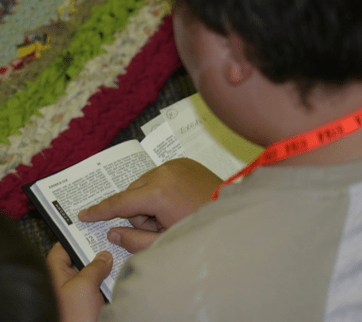
 Both the Old and New Testament readings today focus on scripture, the Word of God written on our hearts, delighting our spirits, and leading us to salvation. We are in the third of four Sundays examining Paul’s ‘last will and testament’ of faith in the second letter to Timothy. This week we move on from ‘wrangling over words, which does no good but only ruins those who are listening’ (2:14), to allowing scripture to work on us, to change us and equip us.

Remember that the Bible’s primary purpose is to reveal God to us. But what is the point of that revelation if we do nothing with it? Continue reading

Handle With Care – Sermon on 2 Timothy 2:8-15

10/13/2019

Words can be dangerous. We have to handle them with care. Here’s an example: On Tuesday, I had heard that one of our members had been hurt falling off a ladder. When I called to check on him, he assured me he had done no such thing. It’s easy for rumors to spread misinformation like this. Idle chitchat can have major consequences. 

Here’s another one: Last Sunday, I announced my retirement in 2020. By Sunday afternoon, there was a rumor that Bruce and I plan to move to the east coast after I retire. I’m not sure where that one came from. We are not making any plans to move to the east coast! Rumors can get pretty interesting, can’t they? We have to handle our words with care. Continue reading

Communion

Entrusted to You – Sermon on 2 Timothy 1:1-14

October 6, 2019 – World Communion Sunday

Second Timothy is a great example of ‘testament’ writing in the Bible. A testament gives the author an opportunity to summarize important teaching when it’s time to say goodbye. Jesus gives a testament in John 14-17 as he pulls together the most important things he wants the disciples to remember after he is gone. Moses gives a testament on Mount Sinai, just before the tribes of Israel enter the Promised Land without him.

About the only time we use the word ‘testament’ today is in a Last Will and Testament. It usually starts with the words, “I, (fill in your name here), being of sound mind, …” It’s a statement of identity and an assurance that the one making that statement has the ability and the authority to do so. A testament is what we leave behind as a witness to what matters most to us. Continue reading

Minding the Gap – Sermon on Luke 16:19-31

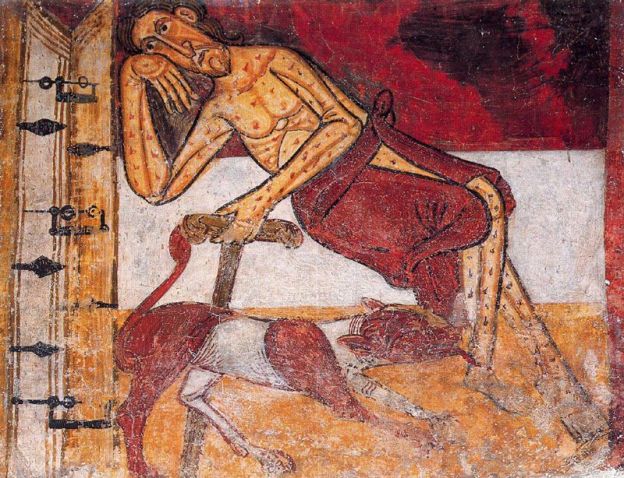
We’ve been hearing Jesus teach with parables for the past few weeks. Today we hear the last of five stories that make up chapters 15 and 16 in Luke’s gospel. They all have something to do with wealth, in one way or another. And they all have something to do with repentance. Continue reading

Trust Investment – Sermon on Luke 16:1-13       

September 22, 2019

Last week, we heard Jesus use the parables of the lost sheep and the lost coin to introduce the story of the Prodigal Son. I mentioned to you that these three stories are always linked together. Today and next week, we hear two parables that begin with the words, “There was a rich man…”

It’s not coincidence that Luke sandwiches the Prodigal Son between the Lost Sheep and Lost Coin at the beginning, and two “rich man” parables at the end. If you look at them as a unit, all five of these stories are about repenting from misplaced values. They’re about getting our priorities right.

Jesus talks a lot about money – how we use it, how we waste it, how we try to hold onto it. And while Jesus usually speaks pretty clearly when he’s talking to just his inner circle of disciples, this particular passage gets pretty confusing pretty fast. Continue reading

Jesus Eats with Sinners – Sermon on Luke 15:1-10

September 15, 2019

The tension is growing between Jesus and the Religious Establishment. He’s been challenging everything held dear by the Pharisees and teachers of the law. He’s also been challenging the crowds who gather to listen to him.

Last week, we heard him tell us that, unless we commit ourselves fully to living our lives in him, we cannot call ourselves his disciples. Jesus is raising the bar, and we are beginning to understand what the disciples mean when they wonder out loud, “who then can be saved?” (Luke 18:26) or “this teaching is difficult; who can accept it?” (John 6:60) And if his own disciples are struggling, just imagine how hard it is for the religious leaders to grasp what Jesus is demanding of any who want to follow him. But there is one group of people who are eating up everything Jesus says. Continue reading

Know the Cost – Sermon on Luke 14:25-33

September 8, 2019

First, I’m not preaching a new sermon. I’ve trimmed the one from three years ago and will use it again this year because, well, it’s still true.

But there are two things I hope to emphasize this time that I’m not sure I made clear before. One is that knowing the cost of discipleship means knowing we can’t afford it. The price is too high, it’s beyond our capacity. And the other is that following Jesus means devoting our whole selves to following Jesus, not the way we follow him. Let me explain.

It is easy to get caught in the trap of believing that our particular method of following Jesus is the only way to do it. Because it works for us, we think it’s not only best, but anyone who doesn’t follow Jesus the way we do isn’t really following Jesus. Not only does this thinking bring us perilously close to judging others, our form of discipleship becomes more important to us than our relationship with Christ itself. And that’s just wrong.

Jesus doesn’t say, “Follow me according to a particular formula,” or even “Follow me according to your understanding of scripture.” Jesus says, “If you want to be my disciple, you have to give up all your pre-conceived notions of what that means, and just stick close to me.” Discipleship means becoming a student of Christ, not a student of ‘following.”

Maybe I’m just picking at nits, but I think this is an important distinction. Christ calls us to follow Christ, not whatever form of Christianity we claim to practice. May I be faithful, may you be faithful, as we follow Jesus together.

Your Place at the Table – sermon on Luke 14:1, 7-14

It may come as a surprise to you that Jesus was friends with Pharisees. Back at the end of chapter eleven of Luke’s gospel, Jesus was invited to a Pharisee’s house for dinner on the Sabbath. This might seem like a small detail, but it’s actually pretty significant.

Being invited to someone’s house for dinner was a way to climb up the social ladder, but being invited for the Sabbath meal meant you were almost family. We usually think of the Pharisees as ‘the opposition,’ but Jesus didn’t always behave that way. Continue reading

A Posture of Praise – sermon on Luke 13:10-17

August 25, 2019
Here is an earlier version of this sermon, told in first person narrative style.

Hearing just a few verses of the gospel each week, it’s easy to lose track of the bigger story. It seems like ages ago that Jesus set his face toward Jerusalem. And for the past three weeks, he’s been in the same spot, even thought Luke doesn’t tell us exactly where that spot is.

Now we’ve moved into the next phase of the journey. Jesus is still teaching outside the Pharisee’s house where he had dinner back in chapter 11. And he’s telling parables again. He has just told the story of the barren fig tree (13:6-9). In that parable, the landowner gives the gardener one more year to work the soil around the tree so that it can bear fruit. If that doesn’t do any good, the tree will be cut down.

In the verses that follow today’s reading, Jesus will give two analogies for the kingdom of God: the mustard seed growing into a great bush where many birds will roost, and the leaven growing in the lump of dough (13:13:18-21).

But here, sandwiched in between these stories about things that grow and things that don’t, is a real-life encounter with Jesus. It wasn’t expected. It wasn’t planned. But this encounter introduces us to two people who could easily have been represented by the parables surrounding their story. Notice which one seems more like a mustard seed growing into a tall plant, and which one resembles a fig tree that won’t grow any fruit. Continue reading

God’s Good Pleasure – Sermon on Luke 12:32-40

August 11, 2019

Last week, we considered how greed can actually make you poorer, as we heard Jesus tell the story of the farmer who wanted to keep all his crops for himself. This week, we pick up Luke’s story almost where we left off. Jesus has been teaching how different the Kingdom of God is from anything we might imagine. He has just explained how we each matter to God, and how God wants to provide for all our basic needs.

If our heavenly Father feeds the birds and clothes the flowers of the field, we can depend on him to care for every need we have, because God loves us so very, very much. You wouldn’t give your child a snake or a scorpion to eat, would you? How much more is our heavenly Father eager to give the Holy Spirit to those who ask. And how much more God wants to give us, his own beloved children! So what are we afraid of? Continue reading